

 效果预览
效果预览
 分享
分享 分享
分享
 详情
详情 Guide
Guide

 下载
下载
 相似作品
相似作品 X射线
X射线 幻灯片播放
幻灯片播放 统计数据
统计数据A Mountain Road


 展开详情
展开详情
手工油画复制品
由我们的艺术家按需定制,为您提供您所选尺寸及画框的布面手工油画。 ( 切换至版画销售渠道 切换至数字图像销售渠道)




































从与原作比例一致的预设尺寸中进行选择。

您可以输入自定义尺寸,以适配特定的画框或空间。如果所选尺寸与原图比例不符,我们将通过裁剪作品或添加手绘元素来扩展画面。数字样稿将在制作开始前发送给您确认。
请注意,屏幕预览无法准确反映实际的裁剪或扩展效果,只有样稿才能真实呈现最终的构图。
虽然我们提供定制尺寸服务,但为了保留原作比例,建议您从预设列表中选择尺寸。
下单后,OriginalUniqueArt.com 团队将通过电子邮件联系客户获取具体要求,并提供效果预览图。


 玻璃选项仅适用于110厘米以下的尺寸。

A Mountain Road
复制材质
复制品尺寸
-


最终总价
$ 300
艺术家简介
The Architect of Atmospheric Vistas
Joos de Momper the Younger stands as a pivotal figure in Flemish Baroque landscape painting, bridging the gap between the expressive dynamism of Pieter Bruegel the Elder and the opulent grandeur of Peter Paul Rubens. His artistic legacy resides primarily in his breathtaking depictions of mountainous vistas—scenes imbued with an unparalleled sense of drama and psychological depth. Born into a family steeped in artistic tradition in Antwerp, de Momper’s lineage traced back to his grandfather, Bartolomeus de Momper, a respected landscape painter himself. This familial influence undoubtedly shaped his early artistic inclinations and instilled within him a profound appreciation for capturing the sublime beauty of nature. He received formal training from his father, bolstering his technical skills and establishing a foundation for his distinctive style.
Recognizing the importance of broadening his horizons, de Momostemper embarked on a formative journey to Italy in the 1580s, immersing himself in the artistic fervor of Rome and absorbing the innovations of Mannerism—a stylistic movement that would subtly inform his subsequent work. His ascent within the Antwerp Guild of St. Luke at just seventeen years old signaled a decisive step toward establishing his professional career. His membership afforded him access to invaluable resources and fostered connections with influential patrons, securing commissions that propelled him to prominence. Notably, Archduchess Isabella Clara Eugenia, ruler of Flanders, demonstrated her unwavering support by petitioning the Antwerp magistrates for an exemption from customary taxes and fees—a testament to de Momper’s reputation as a respected artist and his contribution to the cultural landscape of the era.
A Master of Collaboration and Transition
The true brilliance of de Momper's oeuvre lies in its position at a historical crossroads. His work is situated at the delicate transition from late 16th-century Mannerism to the greater realism in landscape painting that developed in the early 17th century. While his compositions often retain the intricate, almost fantastical details characteristic of the Mannerist tradition, they are increasingly infused with an atmospheric truthfulness that anticipates the Dutch Golden Age. This evolution is most evident in his ability to manipulate light and distance, creating a sense of infinite space through the use of aerial perspective, where distant mountains dissolve into soft, hazy blues.
Perhaps de Momper's most significant contribution to the history of art was his ability to work alongside other titans of the Flemish Baroque. He was not merely a solitary painter but a collaborator who elevated the landscape genre through shared vision. His partnerships were legendary, most notably with Jan Brueghel the Elder. In works such as their celebrated Landscape housed in the Museo del Prado, de Momper provided the sweeping, dramatic terrain while Brueghel added the delicate, intricate details of flora and fauna. These collaborations created monumental compositions that defined the aesthetic of the era. His influence also extended to later masters like Francken II and Snayers, ensuring that his stylistic DNA persisted through the 17-century.
Legacy of the Flemish Landscape
Beyond the grand vistas, de Momper possessed a remarkable ability to capture the pulse of rural life. His canvases often featured scenes of everyday labor—such as the rhythmic toil of a grape harvest or the quiet activity of village life—rendered with a sense of depth and perspective that added a profound layer of realism to his work. Whether depicting a River with Castle, Horsemen and Woodcutters or a solitary, sun-drenched cottage, his ability to imbue the landscape with human narrative remains unparalleled.
The historical significance of Joos de Momper the Younger cannot be overstated. He helped transform the landscape from a mere backdrop for religious or historical scenes into a subject worthy of intense psychological and aesthetic study. His mastery over the elements—the mist, the rugged stone, and the shifting light—laid the groundwork for the landscape traditions that would dominate European art for centuries to come. Today, his works remain cherished in the world's most prestigious collections, from the British Museum to the Academy of Fine Arts Vienna, serving as enduring windows into the soul of the Flemish Baroque.

Joos de Momper the Younger
1564 - 1635
艺术家简介
- Artistic Movement Or Style: Baroque Landscape Painting
- Artists Or Movements Influenced By This Artist: ['Peter Paul Rubens']
- Artists Who Influenced This Artist: ['Pieter Brueghel the Elder']
- Date Of Death: 1635
- Full Name: Joos de Momper the Younger
- Nationality: Flemish
- Notable Artworks:
- Landscape with Travellers
- Grape Harvest
- Place Of Birth: Antwerp
相关文章
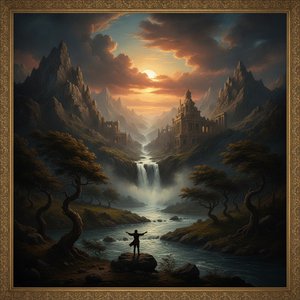
Epic Drama & Dark Vibes: The Ultimate Collector's Guide to Baroque Landscapes
Master the art of drama with our ultimate guide to Baroque landscapes. Discover the power of chiaroscuro, explore legendary masters, and learn how to curate epic, dark-vibe masterpieces for your collection with expert insights from OriginalUniqueArt.

浪漫主义画派的十部巨作:定义风景画的艺术传奇
探索浪漫主义风景画的巅峰!本文精选十部经典名作,带您领略莫奈、库尔贝等大师的艺术魅力。感受色彩与光影的诗意,重温自然风光的震撼。OriginalUniqueArt.com为您提供博物馆级别的艺术复制品和个性化家居装饰方案。尽在OriginalUniqueArt.com!

About Us
Discover our story! We bring world-class art into your life through expert curation, personalized creations, and free previews. Trusted by individuals and businesses since 2000.

戈雅大师25幅杰作:西班牙灵魂的艺术之旅| OriginalUniqueArt
探索戈雅大师的25幅杰作!深入了解西班牙绘画巨匠Francisco Goya的艺术世界,从洛可可到浪漫主义风格,感受黑加仑时代的情感力量。OriginalUniqueArt.com提供高品质油画复制品和家居装饰灵感。立即在线发现所有名画!

Evocations of Place: A Historical Journey Through Landscape Art
Explore the rich history of landscape art with OriginalUniqueArt. Discover renowned artists, movements like Impressionism & Romanticism, and expert guidance for collecting timeless pieces. Find your perfect serene escape today!