切换至版画销售渠道
 展开全文
展开全文







































 对于任何边长超过 105 厘米(约 41 英寸)的艺术品或复制品,画框将以拆解后的组件形式发货。此方法可确保安全送达并防止运输过程中的损坏。


A Portrait of Intellectual Grace: Sir William Huggins by John Maler Collier
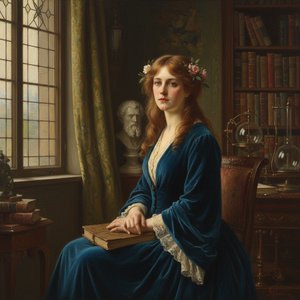
John Maler Collier’s “Sir William Huggins,” painted in 1905 and now residing within the esteemed National Portrait Gallery in London, is more than a simple likeness; it's a carefully constructed tableau of Victorian intellect and quiet dignity. The painting captures Sir William Huggins, a prominent astronomer whose groundbreaking work in astronomical spectroscopy fundamentally reshaped our understanding of celestial bodies, seated thoughtfully in a richly appointed red chair. Collier’s Pre-Raphaelite sensibilities are immediately apparent – the meticulous detail, the luminous color palette, and the subtle play of light and shadow all contribute to an atmosphere of contemplative beauty.
Collier's skill lies not merely in replicating a subject but in imbuing him with character. Huggins’ posture—hands clasped gently before him—suggests both intellectual engagement and a profound sense of inner peace. His gaze, directed slightly off-canvas, hints at the vastness of the universe he dedicated his life to exploring. The red chair itself is a deliberate element, providing a vibrant counterpoint to the muted tones of the background and drawing the viewer’s eye directly to the subject's face – a face etched with wisdom and quiet observation.
The Artist’s Hand: Technique and Style
As a leading figure in the Pre-Raphaelite movement, Collier was renowned for his painstaking attention to detail and his masterful use of color. “Sir William Huggins” exemplifies these qualities perfectly. The artist employs a layering technique, building up the image with thin glazes of oil paint to achieve remarkable depth and luminosity. Note the subtle variations in tone across Huggins’ face – the delicate shading around his eyes, the slight catch of light on his forehead—all contribute to a sense of realism that transcends mere representation. Collier's brushwork is remarkably controlled, creating a surface texture that is both smooth and subtly textured, inviting close inspection.
The composition is carefully balanced, with Huggins occupying the central space and the background receding into soft focus. The use of atmospheric perspective—the gradual darkening of colors as they recede into the distance—creates a sense of depth and spatial awareness. Collier’s ability to capture not just the physical appearance but also the psychological state of his subject is truly remarkable.
A Victorian Mind: Context and Significance
Sir William Huggins was a pivotal figure in 19th-century science, alongside his wife Margaret, whose own contributions to astronomical research were equally significant. Their collaborative work on spectroscopy revolutionized our understanding of the composition and properties of stars and nebulae. The painting reflects the Victorian fascination with scientific discovery and the growing recognition of the importance of intellectual pursuits. It’s a portrait not just of an individual but also of an era defined by its commitment to knowledge and exploration.
Furthermore, Collier's work was deeply influenced by the Pre-Raphaelite Brotherhood, which sought to revive the artistic conventions of the early Renaissance. This movement valued beauty, truth, and imaginative storytelling, often drawing inspiration from medieval art and literature. “Sir William Huggins” embodies these values through its meticulous detail, rich colors, and evocative atmosphere.
Symbolism and Emotional Resonance
Beyond its technical merits, "Sir William Huggins" is imbued with a quiet sense of dignity and contemplation. The subject’s posture and expression suggest a life dedicated to intellectual pursuits—a man who has found solace and fulfillment in the pursuit of knowledge. The red chair, often associated with royalty and power, subtly elevates Huggins' status, suggesting his importance within the scientific community.
The painting invites viewers to reflect on the nature of intellect, the pursuit of knowledge, and the enduring legacy of scientific discovery. It’s a timeless portrait that continues to resonate with audiences today, offering a glimpse into the mind of a brilliant astronomer and a testament to the power of art to capture the essence of human experience.
常见问题与解答
“Sir William Huggins”可以下载吗?
您可以在作品的下载数字图像页面下载约翰·马勒·科利尔 (Yuēhàn Mǎlè Kèlǐ'Ěr) 的《Sir William Huggins》,作为高分辨率数字图像下载。
馆藏于 国家美术馆 的 约翰·马勒·科利尔 (Yuēhàn Mǎlè Kèlǐ'Ěr) 的《Sir William Huggins》 是否可以进行合法复制?
《Sir William Huggins》的原作收藏于国家美术馆,该作品属于属于公有领域 —— 其版权已过期。
鉴于创作日期,"Sir William Huggins" 属于 约翰·马勒·科利尔 (Yuēhàn Mǎlè Kèlǐ'Ěr) 艺术生涯中的哪个阶段?
鉴于其创作于1905年,作品《Sir William Huggins》属于约翰·马勒·科利尔 (Yuēhàn Mǎlè Kèlǐ'Ěr)的Mature Period时期。
 实景预览
实景预览
 分享
分享 分享
分享
 详情
详情 指南
指南

 下载作品
下载作品
 相似作品
相似作品 X射线
X射线 幻灯片播放
幻灯片播放 问答
问答 统计数据
统计数据