

 实景预览
实景预览
 发送
发送 分享
分享
 详情
详情 指南
指南

 下载图片
下载图片
 相似作品
相似作品 X射线
X射线 幻灯片播放
幻灯片播放 统计数据
统计数据Steam Locomotive CP 003


 阅读全文
阅读全文
艺术微喷/版画
博物馆级艺术微喷或帆布版画,制作高效,并提供多种饰面选择。 ( 订购此收藏品的纯手工复刻画作 切换至数字图像销售渠道)




































您可以从与原作比例一致的预设尺寸中进行选择。

您可以输入自定义尺寸,以适配特定的画框或空间。如果您选择的尺寸与原图比例不符,我们将对作品进行裁剪,或通过镜像填充/纯色填充边缘的方式来扩展图像。在开始制作之前,我们会向您发送一份数字效果图供您确认。
请注意,屏幕上的预览并不能反映实际的裁剪或扩展效果。只有效果图才能准确展示最终的构图。
虽然我们提供定制尺寸,但为了保持原图比例,我们建议您从预设列表中选择尺寸。


 玻璃选项仅适用于110厘米以下的尺寸。

Steam Locomotive CP 003
艺术微喷/版画
复刻品尺寸说明
-


总计金额
$ 80
艺术家简介
John Cockerill (1790-1840): Pioneer of Belgian Industry
John Cockerill (August 3, 1790 – June 9, 1840) was a pivotal figure in the industrial revolution, renowned as an English-born industrialist who significantly shaped the landscape of Belgian industry. His legacy extends beyond mere business acumen; he pioneered advancements in steam engine technology and railway development, leaving an indelible mark on 19th-century engineering.
Early Life and Family Legacy
Born in Haslingden, Lancashire, England, John Cockerill's destiny was intertwined with his father, William Cockerill, a visionary British entrepreneur who had established himself as a prominent builder of wool-processing machinery in the Liège region of Belgium. William recognized the potential for industrial growth and brought young John to Verviers, Belgium, around 1802. This relocation proved crucial, immersing John in a world of mechanical innovation from an early age. The Cockerill family tradition focused on improving textile production through innovative machinery, laying the groundwork for John's future endeavors.
Rise as an Industrialist and Technological Innovation
Following his father’s retirement in 1813, John, alongside his brother Charles James Cockerill, assumed management of the family business. A key moment arrived in 1817 when they established the ironworks named "John Cockerill & Cie." (later Societe Anonyme Cockerill-Ougree). This marked a significant expansion beyond textile machinery into broader industrial production. The Seraing factory became a vertically integrated powerhouse, encompassing iron foundries and machine manufacturing. Under John's leadership, the company embraced cutting-edge technologies:
- Steam Engines: Cockerill’s factories produced a wide range of steam engines, including air-blowers, traction engines, and those for maritime use, significantly contributing to industrial power generation.
- Steel Production: The introduction of coke-fired blast furnaces in 1826 demonstrated Cockerill's commitment to modern steelmaking techniques.
- Railway Technology: A landmark achievement was the construction of "Le Belge" (The Belgian), Belgium’s first steam locomotive, in 1835, solidifying Cockerill’s role as a pioneer in railway technology.
Challenges and Legacy
Despite his remarkable achievements, John Cockerill's career faced significant challenges. Economic instability in the late 1830s, triggered by tensions between Belgium and the Netherlands, led to bankruptcy for his company in 1839. He embarked on a desperate mission to secure funding from Russia, but contracted typhoid fever and died in Warsaw in 1840 at the age of 49.
Despite this tragic end, Cockerill’s legacy endured. He was widely recognized as a humanitarian employer and the founder of Belgian manufacturing industry. His company continued to evolve through various mergers and acquisitions, with the Cockerill name remaining associated with engineering excellence for many years. A monument in Brussels commemorates his contributions to Belgium's industrial heritage, ensuring that John Cockerill’s pioneering spirit continues to inspire generations.

John Cockerill
1790 - 1840 , United Kingdom
快速概览
- Date Of Birth: August 3, 1790
- Date Of Death: June 9, 1840
- Full Name: John Cockerill
- Nationality: British, later Belgian
- Notable Artworks: ['Steam Locomotive CP 003']
- Place Of Birth (City And Country): Haslingden, United Kingdom
相关文章

工业美学崛起:现代艺术中的粗犷力量与精神回响
探索工业美学在现代艺术中的崛起!OriginalUniqueArt 提供专业艺术解读、定制油画及高品质艺术品。深入了解粗犷力量与精神回响,助力您的艺术收藏之旅。

约翰·辛格·萨金特:25幅大师级杰作,点亮您的艺术生活 | OriginalUniqueArt
探索约翰·辛格·萨金特25幅传世杰作!深入了解这位美国印象派大师的肖像画技巧、金色时代风格与艺术故事。OriginalUniqueArt.com提供高品质油画复制品,点亮您的室内设计,打造奢华艺术空间。立即在线探索完整系列!
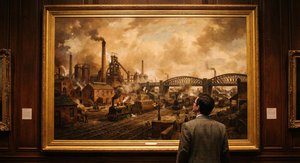
Industrial Revolution on Canvas: 10 Artworks That Define a Modern Aesthetic
Explore 10 iconic artworks capturing the Industrial Revolution’s grit & beauty. From Monet to Manet, discover realism, impressionism & powerful scenes of urban life. Find museum-quality reproductions for your home at OriginalUniqueArt.com.

Capturing the Steam & Steel: Impressionist Visions of the Industrial Age
Explore the breathtaking intersection of industry and art. Discover how Impressionist masters captured the ethereal beauty of steam, steel, and light during the Industrial Age through evocative oil paintings and timeless techniques.

康斯塔布尔大师之作:25幅传世风景画赏析 | OriginalUniqueArt
探索康斯塔布尔的25幅传世杰作!沉浸于英国田园风光,感受浪漫主义绘画大师的光影与色彩。高清油画复制、艺术品购买尽在OriginalUniqueArt.com,为您的家居增添经典之美。立即在线探索完整系列!