

 实景预览
实景预览
 发送
发送 分享
分享
 详情
详情 指南
指南

 下载图片
下载图片
 相似作品
相似作品 X射线
X射线 幻灯片播放
幻灯片播放 统计数据
统计数据设计墓碑图
 布面丙烯
布面丙烯- 墙面艺术品
- Neoclassical Sculpture
 17.0 x 10.0 cm
 耶鲁英国艺术中心
 阅读全文
阅读全文
艺术微喷/版画
博物馆级艺术微喷或帆布版画,制作高效,并提供多种饰面选择。 ( 订购此收藏品的纯手工复刻画作 切换至数字图像销售渠道)




P118B ¥10

P118H ¥10

P118W ¥10

P438Z ¥10

P508JH ¥12

P508YH ¥12

P805H ¥10

P805Z ¥10

P919BZ ¥10

P919G ¥10

P919XJ ¥10

P959ZH ¥10

P968JZ ¥12

W106C ¥8

W218G ¥10

W218JH ¥8

W218Y ¥10

W307PJ ¥10

W316G ¥10

W316PJ ¥8

W316Y ¥10

W398PJ ¥8

W4111J ¥10

W500HY ¥15

W500JH ¥15

W692G ¥12

W849H ¥8

W940BG ¥15

W953PJ ¥8




您可以从与原作比例一致的预设尺寸中进行选择。

请输入您所需的宽度和高度,以适配您的画框或墙面。由于印刷品只能进行裁剪,无法超出原图尺寸,因此若比例不一致,画面的一部分将会被裁切。在正式印刷之前,我们会为您发送一份数字效果图供您确认。本页面显示的图片并非最终裁剪后的效果——只有效果图才能展示真实的裁剪情况。


 玻璃选项仅适用于110厘米以下的尺寸。

设计墓碑图
艺术微喷/版画
复刻品尺寸说明
-


总计金额
¥ 538
设计理念与艺术风格:约翰·埃克斯坦的《墓碑设计》
约翰·埃克斯坦(1735年6月26日-1802年7月24日),是一位在18世纪法国艺术界极具才华的人物——一位贵族、肖像画家、素描家、小型装饰家和雕塑家。 他出生于法国南雅尔,成长于一个拥有艺术天赋的家庭背景中。 早期的生活为他未来的职业生涯奠定了坚实的基础。 虽然关于他的具体训练细节仍然有些模糊,但普遍认为他从父亲那里接受了绘画指导,后来在莫里斯·昆廷·德·图尔的资助下,这位著名的素描家以其精湛的肖像画技艺而闻名于世。 这早期的导师培养了他对技巧的深刻理解,特别是捕捉微妙细节和情感表达的能力——这些技能将成为他独特风格的标志性特征。 他于1760年迁居巴黎,开启了他的艺术生涯发展之路,并在首都艺术圈中不断攀升,继续在绘画领域精益求精。- 艺术家背景:约翰·埃克斯坦出生于德国南雅尔,父亲是一位画家,这为他学习艺术打下了基础。 他师从莫里斯·昆廷·德·图尔,这位著名素描家以其对肖像画的卓越技艺而著称。
- 艺术风格:埃克斯坦的作品体现了新古典主义风格,注重精确的线条和比例,以及对人物表情和姿态的细腻刻画。 他运用铅笔、炭黑和水洗技术,创造出具有立体感和真实感的作品。
作品解读与历史语境
《墓碑设计》是一幅黑白风格的绘画作品,展现了男性肖像艺术的巅峰之作。 画中人物身着长袍,双臂舒张,目光坚定而严肃,头部戴着帽子,象征着庄严和肃穆。 他旁边堆放着几袋货物,暗示着财富与社会地位。 背景中的其他小人物虽然并非主要焦点,但他们共同构成了作品的丰富视觉层次。 这幅画捕捉到了一个引人入胜的场景,男性形象作为艺术创作的核心。 作品创作于英国时期,反映了当时欧洲艺术审美和文化精神。 新古典主义风格强调理性与秩序,追求理想化的美学标准,这在墓碑设计中得到了淋漓尽致的体现。- 象征意义:长袍和帽子象征着尊贵和庄严,货物则代表着财富和社会地位。 这些元素共同营造出一种肃穆而富丽堂皇的气氛,表达了对逝者的哀思与敬意。
- 历史背景:作品创作于英国时期,当时新古典主义艺术在欧洲占据主导地位,埃克斯坦的作品体现了这一时代审美趋势。
技术运用与艺术魅力
埃克斯坦运用铅笔、炭黑和水洗技术进行绘画创作,力求准确地表现人物形象的结构和细节。 他对光影的处理非常出色,营造出一种立体感和真实感,使作品具有极强的视觉冲击力。 作品采用水彩纸作为材质,这种纸张具有细腻的纹理和良好的色彩表现能力,为作品增添了艺术魅力。 精湛的绘画技巧和对艺术美学的追求是埃克斯坦作品能够打动观众的关键所在。 这幅画不仅是一件艺术品,更是一种文化遗产,它记录了当时英国艺术家的创作精神和审美情趣。- 绘画技法:铅笔、炭黑和水洗技术相结合,能够准确地表现人物形象的结构和细节,并营造出一种立体感和真实感。
- 材质选择: 水彩纸具有细腻的纹理和良好的色彩表现能力,为作品增添了艺术魅力,也体现了艺术家对材料的精益求精追求。
总结与情感共鸣
约翰·埃克斯坦的《墓碑设计》是一幅充满力量和美感的作品,它不仅展现了新古典主义绘画的卓越技艺,更表达了艺术家对生命和死亡的思考与感悟。 作品以其庄严的气氛、精湛的技巧和深刻的象征意义,能够引发观众的情感共鸣,成为艺术史上的经典之作。 这幅画将继续激励着人们欣赏艺术的美丽与智慧,传承艺术的精神与文化价值。问答详情
在哪里可以购买到 Johann Eckstein 的《设计墓碑图》 的数字图像?
您可以在 Johann Eckstein 的《设计墓碑图》 的 数字图像 页面购买其数字图像:高分辨率数字图像下载。
"设计墓碑图" 的艺术家是谁?
"设计墓碑图" 的创作者是 Johann Eckstein。该作品以 Johann Eckstein 的名义编入目录。
Johann Eckstein 的《设计墓碑图》 的对比度有多强?
Johann Eckstein 的《设计墓碑图》 的对比度为 宁静。
艺术家简介
A Life of Artistic Versatility
Johann Eckstein stands as a remarkable testament to the boundless versatility required of a master craftsman during the late 18th century. Born in Poppenroth, Germany, he was the son of Conrad Eckstein, a skilled woodcarver and cabinet-maker, an upbringing that likely laid the foundation for his profound technical dexterity. His artistic journey was one of constant movement and adaptation, spanning the grand courts of Europe and the burgeoning landscape of America. A true polymath of the visual arts, Eckstein’s talent was not confined to a single medium; his oeuvre encompassed the delicate precision of engraving, the emotive power of portraiture, the tactile grace of pastel artistry, and the monumental presence of sculpture.
His formal training began at the Nuremberg Academy of Arts under the guidance of Preissler, providing him with the classical grounding necessary to navigate the prestigious artistic circles of his era. This education prepared him for a career that would see him move from the vibrant art scene of London to the royal splendor of Prussia, and eventually to the shores of the United States. Whether working in wax, marble, or ink, Eckstein possessed an intellectual curiosity that allowed him to master diverse techniques, making him a rare figure capable of addressing both the intimate scale of a portrait and the architectural demands of a public monument.
From European Courts to the New World
The trajectory of Eckstein’s career was marked by significant royal patronage and international transitions. During his time in London between 1758 and 1765, he established himself through notable achievements, such as working on the relief for the monument to Roger Townshend in Westminster Abbey and receiving prestigious premiums from the Society of Arts for his Portland stone reliefs. His reputation soon caught the attention of Frederick the Great, whose invitation led Eckstein to the Prussian court. As the principal sculptor at Potsdam and Sans Souci, he executed works that defined the neoclassical aesthetic of the era, later continuing his service under Frederick William.
Eckstein’s influence extended into the realm of fine porcelain and commemorative art, as seen in his modeling for the Berlin porcelain factory and his creation of death masks and wax busts. However, his life took a dramatic turn when he sought a new beginning in America. Arriving in Philadelphia by November 1793, he brought with him a wealth of European tradition, becoming a founder member of the Philadelphia Academy. Despite the challenges of settling in a new country—a struggle he lamented in his later years—he continued to exhibit works ranging from equestrian figures of George Washington to instructional texts like The American Drawing Magazine. His final chapter took him to Havana, where he passed away after a life defined by an unrelenting pursuit of artistic excellence across continents.
Technical Mastery and Artistic Legacy
The essence of Eckstein’s work lies in his ability to blend meticulous detail with profound emotional resonance. In his drawings and engravings, such as the Design for Funerary Monument, one observes a signature style characterized by restrained emotion and a somber reflection on the human condition. His use of techniques like precise hatching and cross-hatching allowed him to render textures with exceptional skill, creating a sense of gravitas that invited quiet introspection from the viewer. This technical precision was equally evident in his sculptural endeavors, where he could transition seamlessly from the delicate modeling of wax portraits to the heavy, enduring medium of marble.
Eckstein’s legacy is not merely found in individual masterpieces but in his role as a bridge between the established traditions of Europe and the developing artistic identity of America. His ability to master various disciplines—sculpture, engraving, painting, and even instructional writing—demonstrates a breadth of talent that few of his contemporaries could match. Through his work, he captured the neoclassical preoccupation with idealized form and dignified emotion, leaving behind a body of work that reflects both the Enlightenment ideals of his time and the personal resilience of a wandering master.

Johann Eckstein
1735 - 1818 , Germany
快速概览
- Artistic Movement Or Style: Neoclassical Sculpture
- Artists Who Influenced This Artist: ['Preissler']
- Full Name: Johann Eckstein
- Nationality: German
- Notable Artworks: ['Design for Funerary Monument']
- Place Of Birth: Poppenroth, Germany
- Date Of Birth: 1735
- Date Of Death: 1818
相关文章

The Enduring Form: Sculpture Across History, Technique & Emotional Resonance
Explore the rich history of sculpture with OriginalUniqueArt. Discover key techniques, influential artists & investment potential for discerning collectors. Expert insights into valuing and collecting timeless masterpieces.

The Enduring Form: Exploring Themes & Techniques in Sculpture Across Historical Periods
Explore the rich history of sculpture from ancient masterpieces to contemporary innovations. Discover key techniques, influential artists & investment potential for discerning art collectors.

Bronze Age to Modern Masters: 10 Sculptures That Redefined Art | OriginalUniqueArt
Journey through art history with 10 legendary bronze sculptures – from Michelangelo's David to Rodin’s Thinker. Explore the stories, techniques & timeless beauty of these masterpieces. Find museum-quality reproductions & elevate your home decor on OriginalUniqueArt.com.

Bronze Sculptures That Defined Art History | OriginalUniqueArt
Journey through art history with our Top 10 bronze sculptures! Explore masterpieces by Rodin, Michelangelo & more. Discover stories behind iconic statues and find museum-quality reproductions for your home decor at OriginalUniqueArt.com.
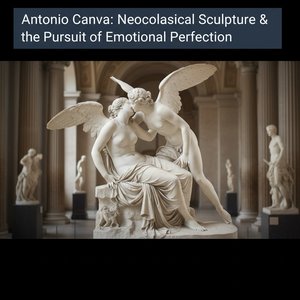
Antonio Canova: Neoclassical Sculpture & the Pursuit of Emotional Perfection
Explore the life & art of Antonio Canova, the greatest Neoclassical sculptor. Discover his masterpieces, innovative techniques, and lasting influence on fine art collecting. Expert insights for discerning investors.
