切换至版画销售渠道
 展开全文
展开全文







































 对于任何边长超过 105 厘米(约 41 英寸)的艺术品或复制品,画框将以拆解后的组件形式发货。此方法可确保安全送达并防止运输过程中的损坏。


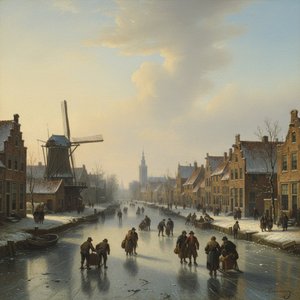
A Symphony of Light and Sky: The Essence of Windmill near Delft
In the quiet, sun-drenched landscapes of the Netherlands, certain moments possess a timeless quality that transcends the mere passage of years. Johan Barthold Jongkind’s 1857 masterpiece, Windmill near Delft, captures such a moment with unparalleled grace. This is not simply a landscape painting; it is a profound meditation on the ephemeral nature of light and the enduring spirit of the Dutch countryside. As the eye wanders across the canvas, one is immediately struck by the brilliant azure sky, where fluffy white clouds drift lazently, casting soft shadows upon the earth below. The composition is anchored by a solitary windmill, positioned with a deliberate, off-center elegance that guides the viewer’s gaze through a tranquil scene of rural life.
The painting serves as a vital bridge between the structured traditions of Dutch Romanticism and the burgeoning revolution of Impressionism. While the subject matter—a quintessential Dutch vista featuring a winding canal and figures engaged in daily rhythms—honors the heritage of masters like Vermeer, Jongkind’s technique whispers of a new era. He moves away from the rigid, meticulous outlines of his predecessors, opting instead for a loose, expressive brushwork that prioritizes atmosphere over anatomical precision. This approach allows the light to appear almost tactile, as if the viewer could feel the warmth of the sun filtering through an overcast afternoon. For the discerning collector or interior designer, this piece offers a sense of movement and vitality, making it a breathtaking focal point for any space seeking a touch of classical serenity paired with modern energy.
Technique and the Impressionistic Dawn
To study Windmill near Delft is to witness the early tremors of the Impressionist movement. Jongkind, a close contemporary and friend to Claude Monet and Eugène Boudin, utilized a palette that was both vibrant and harmoniously muted. His technique involves a sophisticated layering of oil paints to build depth and luminosity, creating a surface where colors bleed into one another with soft, feathered edges. The canal in the foreground acts as a mirror, reflecting the expansive heavens above and pulling the viewer deeper into the perspective of the landscape. This use of horizontal lines emphasizes the vastness of the Dutch horizon, instilling a sense of peace and boundless space.
The emotional resonance of the work lies in its ability to evoke nostalgia without descending into sentimentality. The scattered figures—women tending to flowers by the water’s edge and a man navigating a small boat—are not mere decorations; they are symbols of the quiet, industrious pulse of community life. There is a rhythmic quality to the composition, where the geometric strength of the windmill meets the organic, flowing shapes of the foliage and water. For those looking to adorn a home or gallery, this reproduction offers more than just aesthetic beauty; it provides an invitation to slow down and appreciate the fleeting, beautiful textures of the natural world.
常见问题与解答
“Windmill near Delft”采用了什么技法制作?
约翰·巴特霍尔德·容金德 在作品《Windmill near Delft》中运用了 Oil On Canvas 技法。该技法界定了原作的材质特性。
"Windmill near Delft" 的色彩呈现出浓郁还是柔和的视觉感?
约翰·巴特霍尔德·容金德 的《Windmill near Delft》 呈现出Balanced的色彩强度。
约翰·巴特霍尔德·容金德 的《Windmill near Delft》 的画面方向是怎样的?
约翰·巴特霍尔德·容金德 的《Windmill near Delft》 是一幅 Portrait 构图的作品。在选择打印尺寸之前,建议先确认其比例。
 实景预览
实景预览
 分享
分享 分享
分享
 详情
详情 指南
指南

 下载作品
下载作品
 相似作品
相似作品 X射线
X射线 幻灯片播放
幻灯片播放 问答
问答 统计数据
统计数据