 切换至版画销售渠道
 展开全文
展开全文







































 对于任何边长超过 105 厘米(约 41 英寸)的艺术品或复制品,画框将以拆解后的组件形式发货。此方法可确保安全送达并防止运输过程中的损坏。


The Texture of Existence: An Encounter with Vivre
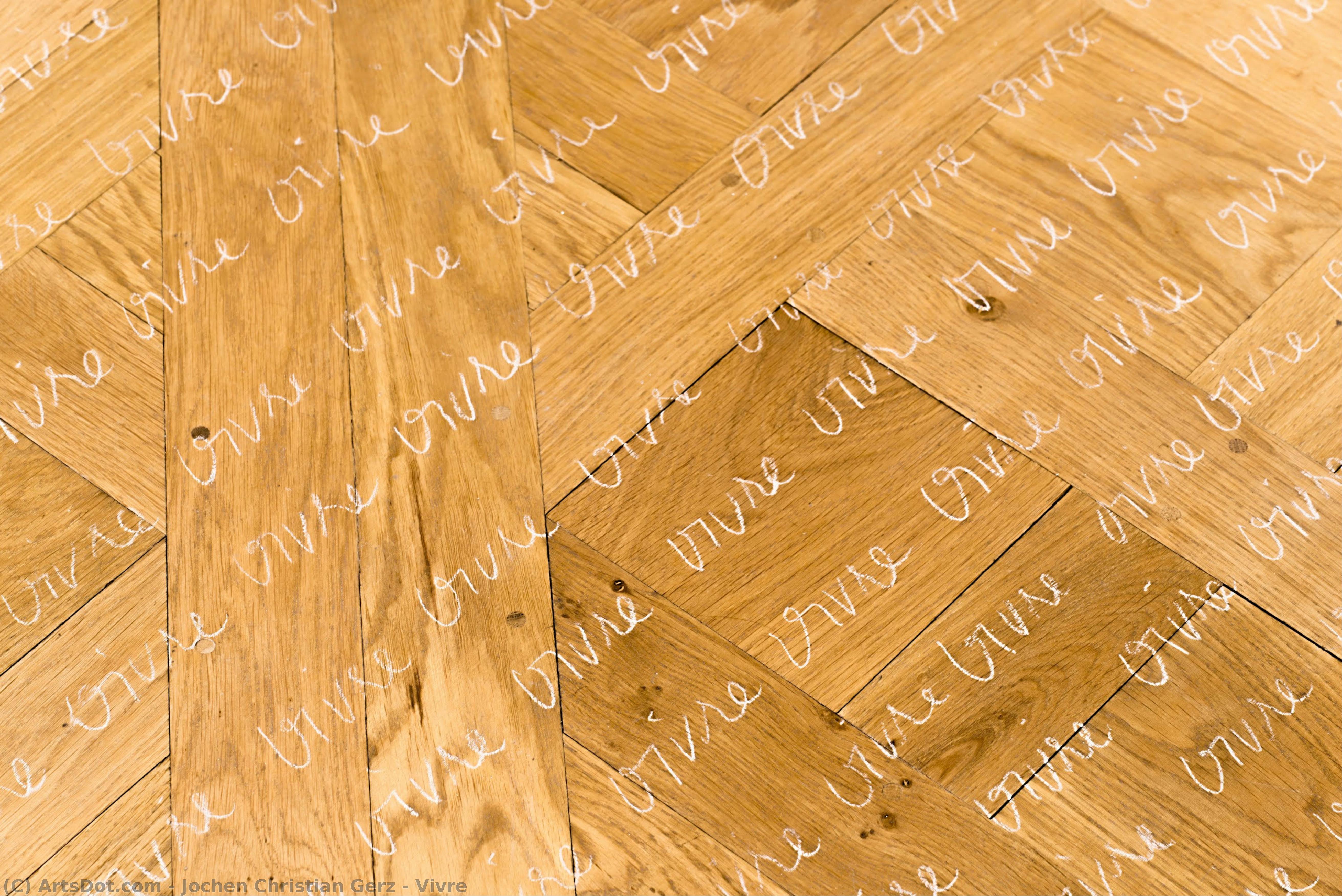
In the quiet, contemplative realm of conceptual art, few works manage to bridge the gap between the tangible material world and the ethereal layers of human thought as effectively as Jochen Christian Gerz’s Vivre. Created in 1974, this piece serves as a profound meditation on the very foundations upon which we stand. At first glance, the viewer is met with the warm, grounding presence of a wooden floor, its planks arranged in an intricate, geometric dance of light and shadow. The rich palette—ranging from honeyed ambers to deep, weathered browns—invites a tactile response, pulling the observer into a space that feels both ancient and immediate. It is a composition that celebrates the organic beauty of grain and timber, yet it refuses to remain merely decorative.
As one lingers on the surface, the true complexity of the work begins to unfold. The rhythmic, interlocking pattern of the wood provides a structural stability that is subtly disrupted by the presence of overlaid text. This layering technique transforms a simple photographic study of texture into a complex dialogue about language and presence. The white lettering, drifting across the wooden expanse, acts as a ghostly layer of consciousness superimposed upon the physical world. It suggests that our reality is never just the material ground beneath our feet, but is always being shaped, named, and redefined by the narratives we carry with us.
A Legacy of Memory and Public Dialogue
To understand Vivre, one must look toward the radical spirit of its creator. Jochen Christian Gerz, a pivotal figure in German contemporary art, emerged from the transformative energy of the late 1960s, a period defined by a desire to dismantle the boundaries between the artist and the public. His work has always been an architectural endeavor of memory, seeking to build spaces where history and individual experience intersect. In this 1974 piece, we see the seeds of his lifelong mission: the use of simple, accessible elements—wood, light, and text—to provoke deep inquiry into how we inhabit our world.
The title itself, meaning "To Live," provides a poignant emotional anchor. It elevates the subject matter from an abstract pattern to a philosophical inquiry. The piece asks us to consider the act of living as both a physical state and a linguistic construction. For the collector or the interior designer, this artwork offers more than just visual sophistication; it brings a sense of intellectual depth to a space. It is a work that demands a slow gaze, rewarding the viewer with a sense of peace derived from its symmetry, while simultaneously stirring a quiet curiosity about the layers of meaning hidden within the everyday.
An Essential Addition for the Discerning Collector
For those seeking to curate an environment of profound character, a high-quality reproduction of Vivre offers a unique opportunity to integrate conceptual mastery into a modern interior. The piece functions beautifully as a focal point in minimalist or contemporary settings, where its organic textures can soften the sharp lines of modern architecture. Its neutral yet warm tones allow it to harmonize with diverse color palettes, while its complex composition ensures it remains a conversation starter.
Owning a reproduction of this caliber is an investment in the history of conceptual thought. It allows the evocative power of Gerz’s vision—the interplay of the permanent and the transient, the physical and the cerebral—to reside within the home. Whether placed in a quiet study or a grand living space, Vivre serves as a constant, gentle reminder of the intricate beauty found in the textures of our shared existence.
常见问题与解答
"Vivre" 的画幅比例是多少?
"Vivre" 的画幅格式为 Landscape。这对于规划复制品的摆放位置非常有用。
"Vivre" 使用了怎样的色彩搭配?
约亨·克里斯蒂安·格尔茨 的《Vivre》 的色调被描述为 Pastels,这简练地概括了作品的色彩特征。
约亨·克里斯蒂安·格尔茨 的《Vivre》 描绘了什么内容?
"Vivre" 的描绘主题为 geometric patterns, wooden flooring, text overlay, minimalist design, abstract texture, photographic study, repetitive elements。
 分享
分享 分享
分享
 详情
详情 指南
指南

 下载作品
下载作品
 相似作品
相似作品 幻灯片播放
幻灯片播放 Q&A
Q&A 统计数据
统计数据