切换至版画销售渠道
 展开全文
展开全文







































 对于任何边长超过 105 厘米(约 41 英寸)的艺术品或复制品,画框将以拆解后的组件形式发货。此方法可确保安全送达并防止运输过程中的损坏。


Joan Miró: Decoding Catalan Dreams
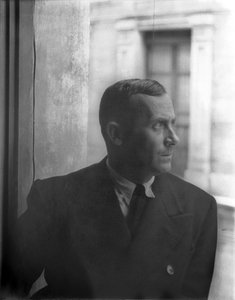
A Catalan Visionary: The Life and Art of Joan Miró Joan Miró i Ferrà, born in Barcelona in 1893, stands as one of the most significant figures in 20th-century art. His journey was not merely a progression through styles but an exploration of inner worlds, translating dreams, memories, and Catalan identity onto canvas with a uniquely poetic visual language. From humble beginnings marked by illness and initial parental reservations about his artistic pursuits, Miró persevered, driven by an innate need to express the intangible—the emotions, sensations, and subconscious currents that lie beneath the surface of reality. His early life was steeped in the traditions of Barcelona, a city brimming with architectural marvels thanks to Antoni Gaudí, whose organic forms would subtly influence Miró’s later abstractions. The goldsmithing profession of his father instilled an appreciation for meticulous craftsmanship, while the rugged Catalan landscape became a recurring motif and source of inspiraThe Birth of Surrealism
Miró's artistic breakthrough arrived during the tumultuous years following World War I, coinciding with the emergence of Surrealism—a movement spearheaded by André Breton that sought to liberate creativity from rational constraints. Influenced profoundly by Sigmund Freud’s psychoanalytic theories and fascinated by automatism—the spontaneous creation of images without conscious thought—Miró embraced techniques designed to tap into the subconscious mind. This fascination manifested in his use of collage, incorporating found objects and fragments of text alongside painted surfaces, creating layered compositions that defied conventional representation. Breton himself recognized Miró’s singular vision as embodying the essence of Surrealist aesthetics: “He is a painter who has discovered the secret of dreaming.”“Sèrie Grans rupestres”: An Eye to Eternity
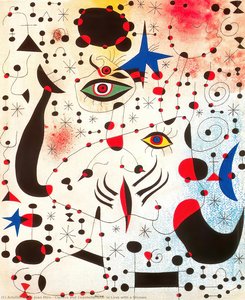
The painting "Sèrie Grans rupestres," or “Great Cave Paintings,” exemplifies Miró’s distinctive style—characterized by bold, biomorphic forms rendered in vibrant hues against stark white backgrounds. Dominating the canvas is a central eye-like shape, encircled by dots and lines that pulsate with energy. This motif isn't merely decorative; it represents a profound symbol of perception, awareness, and contemplation—a visual echo of prehistoric cave paintings depicting animals and human figures, suggesting an enduring connection to primal imagery and spiritual beliefs. The artist’s meticulous application of oil paint creates a textured surface that enhances the painting’s tactile quality, inviting viewers to engage with its visual richness on multiple levels.Technique and Material Considerations
Miró's artistic process involved layering techniques—primarily brushwork combined with collage elements—to achieve his desired effect. He began by applying thin washes of color onto the canvas, establishing a luminous foundation that allowed for subsequent additions of thicker paint strokes. These strokes were executed with confidence and precision, capturing the dynamism inherent in Miró’s vision. The incorporation of collage materials—such as newspaper clippings and fragments of fabric—added textural contrast and disrupted visual harmony, mirroring the chaotic nature of dreams and subconscious experience. Furthermore, Miró's careful selection of pigments ensured that his paintings retained their brilliance over time, reflecting a commitment to artistic excellence and enduring beauty.Emotional Resonance: Beyond Representation
Ultimately, “Sèrie Grans rupestres,” like much of Miró’s oeuvre, transcends mere visual representation—it communicates an emotional state rather than depicting a specific scene. The painting evokes feelings of wonder, curiosity, and perhaps even apprehension—mirroring the awe experienced when confronted with the immensity of geological time and the mysteries of the cosmos. It invites contemplation on themes of mortality, rebirth, and the enduring power of imagination. For interior designers seeking to infuse their spaces with artistic inspiration, Miró’s work offers a compelling counterpoint to conventional decorative styles—a celebration of spontaneity, abstraction, and the evocative beauty of dreamlike imagery.常见问题与解答
米罗 的《Sèrie Grans rupestres》传达了怎样的情感?
米罗 的《Sèrie Grans rupestres》 所传达的情感基调为 Calm,这概括了作品所表达的情绪。
米罗 的《Sèrie Grans rupestres》 是否属于公有领域?
米罗 的《Sèrie Grans rupestres》 的版权说明:该作品属于 仍受版权保护。这决定了是否可以自由进行图像复制。
"Sèrie Grans rupestres" 适合作为礼物送给谁,又适用于什么场合?
若想表达Accent之意,将“Sèrie Grans rupestres”作为送给Wedding的礼物是不错的选择。
 实景预览
实景预览
 分享
分享 分享
分享
 详情
详情 指南
指南

 下载作品
下载作品
 相似作品
相似作品 X射线
X射线 幻灯片播放
幻灯片播放 问答
问答 统计数据
统计数据