实景预览
实景预览
 发送
发送 分享
分享
 详情
详情 指南
指南

 下载图片
下载图片
 相似作品
相似作品 X射线
X射线 幻灯片播放
幻灯片播放 统计数据
统计数据House with Palm Tree
 Oil
Oil- WallArt
- Surrealism and Fauvism
 1918
1918- Modern
 65.0 x 73.0 cm
 阅读全文
阅读全文
艺术微喷/版画
博物馆级艺术微喷或帆布版画,制作高效,并提供多种饰面选择。 ( 订购此收藏品的纯手工复刻画作 切换至数字图像销售渠道)




P118B ¥10

P118H ¥10

P118W ¥10

P438Z ¥10

P508JH ¥12

P508YH ¥12

P805H ¥10

P805Z ¥10

P919BZ ¥10

P919G ¥10

P919XJ ¥10

P959ZH ¥10

P968JZ ¥12

W106C ¥8

W218G ¥10

W218JH ¥8

W218Y ¥10

W307PJ ¥10

W316G ¥10

W316PJ ¥8

W316Y ¥10

W398PJ ¥8

W4111J ¥10

W500HY ¥15

W500JH ¥15

W692G ¥12

W849H ¥8

W940BG ¥15

W953PJ ¥8




您可以从与原作比例一致的预设尺寸中进行选择。

请输入您所需的宽度和高度,以适配您的画框或墙面。由于印刷品只能进行裁剪,无法超出原图尺寸,因此若比例不一致,画面的一部分将会被裁切。在正式印刷之前,我们会为您发送一份数字效果图供您确认。本页面显示的图片并非最终裁剪后的效果——只有效果图才能展示真实的裁剪情况。


 玻璃选项仅适用于110厘米以下的尺寸。

House with Palm Tree
艺术微喷/版画
复刻品尺寸说明
-


总计金额
¥ 537
A Dreamscape in White and Blue: Unpacking Joan Miró’s “House with Palm Tree”
Joan Miró’s “House with Palm Tree,” painted in 1918, isn't merely a depiction of a building and a tree; it’s a portal into the artist’s subconscious, a vibrant distillation of Catalan identity, and a pivotal work marking his early experimentation with Surrealist and Fauvist aesthetics. Measuring a modest 65 x 73 cm, this painting immediately captivates with its bold color palette – primarily a luminous blue sky juxtaposed against the stark white facade of the house – yet it’s the underlying sense of playful abstraction and dreamlike logic that truly defines its power. Miró, already wrestling with the burgeoning artistic movements of his time, sought to capture not just what he *saw*, but what he *felt*—a deeply personal vision rendered in a language uniquely his own.
The composition itself is deceptively simple. A white house, almost luminous against the azure backdrop, dominates the foreground. Its architecture is stylized and somewhat simplified, hinting at a traditional Catalan farmhouse rather than a precise representation. A clock is prominently displayed on its side, a recurring motif in Miró’s work that often symbolizes time, memory, and the passage of experience. A palm tree, rendered with an almost childlike exuberance, stands proudly before the house, anchoring the scene and adding a touch of tropical exoticism – a subtle nod to Miró's native Catalonia. The inclusion of smaller buildings in the background suggests a village or community, grounding the dreamscape in a recognizable reality while simultaneously maintaining an element of mystery.
Echoes of Fauvism and Early Surrealism
“House with Palm Tree” firmly establishes Miró’s early engagement with both Fauvist and Surrealist principles. The vibrant, unmodulated colors—the intense blue sky, the stark white house—are characteristic of the Fauves, a movement known for its rejection of naturalistic representation in favor of expressive color. However, unlike the purely decorative use of color by the Fauves, Miró employs it to evoke emotion and create a sense of atmosphere. Simultaneously, the painting’s illogical composition, ambiguous forms, and dreamlike quality align it with the nascent Surrealist movement, which sought to unlock the power of the unconscious mind.
Miró's artistic journey during this period was marked by experimentation. He drew inspiration from a diverse range of sources – Van Gogh’s expressive brushstrokes, Cézanne’s geometric simplification, and the naive art traditions of Catalonia. This eclectic mix informed his unique style, characterized by biomorphic shapes, symbolic imagery, and a playful disregard for conventional perspective. “House with Palm Tree” exemplifies this synthesis, blending elements of observation with imaginative invention.
Symbolism and Catalan Identity
Beyond its formal qualities, "House with Palm Tree" is rich in symbolism. The house itself can be interpreted as representing the artist’s homeland – Catalonia – a place deeply ingrained in his identity and artistic vision. The palm tree, a prominent symbol of the Mediterranean region, further reinforces this connection. The clock, frequently appearing in Miró's work, may represent time, memory, or perhaps even the cyclical nature of life. Even the stark white color of the house could be seen as representing purity, simplicity, and the enduring spirit of Catalan culture.
Miró’s art was deeply intertwined with his personal experiences and cultural heritage. He frequently incorporated elements of Catalan folklore, mythology, and landscape into his paintings, creating a visual language that resonated with both local audiences and international collectors. “House with Palm Tree” is a testament to this commitment, offering a glimpse into the artist's inner world and his profound connection to his homeland.
A Legacy in Reproduction
OriginalUniqueArt.com offers meticulously crafted oil painting reproductions of "House with Palm Tree," allowing art enthusiasts and collectors to bring this iconic work into their homes. Our hand-painted reproductions capture not only the visual details but also the emotional depth and atmospheric quality of Miró’s original masterpiece. Each reproduction is created using traditional techniques and high-quality materials, ensuring a faithful representation of the painting's vibrant colors and dynamic composition. Owning a reproduction of “House with Palm Tree” is more than just acquiring a beautiful artwork; it’s an opportunity to connect with one of the 20th century’s most innovative and influential artists.
Further Exploration: For deeper insights into Joan Miró's life, work, and artistic influences, we encourage you to visit these resources: Joan Miró: House with Palm Tree, Joan Miró on Wikipedia, and explore the collections of the Fundació Joan Miró in Barcelona and Palma.
问答详情
建议将 "House with Palm Tree" 的 Landscape 格式作品陈列在什么位置?
米罗 的《House with Palm Tree》 的 Landscape 格式推荐用于 Living Room。画幅与空间的结合,将为您提供复制品摆放的指引。
米罗 的《House with Palm Tree》 使用的是什么媒介?
《House with Palm Tree》采用Oil创作。
米罗 的《House with Palm Tree》 的色彩饱和度如何?
米罗 的《House with Palm Tree》 展示了Balanced的色彩强度。
艺术家简介
卡達拉尼亞的幻象:米罗的一生与艺术
若昂·米罗·伊·费尔拉(Joan Miró i Ferrà),1893 年出生于巴塞罗那,是 20 世纪最具影响力的艺术家之一。他的旅程并非仅仅是风格的演变,而是对内心世界的探索,将梦想、记忆和加泰罗尼亚认同转化为画布上独具诗意的视觉语言。从最初因疾病和父母对其艺术追求的犹豫而带来的谦逊开端,米罗坚持不懈,由衷地需要表达难以捉摸的东西——潜藏于现实表象之下的情感、感觉和潜意识流。他早年的生活深深扎根于巴塞罗那的传统之中,这座城市拥有安东尼·高迪的建筑奇迹,而这些有机形态将微妙地影响米罗后来的抽象作品。他父亲是一位金匠,这培养了他对精湛工艺的欣赏,而崎岖的加泰罗尼亚景观则成为了他职业生涯中反复出现的主题和灵感来源。从早期影响到超现实主义之路
米罗正式的艺术训练始于巴塞罗那的拉洛蒂亚学院(La Llotja),在那里他磨练了传统技巧。然而,是接触到席卷巴黎的前卫运动真正点燃了他的创造性进化。 Fauvism 的鲜艳色彩和立体主义的分裂形式深深地引起了他的共鸣,促使他于 1920 年迁居巴黎。这一时期至关重要,因为他遇到了像巴勃罗·毕加索这样的艺术家,并开始尝试越来越抽象的构图。然而,米罗并非简单地采用这些风格;他将它们综合起来,开辟了他自己的独特美学之路。他力求提炼形式的本质,放弃表现性细节,转而使用象征性的形状和富有表现力的色彩。这种探索使他走上了超现实主义道路,于 1924 年加入了超现实主义团体,与马克·埃尔内斯特(Max Ernst)和萨尔瓦多·达利(Salvador Dalí)等艺术家结盟。虽然他拥抱了超现实主义对潜意识的兴趣,但米罗保持了一种独特的敏锐性——他的作品并非关于令人震惊的图像或弗洛伊德式的象征意义,而是关于创造一个充满趣味形式和诗意暗示的世界。符号语言:主要作品与艺术创新
在 1920 年代和 30 年代,米罗发展了他独特的视觉词汇——一个充满生物形态形状、漂浮形式和鲜艳色彩的世界。《农场》(1922)通常被认为是他的代表作之一,体现了这种转变。它不仅仅是对乡村生活的描绘,更是对加泰罗尼亚认同的唤起以及对自然世界的象征性表达。他与超现实主义艺术家合作,开创了诸如grattage等创新技术,该技术于 1926 年为谢尔盖·迪亚吉列夫(Sergei Diaghilev)的芭蕾舞剧设计服务,通过在画布上刮擦油漆来揭示纹理。荷兰内景(1928)系列展示了他以一种独特的现代视角重新诠释大师画作的能力,将家庭场景转化为梦幻般的抽象作品。《绘画》(1933)以其大胆的色彩和简化的形式,体现了米罗对潜意识的探索以及他对传统艺术边界的拒绝。除了绘画之外,米罗还勇敢地尝试雕塑、陶瓷和版画,拓展了他的创作视野,并展示了他非凡的多才多艺。遗产与持久的影响
若昂·米罗对 20 世纪艺术的影响是不可否认的。他不仅仅是一位画家;他还是一个挑战了艺术表达本身的定义的先驱者。他的作品为抽象表现主义铺平了道路,并继续激励着各个领域的艺术家。 他创建了两家基金会——巴塞罗那的若昂·米罗基金会(1975)和帕尔马德马拉加的皮拉尔·伊·若昂·米罗基金会(1981),确保了他的遗产将世代相传,为艺术探索和教育提供场所。 纵观他漫长的职业生涯,他始终致力于突破界限、质疑惯例并探索人类想象力的深度。 米罗的艺术是对抽象、象征意义和诗意表达力量的证明——对生活、梦想和加泰罗尼亚文化持久精神的充满活力的庆祝。他的作品继续引起世界各地观众的共鸣,邀请我们进入一个一切皆有可能的世界,现实与幻想之间的界限模糊成一种迷人的色彩和形式之舞。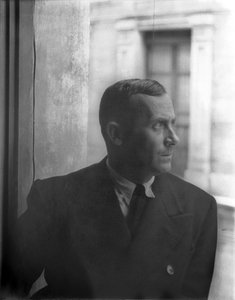
米罗
1893 - 1983 , 西班牙
快速概览
- Artistic Movement Or Style: 超现实主义,抽象艺术
- Artists Or Movements Influenced By This Artist:
- 超现实主义
- 抽象表现主义
- Artists Who Influenced This Artist:
- 梵高
- 塞尚
- Date Of Birth: 1893年4月20日
- Date Of Death: 1983年12月25日
- Full Name: 胡安·米罗
- Nationality: 西班牙国籍
- Notable Artworks:
- 《农场》
- 《荷兰内景》
- 《绘画》
- Place Of Birth: 巴塞罗那, 西班牙
相关文章
Arboreal Echoes: A Historical & Artistic Exploration of Trees in Painting
Explore the rich history of trees in painting! Discover symbolism, Romantic masterpieces by Caspar David Friedrich & beyond. A curated journey for art enthusiasts.
解读超现实主义:十幅定义艺术史的杰作
探索超现实主义的魅力!本文精选十幅定义艺术史的杰作,带您深入了解达利、马格里特等大师的创作故事与技法。从梦境到色彩,感受超现实主义的独特魅力。OriginalUniqueArt.com 提供高品质画作复制品及家居装饰灵感,尽在其中!
浮世奇想:十幅定义超现实主义的艺术杰作
探索超现实主义的十幅艺术瑰宝!从达利到马格里特,重温这些定义了梦境与想象力的杰作。深入了解艺术家故事、创作技法,感受色彩与情感的力量。OriginalUniqueArt.com为您提供博物馆品质画作复制及精选家居装饰方案。尽在OriginalUniqueArt.com!

Arboreal Echoes: A Historical & Artistic Exploration of Trees in Painting
Explore the rich history of trees in painting! Discover symbolism, Romantic masterpieces by Caspar David Friedrich & beyond. A curated journey for art enthusiasts.
米罗大师25幅杰作:探索超现实主义的色彩与诗意 | OriginalUniqueArt
探索米罗大师25幅经典画作,领略超现实主义的色彩与诗意。深入了解每件作品背后的故事、艺术技巧和文化意义。OriginalUniqueArt.com提供高品质米罗油画复制品,为您的家居增添艺术灵感!立即在线探索完整系列。