效果预览
效果预览
 分享
分享 分享
分享
 详情
详情

 下载
下载
 相似作品
相似作品 X射线
X射线 幻灯片播放
幻灯片播放 统计数据
统计数据Cabeza de mujer


 展开详情
展开详情
艺术微喷/版画
博物馆级艺术微喷或帆布版画,制作高效,并提供多种饰面选择。 ( 购买手绘画作 切换至数字图像销售渠道)




P118B $10

P118H $10

P118W $10

P438Z $10

P508JH $12

P508YH $12

P805H $10

P805Z $10

P919BZ $10

P919G $10

P919XJ $10

P959ZH $10

P968JZ $12

W106C $8

W218G $10

W218JH $8

W218Y $10

W307PJ $10

W316G $10

W316PJ $8

W316Y $10

W398PJ $8

W4111J $10

W500HY $15

W500JH $15

W692G $12

W849H $8

W940BG $15

W953PJ $8




从与原作比例一致的预设尺寸中进行选择。

您可以输入自定义尺寸,以适配特定的画框或空间。如果您选择的尺寸与原图比例不符,我们将对作品进行裁剪,或通过镜像填充/纯色填充边缘的方式来扩展图像。在开始制作之前,我们会向您发送一份数字效果图供您确认。
请注意,屏幕上的预览并不能反映实际的裁剪或扩展效果。只有效果图才能准确展示最终的构图。
虽然我们提供定制尺寸,但为了保持原图比例,我们建议您从预设列表中选择尺寸。


 玻璃选项仅适用于110厘米以下的尺寸。

Cabeza de mujer
艺术微喷/版画
复制品尺寸
-


最终总价
$ 80
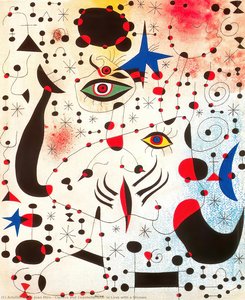
A Fragment of Dreams: The Visceral Power of Cabeza de Mujer
In the vast, labyrinthine landscape of 20th-century Surrealism, few works possess the raw, psychological magnetism of Joan Miró’s Cabeza de mujer. Painted during a transformative period between 1935 and 1940, this masterpiece serves as a profound window into the artist's subconscious. Rather than offering a traditional portrait, Miró presents us with a stylized, dreamlike visage that defies the boundaries of literal representation. The painting is an evocative exploration of identity and emotion, where the human form is deconstructed into a rhythmic dance of geometric shapes and organic flourishes. To gaze upon this work is to step into a realm where the distinction between reality and fantasy dissolves, leaving only the primal essence of the subject behind.
The visual language of Cabeza de mujer is defined by its striking, almost confrontational, palette. Miró utilizes a stark, dramatic tension through the interplay of deep blacks and a piercing, crimson red. This limited yet potent color scheme does more than just command attention; it mirrors the turbulent psychological landscape of an era marked by profound uncertainty. The technique itself—tempera on canvas applied with thick, expressive impasto strokes—lends a tactile physicality to the piece. These bold, textured marks create a sense of movement and spontaneity, as if the artist were capturing a fleeting thought or a sudden burst of emotion directly from the ether of his imagination.
Symbolism and the Shadows of History
Beyond its aesthetic brilliance, the artwork is deeply embedded in the historical currents of Catalonia. Created amidst the rise of Francisco Franco’s dictatorship following the Spanish Civil War, the painting breathes with the anxieties of a society under siege. For Miró, Surrealism was not merely an artistic choice but a tool for resistance—a way to articulate the suppressed truths and cultural identities that faced censorship. The composition, featuring eyes scattered across a face composed of circles, squares, and triangles, suggests a fragmented perception, perhaps reflecting the fractured state of a nation in turmoil. The inclusion of organic forms, reminiscent of roots or plant stems, intertwines the human experience with the very earth of Catalonia, grounding his abstract visions in a deep sense of place.
For the discerning collector or interior designer, Cabeza de mujer offers much more than visual intrigue; it provides an emotional anchor for a sophisticated space. The painting’s ability to evoke both unsettling tension and mesmerizing beauty makes it a versatile centerpiece for modern environments. Whether placed in a minimalist gallery setting or integrated into a richly textured living space, the work invites continuous contemplation. It is a piece that does not merely decorate a wall but transforms an atmosphere, offering a sophisticated dialogue between the viewer and the enduring legacy of one of art history's most visionary minds.
艺术家简介
卡達拉尼亞的幻象:米罗的一生与艺术
若昂·米罗·伊·费尔拉(Joan Miró i Ferrà),1893 年出生于巴塞罗那,是 20 世纪最具影响力的艺术家之一。他的旅程并非仅仅是风格的演变,而是对内心世界的探索,将梦想、记忆和加泰罗尼亚认同转化为画布上独具诗意的视觉语言。从最初因疾病和父母对其艺术追求的犹豫而带来的谦逊开端,米罗坚持不懈,由衷地需要表达难以捉摸的东西——潜藏于现实表象之下的情感、感觉和潜意识流。他早年的生活深深扎根于巴塞罗那的传统之中,这座城市拥有安东尼·高迪的建筑奇迹,而这些有机形态将微妙地影响米罗后来的抽象作品。他父亲是一位金匠,这培养了他对精湛工艺的欣赏,而崎岖的加泰罗尼亚景观则成为了他职业生涯中反复出现的主题和灵感来源。从早期影响到超现实主义之路
米罗正式的艺术训练始于巴塞罗那的拉洛蒂亚学院(La Llotja),在那里他磨练了传统技巧。然而,是接触到席卷巴黎的前卫运动真正点燃了他的创造性进化。 Fauvism 的鲜艳色彩和立体主义的分裂形式深深地引起了他的共鸣,促使他于 1920 年迁居巴黎。这一时期至关重要,因为他遇到了像巴勃罗·毕加索这样的艺术家,并开始尝试越来越抽象的构图。然而,米罗并非简单地采用这些风格;他将它们综合起来,开辟了他自己的独特美学之路。他力求提炼形式的本质,放弃表现性细节,转而使用象征性的形状和富有表现力的色彩。这种探索使他走上了超现实主义道路,于 1924 年加入了超现实主义团体,与马克·埃尔内斯特(Max Ernst)和萨尔瓦多·达利(Salvador Dalí)等艺术家结盟。虽然他拥抱了超现实主义对潜意识的兴趣,但米罗保持了一种独特的敏锐性——他的作品并非关于令人震惊的图像或弗洛伊德式的象征意义,而是关于创造一个充满趣味形式和诗意暗示的世界。符号语言:主要作品与艺术创新
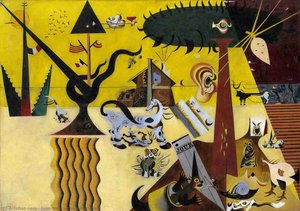
在 1920 年代和 30 年代,米罗发展了他独特的视觉词汇——一个充满生物形态形状、漂浮形式和鲜艳色彩的世界。《农场》(1922)通常被认为是他的代表作之一,体现了这种转变。它不仅仅是对乡村生活的描绘,更是对加泰罗尼亚认同的唤起以及对自然世界的象征性表达。他与超现实主义艺术家合作,开创了诸如grattage等创新技术,该技术于 1926 年为谢尔盖·迪亚吉列夫(Sergei Diaghilev)的芭蕾舞剧设计服务,通过在画布上刮擦油漆来揭示纹理。荷兰内景(1928)系列展示了他以一种独特的现代视角重新诠释大师画作的能力,将家庭场景转化为梦幻般的抽象作品。《绘画》(1933)以其大胆的色彩和简化的形式,体现了米罗对潜意识的探索以及他对传统艺术边界的拒绝。除了绘画之外,米罗还勇敢地尝试雕塑、陶瓷和版画,拓展了他的创作视野,并展示了他非凡的多才多艺。遗产与持久的影响
若昂·米罗对 20 世纪艺术的影响是不可否认的。他不仅仅是一位画家;他还是一个挑战了艺术表达本身的定义的先驱者。他的作品为抽象表现主义铺平了道路,并继续激励着各个领域的艺术家。 他创建了两家基金会——巴塞罗那的若昂·米罗基金会(1975)和帕尔马德马拉加的皮拉尔·伊·若昂·米罗基金会(1981),确保了他的遗产将世代相传,为艺术探索和教育提供场所。 纵观他漫长的职业生涯,他始终致力于突破界限、质疑惯例并探索人类想象力的深度。 米罗的艺术是对抽象、象征意义和诗意表达力量的证明——对生活、梦想和加泰罗尼亚文化持久精神的充满活力的庆祝。他的作品继续引起世界各地观众的共鸣,邀请我们进入一个一切皆有可能的世界,现实与幻想之间的界限模糊成一种迷人的色彩和形式之舞。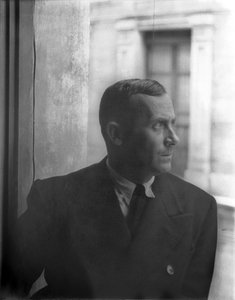
米罗
1893 - 1983 , 西班牙
艺术家简介
- Artistic Movement Or Style: 超现实主义,抽象艺术
- Artists Or Movements Influenced By This Artist:
- 超现实主义
- 抽象表现主义
- Artists Who Influenced This Artist:
- 梵高
- 塞尚
- Date Of Birth: 1893年4月20日
- Date Of Death: 1983年12月25日
- Full Name: 胡安·米罗
- Nationality: 西班牙国籍
- Notable Artworks:
- 《农场》
- 《荷兰内景》
- 《绘画》
- Place Of Birth: 巴塞罗那, 西班牙
相关文章

抽象表现主义:十幅定义艺术史的杰作
探索抽象表现主义的十幅经典杰作!波洛克、罗斯科等大师作品,揭秘艺术史上的重要瞬间。OriginalUniqueArt.com为您呈现高品质艺术品复制和精选家居装饰方案,感受现代艺术的力量与魅力。立即浏览全系列!
Beyond the Lines: Mastering the High-Impact World of Contemporary Abstraction
Master the high-impact world of contemporary abstraction. Discover how bold colors, textures, and modern movements like Abstract Expressionism can transform your space with premium, high-energy art curated for the design-conscious professional.
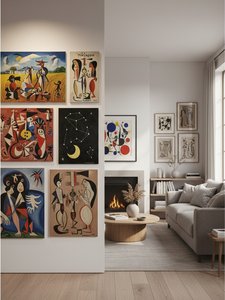
米罗大师25幅杰作:探索超现实主义的色彩与诗意 | OriginalUniqueArt
探索米罗大师25幅经典画作,领略超现实主义的色彩与诗意。深入了解每件作品背后的故事、艺术技巧和文化意义。OriginalUniqueArt.com提供高品质米罗油画复制品,为您的家居增添艺术灵感!立即在线探索完整系列。
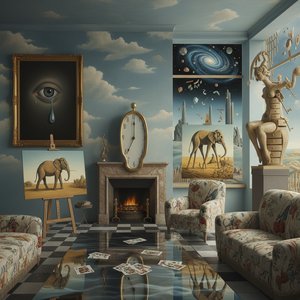
解读超现实主义:十幅定义艺术史的杰作
探索超现实主义的魅力!本文精选十幅定义艺术史的杰作,带您深入了解达利、马格里特等大师的创作故事与技法。从梦境到色彩,感受超现实主义的独特魅力。OriginalUniqueArt.com 提供高品质画作复制品及家居装饰灵感,尽在其中!

几何抽象艺术十大杰作:定义现代家居装饰的经典之作
探索几何抽象艺术的十大杰作!康定斯基、蒙德里安等大师作品,色彩构成与非具象之美。OriginalUniqueArt.com提供博物馆级艺术复制品,为您的家居带来现代艺术灵感。立即在线探索完整系列!