
() ·
为您亲手绘制的每一幅画作
手工油画复制品
由我们的艺术家按需定制,为您提供您所选尺寸及画框的布面手工油画。 ( 切换至版画销售渠道 切换至数字图像销售渠道)
藏品详情
Explore Jean Lurçat’s ‘Baigneuses,’ a captivating 1925 oil painting showcasing expressive figures & evocative landscapes. A key work by this influential French artist.
艺术家简介
Jean Lurçat (1892-1966) was a pivotal French artist who revitalized contemporary tapestry. Known for bold colors, abstract forms & themes of nature, travel, and social commentary. Explore his paintings, ceramics & influential designs.
 展开全文
展开全文
低于 ·
第1章
您需要多大的尺寸?
左右滑动以更改尺寸;左侧图片展示了画框的实际宽度。原图比例保持不变。
您可以从与原作比例一致的预设尺寸中进行选择。

请输入您需要的宽度和高度,以适配您的画框或墙面。由于作品为手工绘制,若选择不同比例的尺寸,艺术家可能会在画面边缘多画一些或稍作裁剪 —— 由您决定。在开始绘画之前,我们会为您发送一份数字效果图供您确认。本页面上展示的图片并非最终实物 —— 只有效果图才能反映真实结果。
第二章
您希望以何种方式送达?
选择绷边画布的边缘样式
选择您的画框

白色边缘 ¥1

边缘晕染效果 ¥1

延展式 ¥1

P118B ¥10

P118H ¥10

P118W ¥10

P438Z ¥10

P508JH ¥12

P508YH ¥12

P805H ¥10

P805Z ¥10

P919BZ ¥10

P919G ¥10

P919XJ ¥10

P959ZH ¥10

P968JZ ¥12

W106C ¥8

W218G ¥10

W218JH ¥8

W218Y ¥10

W307PJ ¥10

W316G ¥10

W316PJ ¥8

W316Y ¥10

W398PJ ¥8

W4111J ¥10

W500HY ¥15

W500JH ¥15

W692G ¥12

W849H ¥8

W940BG ¥15

W953PJ ¥8

H24-GOLD ¥30

H24-SILVER ¥30

H36-GOLD ¥45

H36-SILVER ¥45
带框
边框材质: . 含框总尺寸: .
第三章
谁创作了这幅作品,是否需要进行任何改动?
第四章
最后的润色
像博物馆里的那样,配上一块铭牌?
青铜铭牌雕刻详情
This elegant plaque features the artist's name and the title of the artwork, finely engraved for a timeless presentation.
It is made from bronze with a refined, elegant finish. The text is precisely laser-engraved for a sharp and permanent result. Measuring 9x2 cm, the plaque is compact yet easy to read. It's built to be durable and scratch-resistant, offering a professional, museum-quality look. Mounting is simple thanks to the included adhesive backing.
透明亚克力铭牌详情
The plaque includes essential engraved details such as the artist's name, the title of the artwork, the date it was created, the type of media used-like oil on canvas or watercolor-a brief description of the piece, and a QR code that links to the complete artwork information.
It is crafted from clear acrylic, offering a sleek, modern appearance. The text is UV-engraved in black to ensure strong visual contrast. With a size of 10x15 cm, it ensures optimal readability. It comes equipped with two metal hooks for secure wall mounting. The plaque is designed to be weather-resistant, making it suitable for various environments, and it includes interactive features that work seamlessly with smartphone scanning.
黑色亚克力铭牌详情
This elegant plaque includes engraved information such as the artist's name, the title of the artwork, the date it was created, the type of media used (like oil on canvas or watercolor), a short description of the artwork, and a QR code for quick access to more information.
The plaque itself is made from refined black acrylic with a premium finish. The text is laser-engraved in white for high contrast and readability. Its size is 10x15 cm, designed to be easy to read. It comes with two metal hooks for professional mounting. The design is sleek and fits any interior style. It is also weather-resistant and durable, with built-in digital integration for mobile compatibility.
需要保护性光油吗?
您预计何时收到?
第五章
您的画作,正如您所订购的那样

Baigneuses
复制品材质
复刻品尺寸
-

精选资深艺术家
更丰富的细节、更精湛的工艺以及更充裕的制作时间
-

复制画装裱选项
-
-
对于任何边长超过 105 厘米(约 41 英寸)的艺术品或复制品,画框将以拆解后的组件形式发货。此方法可确保安全送达并防止运输过程中的损坏。
需由专业人员组装 —— 本产品不适用于 DIY 操作。
该组件必须由经验丰富的专业装裱师进行组装及画布绷装,过程中需使用木工胶(不随附)、画布绷边钳以及夹具,以确保在胶水干燥期间保持内框方正。组装不当或画布张力不均可能会对艺术品造成永久性损坏,且此类情况不在我们的保修范围之内。
 对于任何边长超过 105 厘米(约 41 英寸)的艺术品或复制品,画框将以拆解后的组件形式发货。此方法可确保安全送达并防止运输过程中的损坏。
包含所有实木条,尺寸精确,便于组装。
使用随附的螺丝进行组装,另需准备用于角部连接的木工胶(本品不含木工胶),请由您的装裱师自行准备。
需另备专业工具(本套件不含):画布绷紧钳以及用于在胶水干燥过程中保持木条方正的夹具。
重要提示:
角部连接处需要使用木工胶,边框条必须使用夹具固定直至胶水完全干透,且在组装好的框架上绷紧画布需要用到画布拉伸钳。以上工具均不包含在套装内。请在订购此尺寸前,预先联系经验丰富的专业装裱师。

展品铭牌
-
-

保护性清漆
光泽清漆(提亮色彩,防光防潮)
-

定制我的艺术品
定制化示例:替换面部为客户照片;添加宠物(例如,将猫替换为狗);在背景中加入隐藏信息;更改背景风景或元素。
-

加急
全球配送()仅需 3-4 周即可送达,无需等待标准时效的 5 周。(4 November)。品质始终如一,绝不妥协。
-
极速达
全球配送(),预计 5 周送达。(11 November)。
已包含
最终结算价
¥ 2014
玻璃选项仅适用于110厘米以下的尺寸。
每份订单均包含
- 全球免运费特快专递服务
- 优质亚麻画布
- 全程运输保险
- 关税退款保证
- 色彩精准还原保证
- 100天退货保障(仅限制造缺陷)
- 100% 退款保证
- 多件购买优惠


 实景预览
实景预览
 分享
分享 分享
分享
 详情
详情 指南
指南

 下载作品
下载作品
 相似作品
相似作品 X射线
X射线 幻灯片播放
幻灯片播放 问答
问答 统计数据
统计数据数据概览
- 1925创作年份
- 29可选画框
- 标准尺寸,各具比例
- 5需数周时间进行绘制与交付
关于原作

- 40.0 x 68.0 cm


Jean Lurçat
1892 - 1966, France
关于 Jean Lurçat 的简介
- Artistic Movement Or Style: Contemporary tapestry revival
- Artists Who Influenced This Artist:
- Victor Prouvé
- Bernard Naudin
- Jean-Paul Lafitte
- Date Of Birth: 1892
- Date Of Death: 1966
- Full Name: Jean Lurçat
- Nationality: French
- Notable Artworks:
- Filles vertes
- Soirée dans grenade
- Place Of Birth: Bruyères, France
艺术家简介
The Weaver of Modernity: The Life and Legacy of Jean Lurçat
In the grand tapestry of twentieth-century art, few figures loom as large or as textured as Jean Lurçat. Born in 1892 in the quiet town of Bruyères, France, Lurçat’s journey was one of profound transformation, moving from the rigorous study of medicine to the vibrant, tactile world of textile and pigment. His early years were shaped by a deep intellectual curiosity, leading him through the halls of the Faculté des Sciences de Nancy before he ultimately abandoned the stethoscope for the studio. This transition was not merely a change in profession but a spiritual migration toward the essence of form and color. Settling in Paris alongside his brother André, Lurç at found himself at the epicenter of a burgeoning modernism, rubbing shoulders with luminaries such as Matisse, Cézanne, and Renoir. These encounters infused his early work with a sense of structural boldness and a palette that would later define his revolutionary approach to medium.
The turbulence of the First World War left an indelible mark on Lurçat’s psyche and creative output. Having served in the infantry only to be sidelined by injury, his period of convalescence became a crucible for artistic experimentation. It was during these years of forced stillness that he began to explore the intimate relationship between line and surface, eventually leading to his first significant forays into tapestry with works like Filles Vertes and Soirée dans Grenade. His travels through Switzerland, Germany, and Italy provided a rich reservoir of classical and contemporary motifs, allowing him to weave together the ancient traditions of European craftsmanship with the avant-garde sensibilities of his era. By the time he established himself in Paris with Marthe Hennebert, Lurçat was no longer just a painter; he was an architect of thread.
A Revolution in Thread and Color
Jean Lurçat’s most enduring contribution to the art world was nothing less than the resurrection of contemporary tapestry. Before his intervention, tapestry was often viewed as a stagnant, decorative relic of the past—a medium relegated to mere imitation of painting. Lurçat shattered this perception by introducing a new aesthetic language that respected the inherent properties of the loom. He moved away from the fine, painterly details that required excessive shading and instead embraced bold, flat areas of color and strong, rhythmic outlines. This technique, often referred to as "the return to the large-scale," allowed the tapestry to breathe as an independent art form rather than a secondary reproduction.
His mastery lay in his ability to manipulate light and texture through a limited but potent palette. By focusing on the structural integrity of the weave, he created works that possessed a monumental presence. His themes were as varied as they were profound, ranging from:
- The Natural World: An obsession with flora and fauna that brought the organic rhythms of life to the loom.
- Social Commentary: Using the grand scale of tapestry to address the human condition and the complexities of modern society.
- Abstracted Form: A movement toward simplification that bridged the gap between figurative storytelling and modern abstraction.
Historical Significance and Lasting Impact
The significance of Jean Lurçat extends far beyond the borders of France or the confines of the textile industry. He was a pivotal figure in the Aubusson tapestry tradition, breathing new life into one of Europe's most historic artistic centers. Through his leadership and vision, he transformed a dying craft into a vibrant medium for modern expression, influencing generations of weavers and designers. His work served as a bridge between the classical heritage of the Renaissance and the experimental spirit of the mid-twentieth century.
Even as his career expanded into ceramics and diverse graphic arts, the core of his mission remained unchanged: to find the soul within the material. Today, when we look upon the bold, saturated landscapes and powerful silhouettes of a Lurçat original, we see more than just art; we see the triumph of a man who looked at a single thread and saw the potential for an entire universe. His legacy remains etched in the very fabric of modern art history, reminding us that true innovation often requires a profound respect for the traditions we seek to transform.
相关文章

Jean-Michel Basquiat: Deconstructing Identity & Power Through Neo-Expressionist Graffiti
Explore the powerful work of Jean-Michel Basquiat & his impact on Neo-Expressionism. Discover how he deconstructed identity, challenged power structures, and left an enduring legacy in contemporary art. Expert analysis for collectors.
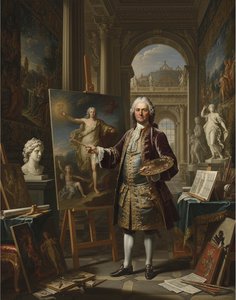
Charles Le Brun: Master of French Baroque Classicism & His Enduring Legacy
Explore the life & art of Charles Le Brun, master of French Baroque Classicism. Discover his royal commissions, influence on Versailles, and enduring legacy through detailed analysis & stunning artworks.
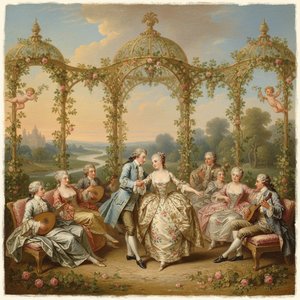
Jean-Baptiste Pater: Rococo Charm & Ephemeral Beauty of 18th-Century France
Explore the captivating world of Jean-Baptiste Pater, a master of Rococo painting. Discover his elegant *fête galante* scenes and shimmering portraits – a glimpse into 18th-century French aristocracy. Learn about his legacy & find high-quality reproductions.
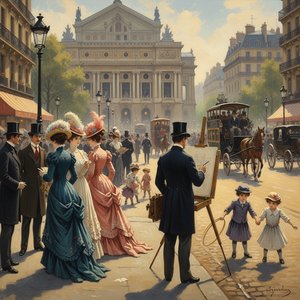
Jean-Georges Béraud: Capturing Parisian Life in the Belle Époque
Explore the captivating world of Jean-Georges Béraud, master painter of Belle Époque Paris. Discover his iconic scenes, artistic evolution, and social commentary. A deep dive into 19th-century French art.