切换至版画销售渠道
 展开全文
展开全文







































 对于任何边长超过 105 厘米(约 41 英寸)的艺术品或复制品,画框将以拆解后的组件形式发货。此方法可确保安全送达并防止运输过程中的损坏。


A Symphony of Blooms: Jean-Baptiste Monnoyer's "Fleurs"
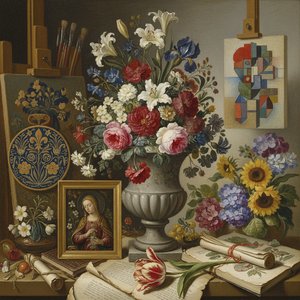
This captivating still life, titled “Fleurs,” showcases the remarkable talent of Jean-Baptiste Monnoyer, a prominent Franco-Flemish painter celebrated for his exquisite floral depictions. Dating from an unknown period within his career (1636-1699), this artwork exemplifies the Baroque style prevalent in 17th-century European art, particularly admired in France and Flanders. The composition presents a lavish arrangement of flowers spilling forth from an earthenware vase, set against a dramatically dark background that intensifies the vibrancy of the blossoms. It’s a testament to Monnoyer's skill in capturing both botanical accuracy and artistic beauty.Baroque Opulence: Style & Technique
Monnoyer’s style is firmly rooted in the Baroque tradition, characterized by its rich color palettes, dramatic lighting, and meticulous attention to detail. The painting utilizes oil paints on canvas, allowing for subtle gradations of tone and texture achieved through layered application – a technique often referred to as impasto in certain areas where the paint sits thickly upon the surface. Observe how the artist masterfully uses light; it appears to emanate from above and slightly left, highlighting the petals and vase while plunging much of the background into shadow. This creates a striking contrast that draws the viewer's eye directly to the floral display. The composition itself is vertically oriented, emphasizing the height and grandeur of the arrangement. Lines are primarily defined by the edges of petals, stems, and leaves, contributing to a naturalistic feel, while flowing lines within the arrangement create a sense of movement and life.A Language of Flowers: Symbolism & Emotional Resonance
Floral still lifes during the Baroque period were far more than mere decorative objects; they carried profound symbolic weight. Flowers often represented themes of transience – the fleeting beauty of life, mirroring the ephemeral nature of blossoms. The abundance depicted in this painting can symbolize prosperity and joy, while the dark background introduces a touch of mystery or contemplation, hinting at the inevitability of decay and mortality—a common *vanitas* motif within the era. The careful selection and arrangement of specific flower types could also have conveyed hidden meanings known to contemporary audiences; though these are now often lost to time, they add another layer of intrigue to the artwork's interpretation. The overall emotional impact is one of luxurious beauty tempered with a subtle awareness of life’s fragility.Monnoyer: A Master of Floral Art
Jean-Baptiste Monnoyer (1636-1699) was highly regarded in his time, serving as a vital link between the artistic world and the decorative arts. He worked extensively for the Gobelins and Beauvais tapestry workshops, creating cartoons—preliminary designs—for their elaborate tapestries. His skill in depicting flowers and fruit made him an invaluable asset to these prestigious institutions. His acceptance into the Académie Royale de Peinture et de Sculpture in 1665 solidified his reputation as a leading artist of his generation. This "Fleurs" painting exemplifies Monnoyer’s dedication to botanical accuracy combined with artistic flair, making it a compelling example of Baroque floral still life and a testament to his enduring legacy.常见问题与解答
"Fleurs" 的主题与 让-巴蒂斯特·莫诺耶 常有的创作主题有何关联?
"Fleurs" 描绘了 still life, flowers, vase, baroque, floral, arrangement, opulence, earthenware,而 让-巴蒂斯特·莫诺耶 的创作主题则以 dutch golden age still life tradition, baroque emphasis on detail & richness, typical of monnoyer's floral specialty, reflects his work for tapestry workshops, demonstrates mastery of color & texture, celebration of natural beauty, vanitas symbolism (transience), display of wealth and luxury 见长。通过两者的对比,可以发现此作与艺术家惯用题材之间的内在联系。
我可以在不同的光线下查看让-巴蒂斯特·莫诺耶 的《Fleurs》吗?
您可以在作品的 X射线透视 页面上逐层探索 “Fleurs”;该交互式查看器的设计灵感源自修复师使用的光源台,通过十一层光学读数呈现图像细节。
"Fleurs" 属于哪种艺术风格?
让-巴蒂斯特·莫诺耶 的《Fleurs》 所属的艺术流派为 Baroque。这一分类将该作品置于相关艺术家及艺术作品的语境之中。
 实景预览
实景预览
 分享
分享 分享
分享
 详情
详情 指南
指南

 下载作品
下载作品
 相似作品
相似作品 X射线
X射线 幻灯片播放
幻灯片播放 Q&A
Q&A 统计数据
统计数据