

 分享
分享 分享
分享
 详情
详情 指南
指南

 下载作品
下载作品
 相似作品
相似作品 幻灯片播放
幻灯片播放 Q&A
Q&A 统计数据
统计数据Winter


 展开全文
展开全文
艺术微喷/版画
博物馆级艺术微喷或帆布版画,制作高效,并提供多种饰面选择。 ( 订购纯手工绘制画作 切换至数字图像销售渠道)




































您可以从与原作比例一致的预设尺寸中进行选择。

请输入您所需的宽度和高度,以适配您的画框或墙面。由于印刷品只能进行裁剪,无法超出原图尺寸,因此若比例不一致,画面的一部分将会被裁切。在正式印刷之前,我们会为您发送一份数字效果图供您确认。本页面显示的图片并非最终裁剪后的效果——只有效果图才能展示真实的裁剪情况。


 玻璃选项仅适用于110厘米以下的尺寸。

Winter
艺术微喷/版画
复刻品尺寸
-


最终结算价
¥ 537
Jean-Antoine Houdon’s “Winter”: A Bronze Study in Melancholy
Jean-Antoine Houdon's "Winter," sculpted from rich, dark bronze around 1768, isn’t merely a depiction of a woman; it’s an embodiment of profound sorrow and introspective isolation. This remarkable piece transcends the typical allegorical representation of winter, offering instead a deeply human portrait of vulnerability—a subject rarely explored with such poignant realism in sculpture of its time. Houdon, a pivotal figure bridging the Rococo and Neoclassical eras, was driven by a desire to capture not just likeness but the very essence of his subjects, their intellect and inner lives. “Winter” exemplifies this ambition, presenting a woman shrouded in heavy drapery, her face obscured, creating an immediate sense of mystery and suppressed emotion.
The sculpture’s style firmly anchors it within the Neoclassical movement, yet Houdon departs significantly from the idealized forms favored by many of his contemporaries. He eschews polished grace for a raw, almost brutal honesty in portraying the figure's slumped posture and tightly drawn limbs. This deliberate roughness contrasts sharply with the smooth surfaces typically associated with Neoclassicism, suggesting a rejection of superficial beauty in favor of genuine emotional expression. The bronze itself is meticulously crafted, showcasing Houdon’s mastery of lost-wax casting – a technique that allows for incredible detail and textural complexity. Notice the subtle variations in tone across the surface; areas are polished to a mirror sheen while others retain a slightly rougher texture, mimicking the feel of the heavy fabric draped over the figure.
The Language of Concealment
Symbolism permeates “Winter,” inviting multiple interpretations. The woman’s concealment—her face hidden beneath the dark drapery—is arguably the sculpture's most potent element. It speaks to a multitude of potential meanings: secrets carefully guarded, trauma experienced and repressed, or perhaps a deliberate desire for isolation from the world. Houdon himself recognized this ambiguity, stating that the figure might be “a seminaked girl rather than an allegorical figure.” This intentional lack of definitive identification forces the viewer to confront their own emotions and project their understanding onto the sculpture.
The heavy fabric isn’t simply decorative; it actively contributes to the sense of despair. It wraps around her, restricting movement and suggesting a feeling of being trapped or overwhelmed. The pose itself—slumped shoulders, bowed head—conveys a deep sadness and inward focus. Houdon masterfully uses light and shadow to further enhance this emotional impact. Notice how the folds of the drapery create pockets of darkness that obscure parts of the figure’s body, while strategically placed highlights accentuate the contours of her form, emphasizing both her vulnerability and her inherent strength.
Historical Context and Artistic Innovation
Houdon's "Winter" emerged during a period of significant social and political upheaval in France – the waning years of the monarchy and the rise of revolutionary ideals. Sculptors like Houdon were increasingly interested in capturing the psychological complexities of their subjects, moving beyond mere likeness to explore themes of human emotion and experience. This shift towards emotional realism was partly influenced by Enlightenment philosophy, which emphasized reason and individual consciousness.
Furthermore, Houdon’s decision to portray winter as a partially clothed woman represented a radical departure from traditional artistic conventions. Previous depictions of winter often featured an old man, symbolizing the inevitability of aging and decline. By choosing a young female figure, Houdon challenged conventional notions of beauty and introduced a new level of vulnerability into the representation of this season. The sculpture’s influence can be seen in later works by artists like Gustave Courbet, who similarly explored themes of social alienation and emotional distress.
A Timeless Study in Human Emotion
“Winter” remains a profoundly moving work of art, captivating viewers with its raw honesty and evocative symbolism. It’s not simply a beautiful sculpture; it's an invitation to contemplate the complexities of human emotion—sorrow, isolation, and the enduring power of the human spirit. Reproductions of this piece offer a remarkable opportunity to bring this powerful image into any space, serving as a constant reminder of the beauty found in vulnerability and introspection.
常见问题与解答
建议将"Winter"用于何处及何种用途?
让-安托万·胡栋 (Ràng Ān Tuō Wěn · Hú Dòng) 的《Winter》 推荐用于 Statement,理想的摆放空间为 Living Room。结合使用场景与空间布局,可以更好地确定复制品的陈列位置。
"Winter" 的明暗对比是否强烈?
让-安托万·胡栋 (Ràng Ān Tuō Wěn · Hú Dòng) 的《Winter》 在明暗区域之间呈现出 Bold 的对比度。
如何发现与 让-安托万·胡栋 (Ràng Ān Tuō Wěn · Hú Dòng) 的《Winter》 风格相近的艺术品?
与 让-安托万·胡栋 (Ràng Ān Tuō Wěn · Hú Dòng) 的《Winter》 相似的作品已汇集在作品的 相似作品 页面中。
艺术家简介
启蒙运动的雕塑家
让-安托万·胡栋,1741年出生于凡尔赛宫,是连接洛可可时代和新古典主义时代的关键人物——一位作品体现了十八世纪知识分子热情和不断变化的审美观念的雕塑家。他的一生经历了法国社会剧烈的转变,从君主制的衰落到革命动荡和拿破仑时代的兴起。然而,胡栋在他的艺术视野中保持着惊人的连贯性:不仅仅捕捉外貌,而是以持久的大理石和青铜形式捕捉他的受试者的本质——他们的智慧、性格和内心世界。这种奉献精神源于他对雕塑的早期天赋,并在1752年开始在皇家绘画与雕塑学院接受正式训练,师从尊敬的雕塑家勒内-米歇尔·斯洛茨、让-巴蒂斯特·勒莫因和让-巴蒂斯特·皮加尔。随后,他于1761年至1764年进入皇家学生学校深造,最终在1761年荣获罗马奖——这项殊荣使他获得了与意大利古典艺术亲身接触的宝贵学习时间,这段经历深刻地塑造了他的审美观念。真实性的艺术与心理洞察力
胡栋的雕塑以其惊人的现实主义和一丝不苟的细节而立刻为人所识别。他不满足于简单复制外貌特征;他试图穿透表面,揭示内在的人格和智慧。这种对真实性的承诺源于他对解剖学的深刻迷恋——这在他的著名青铜雕塑《健壮男子侧面像》中显而易见——以及坚定不移的观察力。与许多同时代艺术家不同,胡栋拥抱瑕疵,认为它们有助于更真实和引人入胜的描绘。他采用了创新的技术,包括直接从真人身上取模,使他能够以前所未有的准确性捕捉细微的细节。这种方法在他的人物胸像中尤为明显,这些胸像成为了他的标志性成就。这些不仅仅是静态的代表;它们是对性格的动态研究,充满了心理深度和情感共鸣。胡栋能够传达的不只是*如何*看待某人,而是*他们是谁*,这使他脱颖而出。他通过微妙的表情、姿势以及对细节的处理来实现这一点,例如眼睛——通常雕刻成略微凹陷以捕捉光线游戏并暗示内在的思想。不朽一个时代:启蒙运动人物群像
胡栋客户的广度可以被看作是那个时代最有影响力思想家、作家、政治家和领导人的名副其实的名单。他将丹尼斯·狄德罗塑造成了具有非凡敏感性的哲学家,捕捉到了他的知识强度和非常规精神。本杰明·富兰克林在法国外交任务期间被描绘成一个充满智慧和务实精神的人,他的目光既精明又仁慈。让-雅克·卢梭的雕塑以其典型的同情心为特征,体现了定义了他的哲学的激情和忧郁。也许最著名的是,胡栋雕刻了伏尔泰——为喜剧法兰斯创作了多个版本的著名作家,捕捉到了他的机智和智慧能量。除了这些知识巨匠之外,胡栋还从皇室那里获得了委托,特别是路易十六世,以及像拿破仑·波拿巴这样冉冉升起的政治人物。然而,他受弗吉尼亚总议会委托雕刻的乔治·华盛顿雕塑巩固了他在美国文化偶像中的地位。这座真人大小的大理石雕像——基于细致的测量和在华盛顿总统任期内拍摄的生活面具——成为了美国第一任总统的决定性形象,为无数版画和复制品提供了模型,甚至几十年来出现在美国邮票上。他还雕刻了托马斯·杰斐逊,进一步巩固了他跨大西洋的遗产。遗产与持久的影响
让-安托万·胡栋对雕塑世界的影响是不可否认的。他将肖像艺术提升到一种能够深刻的心理洞察力和历史记录形式。他对现实主义的奉献精神,结合了他捕捉受试者本质的能力,为雕塑表现树立了新的标准。在他的一生中,他获得了广泛的认可,于1804年被任命为荣誉军团骑士,并于1809年被任命为帝国骑士——证明了他法国社会中的崇高地位。即使在他后来的岁月里,胡栋继续创作重要的作品,直到他在巴黎去世(1828年7月15日),表现出他对工艺的坚定承诺。他的雕塑今天仍然受到高度重视,不仅因为它们的艺术价值,而且还因为它们为启蒙运动时代的生活和时间提供了宝贵的见解。胡栋的作品提醒我们,艺术具有持久的力量来捕捉人类精神并将其保存给后代。 他的影响可以在无数后续艺术家作品中看到,巩固了他作为一位大师雕塑家的地位,其遗产继续激励着敬畏和钦佩。胡栋风格的关键特征
- 新古典主义现实主义: 胡栋的雕塑以其卓越的现实主义和对细节的关注为特征,植根于古典原则,但融入了描绘受试者真实样貌的承诺。
- 心理深度: 他一丝不苟地捕捉了物理特征以及受试者的心理本质,超越了简单的相似性来传达个性和智慧。
- 历史意义: 他的肖像提供了对华盛顿、富兰克林、伏尔泰和卢梭等有影响力的人物的生活和时代的宝贵见解,作为重要的历史文献。
- 美国文化偶像: 胡栋的乔治·华盛顿雕塑成为了19世纪末和20世纪初使用的版画模型,巩固了它在美国文化记忆中的地位。

让-安托万·胡栋 (Ràng Ān Tuō Wěn · Hú Dòng)
1741 - 1828 , 法国
艺术家简介
- Artistic Movement Or Style: 新古典主义现实主义
- Artists Or Movements Influenced By This Artist:
- 卡诺瓦
- 新古典主义
- Artists Who Influenced This Artist:
- 斯洛茨
- 勒莫因
- 皮加莱
- Date Of Birth: 1741年
- Date Of Death: 1828年
- Full Name: 让-安托万·胡栋
- Nationality: 法国国籍
- Notable Artworks (List Of Titles):
- 华盛顿雕像
- 伏尔泰
- 本杰明·富兰克林
- 狄德罗
- 肌肉男侧视图
- Place Of Birth (City And Country): 法国凡尔赛
相关文章
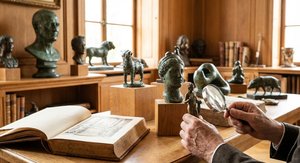
The Enduring Legacy of Bronze Sculpture: A Collector's Guide to Form & Cultural Significance
Explore the rich history & enduring appeal of bronze sculpture with expert insights for collectors at OriginalUniqueArt. Learn about casting techniques, iconic artists, and collecting tips to build a discerning art collection.

The Enduring Legacy of Bronze: A Historical & Artistic Exploration for the Collector
Explore the rich history & enduring appeal of bronze sculpture with expert insights for collectors at OriginalUniqueArt. Learn about casting techniques, iconic artists, collecting tips & contemporary interpretations.

Bronze Age to Modern Masters: 10 Sculptures That Redefined Art | OriginalUniqueArt
Journey through art history with 10 legendary bronze sculptures – from Michelangelo's David to Rodin’s Thinker. Explore the stories, techniques & timeless beauty of these masterpieces. Find museum-quality reproductions & elevate your home decor on OriginalUniqueArt.com.

青铜艺术的永恒遗产:历史、技艺与收藏家的鉴赏之道
探索青铜艺术的辉煌历史、精湛技艺与收藏价值。深入了解失蜡法铸造工艺,掌握青铜器鉴赏技巧,规避市场风险。OriginalUniqueArt.com为您提供专业的艺术咨询和定制服务。

Bronze Sculptures That Defined Art History | OriginalUniqueArt
Journey through art history with our Top 10 bronze sculptures! Explore masterpieces by Rodin, Michelangelo & more. Discover stories behind iconic statues and find museum-quality reproductions for your home decor at OriginalUniqueArt.com.