
 发送
发送 分享
分享
 详情
详情 指南
指南

 下载图片
下载图片
 相似作品
相似作品 幻灯片播放
幻灯片播放 统计数据
统计数据Painted Bronze

 阅读全文
阅读全文
艺术微喷/版画
博物馆级艺术微喷或帆布版画,制作高效,并提供多种饰面选择。 ( 订购此收藏品的纯手工复刻画作 切换至数字图像销售渠道)




































您可以从与原作比例一致的预设尺寸中进行选择。

请输入您所需的宽度和高度,以适配您的画框或墙面。由于印刷品只能进行裁剪,无法超出原图尺寸,因此若比例不一致,画面的一部分将会被裁切。在正式印刷之前,我们会为您发送一份数字效果图供您确认。本页面显示的图片并非最终裁剪后的效果——只有效果图才能展示真实的裁剪情况。


 玻璃选项仅适用于110厘米以下的尺寸。

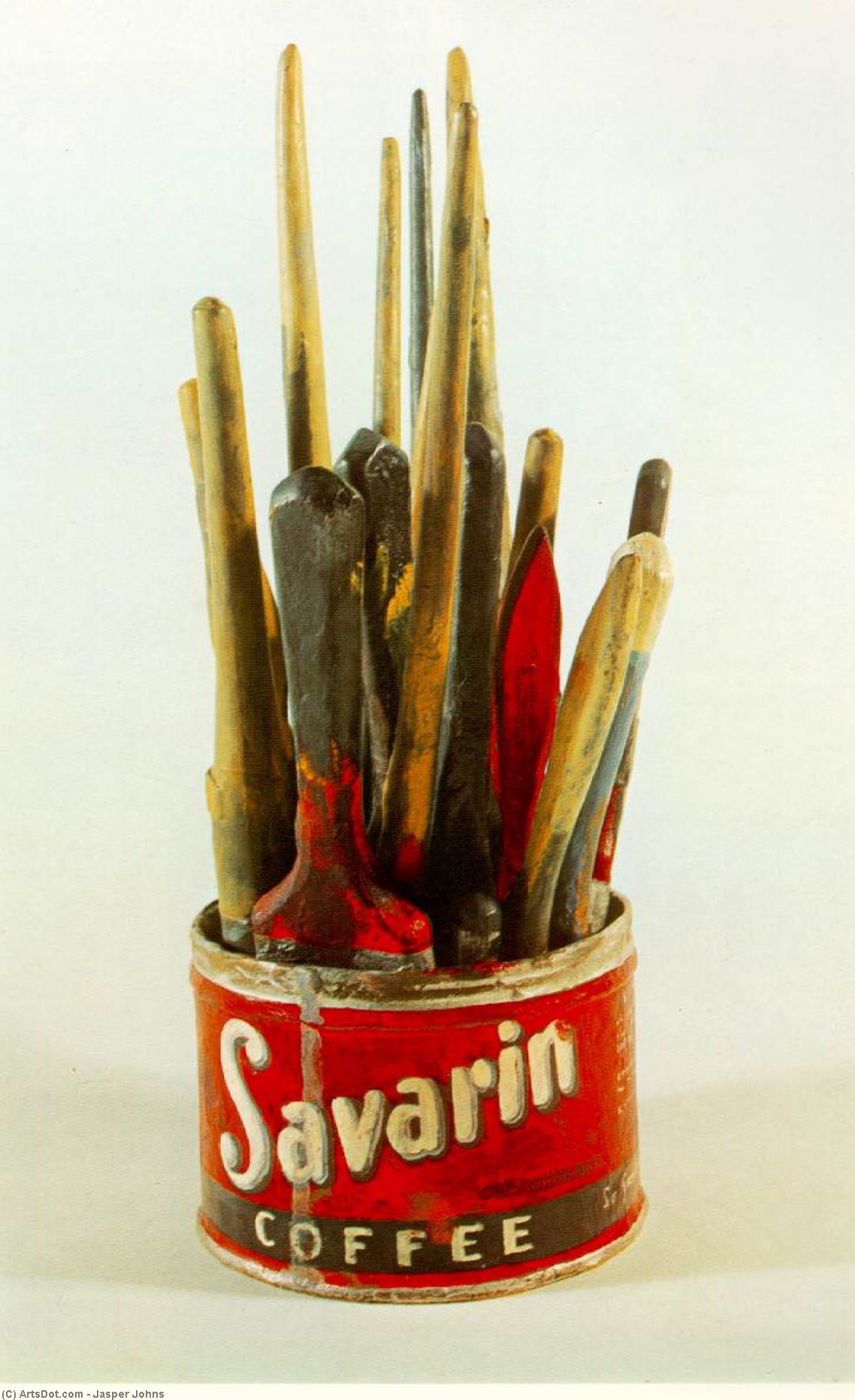
Painted Bronze
艺术微喷/版画
复刻品尺寸说明
-


总计金额
¥ 537
The Genesis of a Simple Object
Jasper Johns' Painted Bronze, created in 1960 but cast and painted the following year, is deceptively simple. At first glance, it presents as two unassuming twelve-ounce beer cans – rendered in bronze and meticulously painted to mimic their metallic counterparts – resting upon a stark, rectangular base. Yet, this apparent banality belies a profound engagement with American iconography, artistic tradition, and the very nature of representation. The genesis of this work is famously attributed to a seemingly offhand remark from Willem de Kooning, a fellow Abstract Expressionist, who reportedly suggested Johns “give that son-of-a-bitch two beer cans” – an observation that highlighted the burgeoning commercialization of art and the potential for transforming everyday objects into compelling subjects.
The anecdote, though perhaps embellished, underscores a key element of Johns’s artistic strategy: his ability to elevate the mundane to the level of significance. He wasn't interested in grand narratives or abstract explorations; instead, he sought to distill meaning from the familiar – the commonplace objects that populate our daily lives. This approach aligns with a broader shift within American art during the 1960s, moving away from the emotionally charged landscapes and figures of Abstract Expressionism towards a more direct engagement with recognizable imagery.
Technique and Materiality: A Dialogue Between Paint and Metal
The technical execution of Painted Bronze is remarkably precise. Johns meticulously cast the beer cans in bronze, ensuring their form was faithfully replicated. However, rather than leaving them to their inherent materiality, he then applied a layer of paint – a muted gold-brown hue – that deliberately obscures and distorts the metallic surface. This act of painting isn’t merely decorative; it's a deliberate disruption of the material’s natural appearance, creating a fascinating dialogue between the cold solidity of bronze and the ephemeral qualities of paint.
The choice of bronze itself is significant. Bronze, historically associated with antiquity and permanence, lends an air of gravitas to the seemingly trivial subject matter. It elevates the beer cans from mere consumer goods to objects imbued with a sense of historical weight and symbolic resonance. The uneven application of paint further emphasizes this tension – suggesting a process of deliberate imperfection, mirroring the artist’s own approach to representation.
Symbolism and American Identity
Beyond its technical merits, Painted Bronze is deeply rooted in American iconography. Beer cans, ubiquitous symbols of post-war prosperity and consumer culture, immediately evoke a specific historical context. The reference to “ale” – a term associated with a more refined and established social class – adds another layer of meaning, subtly referencing the hierarchies and distinctions that defined American society at the time.
Furthermore, Johns’s decision to depict beer cans rather than, say, flags or maps—other recurring motifs in his work—is particularly revealing. Flags and maps are inherently symbolic, representing national identity and geopolitical power. Beer cans, on the other hand, represent a more intimate and personal experience – a shared ritual of consumption that connects individuals across diverse social groups. In this way, Johns transforms an everyday object into a potent symbol of American culture and its complex relationship with commerce and consumerism.
Emotional Resonance and Artistic Legacy
Despite its seemingly simple composition, Painted Bronze possesses a remarkable emotional resonance. The work invites contemplation on the nature of representation, the blurring of boundaries between art and life, and the enduring power of everyday objects to evoke profound meaning. It’s a testament to Johns's ability to distill complex ideas into deceptively straightforward forms, leaving the viewer with a lingering sense of ambiguity and wonder.
Painted Bronze stands as a pivotal work in Jasper Johns’s oeuvre, exemplifying his innovative approach to subject matter and technique. It remains a compelling example of American art's engagement with contemporary culture and its exploration of the symbolic potential within the mundane.
问答详情
"Painted Bronze" 是否支持增强现实 (AR) 预览?
“Painted Bronze” 具备增强现实预览功能:通过作品的 AR 预览 页面,您可以在兼容设备上查看该作品呈现在您专属空间的效果。
是否有关于 贾斯珀·约翰斯 的《Painted Bronze》 的指南?
"Painted Bronze" 的指南位于作品的 指南 页面 —— 这是一份可打印的信息单,展示了该作品及其说明、署名以及详细信息表(艺术家、日期、媒介、原尺寸、馆藏)。
贯穿于贾斯珀·约翰斯 的《Painted Bronze》中的主导色调是什么?
Ochre to Sepia 色调贯穿了 贾斯珀·约翰斯 的《Painted Bronze》。
艺术家简介
杰斯珀·约翰斯:符号与重叠的艺术世界
杰斯珀·约翰斯,这位美国艺术家,以其独特的风格和对符号的深刻探索,在波普艺术运动兴起之际,成为了连接抽象表现主义与新艺术形式的关键人物。1930年出生于佐治亚州的奥古斯塔,他的人生早期经历了一系列变故,父母离异、辗转于不同学校的生活,或许正是这些经历塑造了他对身份认同和象征意义的敏感性。直到1949年移居纽约,约翰斯才真正开始了他的艺术之路。朝鲜战争期间的服役经历也进一步拓宽了他的视野,使他带着更成熟的视角重返艺术界。打破抽象:一种崭新的视觉语言
二战后的美国艺术世界被抽象表现主义所主导,这种风格强调自发的笔触和深刻的情感表达。虽然约翰斯最初受到这一运动的影响,但他很快意识到需要超越纯粹的非再现性。他寻求一种新的视觉语言,将可识别的图像融入其中,但并非作为简单的插图,而是作为更深层次思考的载体。这不仅仅是描绘世界,更是关于我们如何感知和解读其中的符号。马塞尔·杜尚的现成品艺术挑战了传统的艺术观念,而抽象表现主义对材料性的强调则影响了约翰斯的早期技巧。然而,真正成为他艺术词汇核心的是美国文化中那些日常物品和具有强大象征意义的符号——国旗、靶子、地图、数字等等。他并非试图逃避再现,而是希望解构它,赋予其多重含义。标志性图像:国旗、靶心与符号的语言
约翰斯的突破性作品出现在20世纪50年代中期,立刻确立了他作为一位重要艺术家的地位。他对国旗的描绘,尤其是《国旗》(1954-55),并非爱国的宣言,而是对再现本质本身的调查。采用半抽象风格,运用蜡彩(将颜料与热蜡混合)和拼贴技术,这些国旗不仅仅是图像,更是充满象征意义的纹理表面。《靶子》系列始于1958年,进一步探索了对可识别形式的痴迷,通过看似简单的靶心图像质疑感知和意义。地图作品,如《地图》(1961),深入探讨了地理、身份认同以及国家代表性的复杂性。诸如《虚假起点》(1959)的作品则展示了他对语言和视觉密码的实验,创造出复杂的构图,挑战观众解读其潜在含义。《白色国旗》(1955),即使是看似简单的单色画布,也引发了关于缺席、投降以及观看行为本身的深刻问题。影响与持久意义:为波普艺术铺平道路
杰斯珀·约翰斯的贡献对现代艺术的进程产生了不可否认的影响。他在抽象表现主义向波普艺术过渡中发挥了关键作用,挑战了既定的审美规范,并开辟了新的艺术探索途径。通过拥抱可识别的图像,他为安迪·沃霍尔和罗伊·利希滕斯坦等艺术家铺平了道路,他们将继续模糊高雅艺术与大众文化之间的界限。他和罗伯特·劳森伯格的密切合作也产生了深远的影响,培养了一种实验精神,并突破了艺术实践的界限。约翰斯的作品至今仍能引起共鸣,激励着一代又一代的艺术家质疑假设、挑战惯例,并探索符号在塑造我们对世界的理解中的力量。他仍然是一位活跃的艺术家,不断发展他的方法,巩固了他作为20世纪和21世纪最重要的艺术人物之一的地位。荣誉与持久影响
杰斯珀·约翰斯在其辉煌的职业生涯中获得了无数殊荣,包括1988年威尼斯双年展的金狮奖、1990年的国家艺术奖以及2011年的总统自由勋章。他的作品被世界各地的主要博物馆收藏,如纽约现代艺术博物馆、惠特尼美国艺术博物馆、大都会艺术博物馆和伦敦泰特现代美术馆等。无数次的展览巩固了他作为大师的地位。除了绘画之外,约翰斯对雕塑和版画的贡献也证明了他的多才多艺以及对艺术创新的坚定承诺。他的持久遗产不仅在于他创造的标志性图像,更在于他对再现本质、象征意义以及在快速变化的世界上成为一名艺术家的真正含义所提出的深刻问题。
贾斯珀·约翰斯
1930 - , 美国
快速概览
- Artistic Movement Or Style: 波普艺术, 抽象表现主义
- Artists Or Movements Influenced By This Artist:
- 安迪·沃霍尔
- 罗伊·利希滕斯坦
- Artists Who Influenced This Artist: ['马塞尔·杜尚']
- Date Of Birth: 1930年5月15日
- Full Name: 贾斯珀·约翰斯
- Nationality: 美国
- Notable Artworks:
- 旗帜
- 靶子
- 地图
- 白色旗帜
- Place Of Birth (City And Country): 奥古斯塔,美国
相关文章
The Enduring Legacy of Bronze Sculpture: A Collector's Guide to Form & Cultural Significance
Explore the rich history & enduring appeal of bronze sculpture with expert insights for collectors at OriginalUniqueArt. Learn about casting techniques, iconic artists, and collecting tips to build a discerning art collection.

The Enduring Legacy of Bronze: A Historical & Artistic Exploration for the Collector
Explore the rich history & enduring appeal of bronze sculpture with expert insights for collectors at OriginalUniqueArt. Learn about casting techniques, iconic artists, collecting tips & contemporary interpretations.
青铜艺术的永恒遗产:历史、技艺与收藏家的鉴赏之道
探索青铜艺术的辉煌历史、精湛技艺与收藏价值。深入了解失蜡法铸造工艺,掌握青铜器鉴赏技巧,规避市场风险。OriginalUniqueArt.com为您提供专业的艺术咨询和定制服务。

Bronze Sculptures That Defined Art History | OriginalUniqueArt
Journey through art history with our Top 10 bronze sculptures! Explore masterpieces by Rodin, Michelangelo & more. Discover stories behind iconic statues and find museum-quality reproductions for your home decor at OriginalUniqueArt.com.

Bronze Age to Modern Masters: 10 Sculptures That Redefined Art | OriginalUniqueArt
Journey through art history with 10 legendary bronze sculptures – from Michelangelo's David to Rodin’s Thinker. Explore the stories, techniques & timeless beauty of these masterpieces. Find museum-quality reproductions & elevate your home decor on OriginalUniqueArt.com.


