

 实景预览
实景预览
 发送
发送 分享
分享
 详情
详情 指南
指南

 下载图片
下载图片
 相似作品
相似作品 X射线
X射线 幻灯片播放
幻灯片播放 统计数据
统计数据Tugai Bey

 阅读全文
阅读全文
艺术微喷/版画
博物馆级艺术微喷或帆布版画,制作高效,并提供多种饰面选择。 ( 订购此收藏品的纯手工复刻画作 切换至数字图像销售渠道)




































您可以从与原作比例一致的预设尺寸中进行选择。

请输入您所需的宽度和高度,以适配您的画框或墙面。由于印刷品只能进行裁剪,无法超出原图尺寸,因此若比例不一致,画面的一部分将会被裁切。在正式印刷之前,我们会为您发送一份数字效果图供您确认。本页面显示的图片并非最终裁剪后的效果——只有效果图才能展示真实的裁剪情况。


 玻璃选项仅适用于110厘米以下的尺寸。

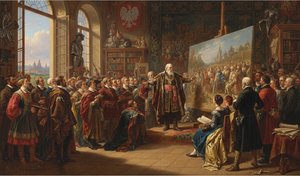
Tugai Bey
艺术微喷/版画
复刻品尺寸说明
-


总计金额
¥ 538
A Glimpse into 17th-Century Conflict: "Tugai Bey" by Jan Matejko
This striking portrait, “Tugai Bey” by Polish master Jan Matejko, offers a compelling window into the complex political and military landscape of 17th-century Eastern Europe. The painting depicts Tugai Bey, a Crimean Tatar leader, a figure pivotal in the tumultuous relationship between Poland-Lithuania and the Cossack Hetmanate. Matejko’s work isn't merely a likeness; it is a carefully constructed narrative reflecting power, diplomacy, and the volatile nature of alliances during a period of intense upheaval. The subject’s commanding presence, captured with meticulous detail, invites viewers to contemplate the historical forces at play.Style & Technique: Romanticism Meets Historical Precision
Matejko was renowned for his monumental historical paintings executed in the Romanticism style. This piece exemplifies that approach. The dramatic lighting, rich color palette (dominated by deep reds, golds, and browns), and dynamic composition create a sense of immediacy and emotional intensity. Matejko’s technique is characterized by its meticulous realism; he painstakingly researched costumes, weaponry, and settings to ensure historical accuracy. The oil on panel medium allows for subtle gradations of tone and texture, bringing the subject's attire and facial features to life with remarkable clarity. Note the careful rendering of the elaborate turban and the detailed depiction of the bow and arrow – hallmarks of Matejko’s dedication to detail.Historical Context & Significance
The painting is inextricably linked to the Khmelnytsky Uprising (1648–1657), a major Cossack rebellion against Polish rule in Ukraine. Tugai Bey played a significant role, initially allied with Bohdan Khmelnytsky, leader of the uprising. Matejko’s work captures a moment of potential alliance or negotiation between these two powerful figures. The painting was created decades after these events (circa 1885), during a period in Poland when national identity and historical memory were being actively cultivated. Matejko's paintings served as visual narratives reinforcing Polish heritage and commemorating key moments in the nation’s history, often with a patriotic undertone. The depiction of Tugai Bey, while acknowledging his role in conflict, also hints at the complex intercultural interactions that shaped this era.Symbolism & Emotional Impact
Beyond its historical accuracy, "Tugai Bey" is rich in symbolism. The subject’s attire—the ornate turban, luxurious fabrics, and weaponry—signifies his status as a leader and warrior. His gaze, both intense and contemplative, suggests a shrewd intellect and strategic mind. The presence of the bow and arrow alludes to military prowess and potential conflict. The overall emotional impact is one of gravitas and restrained power. Matejko masterfully conveys a sense of tension and uncertainty, reflecting the precarious nature of alliances and the ever-present threat of war in 17th-century Eastern Europe. The painting evokes a feeling of witnessing a pivotal moment in history, prompting reflection on themes of leadership, diplomacy, and cultural exchange amidst conflict.问答详情
Romanticism 流派的作品 "Tugai Bey" 源自哪个国家?
《Tugai Bey》由出生于 波兰 的 扬·马泰伊科 (Yáng·Mǎtèiyīkē) 在 Romanticism 运动背景下创作而成。艺术家的原籍地使这部作品与 波兰 艺术家所实践的 Romanticism 风格紧密相连。
扬·马泰伊科 (Yáng·Mǎtèiyīkē) 的《Tugai Bey》 的视觉明亮度如何?
就视觉亮度而言,扬·马泰伊科 (Yáng·Mǎtèiyīkē) 的《Tugai Bey》 呈现出 bright 的效果。
“Tugai Bey”提供下载吗?
艺术家简介
早年生活与教育
扬·马泰伊科,一位享誉盛名的波兰画家,于1838年6月24日出生在克拉科夫。他的父亲弗朗西斯泽·克萨维里·马泰伊科是一位捷克出生的家庭教师和音乐老师。扬的早期生活受到了1846年克拉科夫革命和1848年奥地利军队围攻克拉科夫的影响,这些事件后来深刻影响了他的艺术主题。马泰伊科就读于圣安妮高中,但由于成绩不佳于1851年辍学。然而,他从小就表现出非凡的艺术天赋。从1852年至1858年,他在克拉科夫美术学院学习,专门研究历史绘画,师从沃伊切赫·科尔内利·斯塔特勒和弗瓦迪斯瓦夫·乌什奇凯维奇的指导。艺术生涯
马泰伊科的第一部重要作品《沙皇舒伊斯基向齐格蒙特三世求和》于1853年完成。他从1855年开始在克拉科夫美术爱好者协会展出他的历史画作。值得注意的作品包括:- 雷伊坦 (1866): 一幅大型油画布作品,描绘了波兰历史上一个关键时刻。
- 卢布林联合 (1869): 一件重要的作品,展示了马泰伊科捕捉历史事件的能力。
- 格鲁恩瓦尔德战役 (1878): 一部杰作,突出了他传达战斗场面强烈的能力。
博物馆贡献与遗产
马泰伊科一生的大部分时间都在克拉科夫度过,最终成为扬·马泰伊科美术学院的院长,该学院以前被称为克拉科夫美术学院。他的学生包括著名的画家毛里奇·戈特利布、雅切克·马尔采夫斯基、约泽夫·梅霍费尔和斯坦尼斯瓦夫·维斯皮安斯基。 值得注意的作品在OriginalUniqueArt:- 扬·马泰伊科:瓦尔纳 (浪漫主义)
- 扬·马泰伊科:静物 (浪漫主义)
- 扬·马泰伊科:卢布林联合 (298 x 512 cm,浪漫主义,油画布)
影响与发展
马泰伊科的作品深受浪漫主义运动的影响,他将戏剧性的构图、鲜艳的色彩和对细节的关注结合起来,创造出引人入胜且情感丰富的画作。他的早期作品受到斯塔特勒和乌什奇凯维奇的影响,他们鼓励他对历史题材进行深入研究并发展独特的绘画风格。随着时间的推移,马泰伊科的作品变得越来越复杂和雄心勃勃,他试图通过大规模的史诗般的场景来捕捉波兰民族精神和身份认同。他的作品不仅是历史事件的记录,也是对波兰人民勇气、牺牲和爱国主义的颂扬。历史意义
扬·马泰伊科被广泛认为是波兰历史上最伟大的画家之一。他的画作在塑造波兰民族意识和文化认同方面发挥了重要作用。他通过描绘波兰历史上的关键时刻,帮助激发了波兰人民的爱国主义情感和对独立的渴望。即使在今天,马泰伊科的作品仍然是波兰文化的强大象征,并继续激励着新一代的艺术家和观众。他的作品不仅具有艺术价值,还具有重要的历史和社会意义,为我们了解波兰的历史、文化和民族精神提供了宝贵的见解。参考: 发现波兰克拉科夫国家博物馆的杰作 (wikipedia.org)
扬·马泰伊科 (Yáng·Mǎtèiyīkē)
1838 - 1893 , 波兰
快速概览
- Artistic Movement Or Style: 浪漫主义
- Artists Or Movements Influenced By This Artist: ['毛里齐·戈特利布']
- Artists Who Influenced This Artist:
- 沃伊切赫·斯塔特勒
- 弗拉迪斯拉夫·乌什基维奇
- Date Of Birth: 1838年6月24日
- Date Of Death: 1893年11月1日
- Full Name: 扬·马泰伊科
- Nationality: 波兰国籍
- Notable Artworks:
- 格伦瓦德战役
- 卢布林联合
- Place Of Birth: 波兰克拉科夫
相关文章
Jan Brueghel the Elder: A Master of Flemish Landscape & Allegory – Exploring Innovation & Influence
Explore the captivating world of Jan Brueghel the Elder, a Flemish Baroque master renowned for his stunning landscapes & allegorical paintings. Discover his collaborations with Rubens and lasting artistic legacy.
Jan Gossaert (Mabuse): Pioneering Renaissance Style & the Birth of Netherlandish Antiquity
Explore the groundbreaking art of Jan Gossaert (Mabuse), a pioneer of Renaissance painting in the Low Countries. Discover his Romanist style, stunning portraits, and influence on Northern European art history.
Stanisław Wyspiański: Symbolism, National Identity & the Polish Secession
Explore the life & work of Stanisław Wyspiański, a pivotal figure in Polish Symbolism and the Young Poland movement. Discover his iconic paintings, dramas, and stained glass designs reflecting national identity & artistic innovation.
Jan Steen: A Master of Dutch Genre Painting & the Golden Age
Explore the life & art of Jan Steen, a leading Dutch Golden Age painter renowned for his humorous genre scenes & insightful social commentary. Discover his techniques, legacy, and collecting tips.
Jan Matejko: Historical Narrative & National Identity in 19th-Century Polish Painting
Explore the powerful historical paintings of Jan Matejko, Poland's national artist. Discover his iconic works & learn how he shaped Polish identity in the 19th century. High-quality reproductions available.

