

 实景预览
实景预览
 发送
发送 分享
分享
 详情
详情 指南
指南

 下载图片
下载图片
 相似作品
相似作品 X射线
X射线 幻灯片播放
幻灯片播放 统计数据
统计数据Operation
 Oil On Canvas
- WallArt
- Baroque
 1740
1740- Early Modern
 34.0 x 41.0 cm
 冬宫博物馆 (Hermitage Museum)
 阅读全文
阅读全文
手工油画复制品
由我们的艺术家按需定制,为您提供您所选尺寸及画框的布面手工油画。 ( 切换至版画销售渠道 切换至数字图像销售渠道)




P118B ¥10

P118H ¥10

P118W ¥10

P438Z ¥10

P508JH ¥12

P508YH ¥12

P805H ¥10

P805Z ¥10

P919BZ ¥10

P919G ¥10

P919XJ ¥10

P959ZH ¥10

P968JZ ¥12

W106C ¥8

W218G ¥10

W218JH ¥8

W218Y ¥10

W307PJ ¥10

W316G ¥10

W316PJ ¥8

W316Y ¥10

W398PJ ¥8

W4111J ¥10

W500HY ¥15

W500JH ¥15

W692G ¥12

W849H ¥8

W940BG ¥15

W953PJ ¥8




您可以从与原作比例一致的预设尺寸中进行选择。

请输入您需要的宽度和高度,以适配您的画框或墙面。由于作品为手工绘制,若您选择不同的尺寸比例,艺术家可能会在画面边缘多画一些或稍作裁剪 —— 由您决定。在开始绘画之前,我们会为您发送一份数字效果图供您确认。本页面上展示的图片并非最终实物 —— 只有效果图才能反映真实结果。
下单后,OriginalUniqueArt.com 团队将通过电子邮件联系客户获取具体要求,并提供效果预览图


 玻璃选项仅适用于110厘米以下的尺寸。

Operation
复制品材质
复刻品尺寸说明
-


总计金额
¥ 2017
A Glimpse into Domestic Crisis: The Scene of Operation
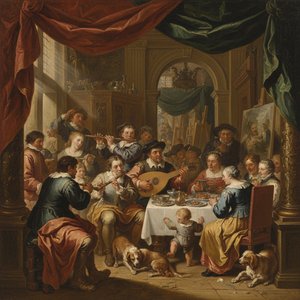
This evocative painting transports us directly into an intimate moment of profound vulnerability—a domestic scene centered around a medical procedure. One can almost hear the hushed urgency in the air, the collective breath held by those gathered around the prone figure on the floor. The composition is rich with human drama; several figures cluster closely, their gestures suggesting focused concern and practiced activity. Objects scattered within the room—bowls, cups, and the simple presence of a chair—are not mere props but integral components of this narrative tableau. It speaks to a time when medicine was both rudimentary and deeply personal, played out within the confines of a private dwelling.
The Hand of Jan Josef Horemans the Elder
Painted around 1740 by Jan Josef Horemans the Elder, this work places us firmly in the milieu of 18th-century Flemish genre painting. Horemans was renowned for his meticulous chronicling of daily life in Antwerp; he possessed an eye that captured the texture of bourgeois existence with almost photographic precision. His style marries a detailed realism with a subtle Baroque sensibility, allowing him to elevate everyday occurrences into moments imbued with narrative weight. To own a reproduction of this piece is to acquire not just a painting, but a tangible connection to the daily rhythms and anxieties of life in the early 18th century.
Technique and Compositional Drama
Observe the masterful handling of light within the room; it seems to illuminate the critical action while leaving corners steeped in suggestive shadow. Horemans employs a rich palette characteristic of the period, allowing the viewer's eye to wander across the varied textures—the folds of clothing, the sheen on the objects, and the pale skin of the woman at the center. The inclusion of the two birds, one high in the corner and another near the floor, adds an unexpected layer of natural symbolism, perhaps representing life observing humanity’s struggle or simply serving as delicate compositional anchors that draw the eye through the scene.
Symbolism and Emotional Resonance for the Modern Collector
Beyond its historical documentation, this artwork resonates with universal themes: caregiving, fragility, and the human instinct to heal. For the collector or interior designer, it offers a powerful focal point—a piece that commands attention while inviting quiet contemplation. It speaks eloquently of community support during times of crisis. Reproducing such a work allows one to bring an atmosphere of thoughtful drama into a modern space, suggesting depth, history, and the enduring power of human connection.
问答详情
Jan Josef Horemans The Elder 的《Operation》展现了怎样的色彩和谐感?
Jan Josef Horemans The Elder 的《Operation》 展示了一种 Unified Palette 的色彩和谐感。
“Operation”的创作技法是什么,尺寸又是多少?
《Operation》采用Oil On Canvas创作,原件尺寸为34 x 41 cm。
“Operation”是如何融入 Jan Josef Horemans The Elder 的主题与风格之中的?
"Operation" 与 Jan Josef Horemans The Elder 的其他作品一样,都体现了 Baroque 风格以及其一贯的主题:flemish genre scene depiction, daily life antwerp society, baroque realism narrative focus, chronicling bourgeois existence。
艺术家简介
A Chronicler of Antwerp Life: Jan Josef Horemans the Elder
Jan Josef Horemans the Elder, born in Antwerp in 1682 and passing away in the same city in 1759, stands as a fascinating figure within the tapestry of 18th-century Flemish painting. While not achieving the widespread renown of some contemporaries, his meticulous genre scenes offer an invaluable glimpse into the daily existence of bourgeois life in Antwerp during a period of significant social and economic change. He wasn’t merely recording what he saw; Horemans was crafting narratives, small windows into the habits, anxieties, and quiet dramas unfolding within the homes and streets of his native city. His work provides a unique historical record, painted with a precision that borders on photographic realism yet imbued with a distinctly Baroque sensibility.Early Life and Artistic Formation
Horemans’s artistic journey began in 1694 when he was registered as an apprentice at the Antwerp Guild of Saint Luke, initially under the tutelage of the sculptor Michiel van der Voort the Elder. This early exposure to sculpture likely instilled a keen understanding of form and three-dimensionality that would later manifest in his carefully constructed compositions. He subsequently moved into the studio of Jan van Pee, where he honed his skills as a painter. In 1706, Horemans achieved master status within the Guild, marking a pivotal moment in his career. A year later, he solidified both his personal and professional life through marriage to Maria Francisca van der Voort, the daughter of his first mentor. This familial connection would prove significant, as his son, Jan Josef Horemans the Younger, also followed in his artistic footsteps, creating a legacy that spanned generations. The elder Horemans’s commitment to his craft was further demonstrated by his role as a teacher, guiding both his younger brother Peter Jacob and his son along their own creative paths.The World Within Walls: Themes and Style
Horemans carved out a niche for himself with his genre scenes – intimate depictions of everyday life. Unlike the grand historical or religious paintings that dominated much of the artistic landscape, Horemans focused on the domestic sphere. Interiors teeming with activity—families sharing meals, merchants conducting business, children at play—became his signature subject matter. He also ventured into portraiture and allegorical works, but it was in these smaller, anecdotal scenes that his talent truly shone. His style is characterized by a remarkable attention to detail; objects are rendered with painstaking accuracy, fabrics shimmer with texture, and faces convey subtle emotions. However, Horemans’s palette tended towards darker tones—a characteristic that earned him the nicknames “le brun” (the dark one) and “le sombre” (the shadowy one), distinguishing his work from that of his son, who favored a lighter approach. Despite this somewhat somber coloration, his paintings are far from bleak; they possess a lively energy, capturing the bustle and vibrancy of Antwerp life.Influences and Legacy
While Horemans developed a distinctly personal style, he was undoubtedly influenced by the 17th-century Flemish genre painters who preceded him—artists like Pieter Bruegel the Younger and David Teniers the Younger. He inherited their penchant for detailed observation and narrative storytelling but infused his work with a more refined elegance and a greater emphasis on contemporary subject matter. His paintings reflect a shift in artistic focus, moving away from purely moralistic or allegorical themes towards a more straightforward depiction of everyday reality. The sheer volume of small paintings he produced—often executed as part of larger series—suggests a thriving market for his work among the burgeoning bourgeois class. Horemans’s legacy extends beyond his individual artworks; he is remembered as a leading chronicler of 18th-century Antwerp, providing an invaluable visual record of a society undergoing transformation. His son, Jan Josef Horemans the Younger, continued this tradition, further solidifying the family's place in Flemish artistic history.Historical Significance and Modern Appreciation
Today, Jan Josef Horemans the Elder is increasingly recognized for his unique contribution to Flemish painting. While he may not be a household name, his work offers a compelling window into a specific time and place—a world of bustling commerce, domestic intimacy, and subtle social dynamics. His paintings are prized by collectors and scholars alike for their meticulous detail, narrative richness, and historical significance. The fact that over 300 artworks attributed to him have appeared at auction speaks to the enduring appeal of his vision. Horemans’s scenes aren't merely decorative; they are social documents, offering insights into the material culture, customs, and values of 18th-century Antwerp. He stands as a testament to the power of genre painting—a reminder that even the most seemingly mundane subjects can reveal profound truths about the human condition. His ability to capture the essence of everyday life with such precision and sensitivity ensures his continued relevance in the world of art history.
Jan Josef Horemans The Elder
1682 - 1759 , Belgium
快速概览
- Full Name: Jan Josef Horemans the Elder
- Nationality: Flemish
- Date Of Birth: 1682
- Date Of Death: 1759
- Place Of Birth: Antwerp, Belgium
- Notable Artworks:
- Operation
- At the Painter's Studio
- Operations in a Surgery
- Artistic Movement Or Style: Genre scenes, portraits
- Artists Who Influenced This Artist: ['Michiel van der Voort']
- Artists Or Movements Influenced By This Artist: ['Rubens']
相关文章

巴洛克艺术的戏剧性辉煌:历史背景、风格特征与持久影响
深入探索巴洛克艺术的辉煌历史、独特风格与持久影响。了解卡拉瓦乔、贝尼尼等大师的作品,洞悉反宗教改革运动下的艺术变革。OriginalUniqueArt.com为您提供专业的艺术解读与高清画作欣赏。
Jacob Jordaens: Baroque Dynamism & Genre Innovation of the Antwerp School
Discover Jacob Jordaens, a leading Flemish Baroque painter renowned for his dynamic compositions & realistic genre scenes. Explore his life, art, and lasting influence with OriginalUniqueArt.

Mastering Drama and Light: A Definitive Guide to the Flemish Baroque Art Movement
Explore the dramatic brilliance of the Flemish Baroque movement. Discover how masters like Peter Paul Rubens utilized chiaroscuro and dynamic composition to redefine art history through light, shadow, and unparalleled emotion.

Oil on Canvas: A Historical & Technical Exploration of a Timeless Artistic Medium
Explore the rich history & enduring techniques of oil painting on canvas. Discover the science behind its longevity, conservation practices, and contemporary relevance. Expert insights for art enthusiasts.

巴洛克艺术巅峰:十部巨作定义时代,点亮您的臻品格调
探索巴洛克艺术的辉煌!本文精选十部巨作,带您领略卡拉瓦乔、伦勃朗等大师的光影魔法与戏剧张力。从黄金时代到宗教绘画,感受奢华与精致。OriginalUniqueArt.com为您提供博物馆品质的艺术复制品和家居装饰灵感。尽在OriginalUniqueArt.com!