

 实景预览
实景预览
 发送
发送 分享
分享
 详情
详情 指南
指南

 下载图片
下载图片
 相似作品
相似作品 X射线
X射线 幻灯片播放
幻灯片播放 统计数据
统计数据The procuress.

 阅读全文
阅读全文
艺术微喷/版画
博物馆级艺术微喷或帆布版画,制作高效,并提供多种饰面选择。 ( 订购此收藏品的纯手工复刻画作 切换至数字图像销售渠道)




P118B ¥10

P118H ¥10

P118W ¥10

P438Z ¥10

P508JH ¥12

P508YH ¥12

P805H ¥10

P805Z ¥10

P919BZ ¥10

P919G ¥10

P919XJ ¥10

P959ZH ¥10

P968JZ ¥12

W106C ¥8

W218G ¥10

W218JH ¥8

W218Y ¥10

W307PJ ¥10

W316G ¥10

W316PJ ¥8

W316Y ¥10

W398PJ ¥8

W4111J ¥10

W500HY ¥15

W500JH ¥15

W692G ¥12

W849H ¥8

W940BG ¥15

W953PJ ¥8




您可以从与原作比例一致的预设尺寸中进行选择。

请输入您所需的宽度和高度,以适配您的画框或墙面。由于印刷品只能进行裁剪,无法超出原图尺寸,因此若比例不一致,画面的一部分将会被裁切。在正式印刷之前,我们会为您发送一份数字效果图供您确认。本页面显示的图片并非最终裁剪后的效果——只有效果图才能展示真实的裁剪情况。


 玻璃选项仅适用于110厘米以下的尺寸。

The procuress.
艺术微喷/版画
复刻品尺寸说明
-


总计金额
¥ 537
艺术家简介
Santi di Tito: A Counterpoint to Mannerism
Santi di Tito (1603 – 1661) emerged from the vibrant, tumultuous artistic landscape of late Renaissance and early Baroque Rome, a period defined by intense stylistic debate. His life and career represent a fascinating case study in navigating evolving artistic conventions, ultimately forging a distinctive style that stands as a crucial bridge between Mannerism and the burgeoning naturalism of the Baroque. Born in Sansepolcro, a small town in Umbria, Santi’s early training remains somewhat shrouded in mystery, with accounts suggesting influences from figures like Bronzino and Baccio Bandinelli, though definitive proof is elusive. This lack of clear lineage contributed to his unique artistic trajectory – one that deliberately distanced itself from the established norms of the time.Early Career and Roman Apprenticeship
Santi’s journey to Rome in 1558 marked a pivotal moment, placing him within the heart of the city's artistic ferment. He spent nearly a decade working alongside Giovanni de’ Vecchi and Niccolò Circignani on monumental frescoes within the Palazzo Salviati and the Sala Grande of the Belvedere at the Vatican – projects that showcased the grandeur and complexity of Mannerist painting. These early commissions exposed Santi to the prevailing stylistic trends, characterized by elongated figures, complex spatial arrangements, and a deliberate emphasis on elegance and refinement. However, rather than simply absorbing these influences, Santi began to subtly reshape them, introducing a greater sense of naturalism and a more restrained palette. The frescoes in the Belvedere, particularly *Homage of the People*, reveal his growing interest in classical forms and a desire for clarity and balance – qualities that would become hallmarks of his later work.The Studiolo of Francesco I: A Defining Period
Santi’s most significant contribution to the Roman art scene occurred during his tenure at the Palazzo Vecchio, where he was commissioned to decorate the *Studiolo* (a private study) of Francesco I de' Medici, Grand Duke of Tuscany. This project proved transformative, solidifying Santi’s distinctive style and establishing him as a leading figure in the Counter-Mannerist movement. The two paintings created for this space – *Sisters of Phaeton* and *Hercules and Iole* – exemplify his innovative approach. Unlike the crowded, theatrical compositions typical of Mannerism, Santi's works are characterized by a remarkable clarity of form, a carefully considered use of light and shadow, and a focus on idealized beauty. He deliberately avoided the excessive ornamentation and artificiality that had become associated with Mannerist painting, opting instead for a more restrained and harmonious aesthetic. This shift was consciously intended as a reaction against the prevailing *maniera* of artists like Bronzino and Federico Zuccari, whom he viewed as overly elaborate and lacking in genuine naturalism.A Reformist Style: Embracing Classical Ideals
Santi’s artistic philosophy can be understood within the broader context of the Counter-Reformation. The Catholic Church was actively seeking to reform its image and promote a more accessible form of religious art, one that emphasized clarity, piety, and emotional engagement. Santi's work reflects this desire for renewal, moving away from the complex intellectualism of Mannerism towards a more direct and emotionally resonant style. He drew inspiration from classical antiquity, particularly the works of Raphael, seeking to emulate his sense of grace, harmony, and balance. This commitment to classical ideals is evident in his careful attention to proportion, his use of idealized figures, and his avoidance of excessive detail. As S. J. Freedberg noted, Santi’s style was “Raphaelesque,” a deliberate attempt to recapture the perceived purity and elegance of Raphael's art.Later Works and Legacy
Following his return to Florence in 1564, Santi continued to produce significant works throughout his career, including altarpieces for Santa Croce and frescoes for Volterra Cathedral. His *Resurrection of Lazarus* and *Supper at Emmaus*, particularly the latter, demonstrate his ability to convey profound emotion through subtle gestures and carefully rendered details. Despite his artistic achievements, Santi faced considerable financial difficulties, ultimately declaring bankruptcy in 1662. He died in poverty in 1661, largely unrecognized during his lifetime. However, his work gradually gained recognition in the 19th century, and today he is considered one of the most important figures in the Counter-Mannerist movement – a pivotal artist who helped to shape the course of European painting. His legacy lies not only in his individual masterpieces but also in his courageous challenge to established artistic conventions and his unwavering commitment to classical ideals.
Jan Gerritsz Van Bronchorst
1603 - 1661 , Netherlands
快速概览
- Full Name: Aert van der Neer
- Nationality: Dutch
- Date Of Birth: 1603
- Date Of Death: 1661
- Place Of Birth: Utrecht, Netherlands
- Notable Artworks:
- Moonlit Landscape
- Winter in Holland
- Artistic Movement Or Style: Landscape painting
- Artists Who Influenced This Artist: ['Rafel and Jochem Camphuysen']
- Artists Or Movements Influenced By This Artist:
- Terborch
- Metsu
相关文章

伦勃朗25幅杰作:光影大师的艺术传奇与家居臻选
探索伦勃朗25幅杰作,领略荷兰黄金时代光影大师的艺术传奇!从《夜巡》到自画像,深入了解巴洛克艺术、历史绘画与人物肖像背后的故事。OriginalUniqueArt.com提供高清艺术复制品及家居装饰灵感。立即探索完整系列!

Golden Light & Dutch Skies: The Timeless Magic of Dutch Golden Age Landscapes
Discover the breathtaking beauty of Dutch Golden Age landscapes. Explore the mastery of light, chiaroscuro, and 17th-century realism through an expert art history lens, celebrating the enduring legacy of the Dutch Masters for discerning collectors and art lovers.

Masterpieces of Light: A Definitive Guide to the Landscapes of the Dutch Golden Age
Discover the luminous mastery of Dutch Golden Age landscapes. Our expert guide explores the atmospheric realism of masters like Van Goyen and Cuyp. Elevate your space with museum-quality, hand-painted oil reproductions from OriginalUniqueArt.com. Art history, beautifully realized.
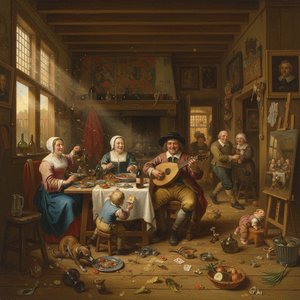
Jan Steen: A Master of Dutch Genre Painting & the Golden Age
Explore the life & art of Jan Steen, a leading Dutch Golden Age painter renowned for his humorous genre scenes & insightful social commentary. Discover his techniques, legacy, and collecting tips.

荷兰黄金时代:十幅定义艺术史的巨作 | OriginalUniqueArt
探索荷兰黄金时代的艺术巅峰! 伦勃朗、维米尔等大师名作,带您领略巴洛克艺术的辉煌。高清画作、博物馆级品质,点亮您的家居空间。OriginalUniqueArt.com 提供精选艺术复制品和定制装饰方案。立即在线探索全系列!