

 实景预览
实景预览
 发送
发送 分享
分享
 详情
详情 指南
指南

 下载图片
下载图片
 相似作品
相似作品 X射线
X射线 幻灯片播放
幻灯片播放 统计数据
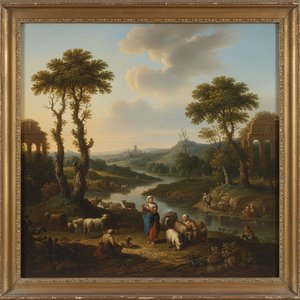
统计数据Italian Landscape
 Oil On Canvas
- WallArt
- Italianate Landscape
 31.0 x 40.0 cm
 Fitzwilliam 学院
 阅读全文
阅读全文
艺术微喷/版画
博物馆级艺术微喷或帆布版画,制作高效,并提供多种饰面选择。 ( 订购此收藏品的纯手工复刻画作 切换至数字图像销售渠道)




P118B ¥10

P118H ¥10

P118W ¥10

P438Z ¥10

P508JH ¥12

P508YH ¥12

P805H ¥10

P805Z ¥10

P919BZ ¥10

P919G ¥10

P919XJ ¥10

P959ZH ¥10

P968JZ ¥12

W106C ¥8

W218G ¥10

W218JH ¥8

W218Y ¥10

W307PJ ¥10

W316G ¥10

W316PJ ¥8

W316Y ¥10

W398PJ ¥8

W4111J ¥10

W500HY ¥15

W500JH ¥15

W692G ¥12

W849H ¥8

W940BG ¥15

W953PJ ¥8




您可以从与原作比例一致的预设尺寸中进行选择。

请输入您所需的宽度和高度,以适配您的画框或墙面。由于印刷品只能进行裁剪,无法超出原图尺寸,因此若比例不一致,画面的一部分将会被裁切。在正式印刷之前,我们会为您发送一份数字效果图供您确认。本页面显示的图片并非最终裁剪后的效果——只有效果图才能展示真实的裁剪情况。


 玻璃选项仅适用于110厘米以下的尺寸。

Italian Landscape
艺术微喷/版画
复刻品尺寸说明
-


总计金额
¥ 538
A Glimpse of Italian Pastoral: Jan Asselijn’s “Italian Landscape”
Jan Asselijn's "Italian Landscape," painted circa 1625-1652, isn’t merely a depiction of a picturesque vista; it’s an invitation to step into a carefully constructed world of serene beauty and subtle drama. This oil on canvas transports the viewer to a hypothetical Italian landscape – a deliberate choice by Asselijn that speaks volumes about the evolving artistic sensibilities of the Dutch Golden Age. The painting, now housed in collections like Bonhams, exemplifies the influence of both the Venetian masters and the burgeoning tradition of “pure” landscape painting emerging from Italy itself.
Asselijn’s style is distinctly characterized by a meticulous attention to detail and a masterful command of atmospheric perspective. He leans heavily into the techniques pioneered by Bamboccio – a contemporary painter known for his evocative, almost dreamlike landscapes – creating an image that feels both familiar and subtly unsettling. The composition unfolds with deliberate grace: a modest, classically-inspired building anchors the left foreground, its geometric solidity providing a grounding element against the undulating hills and hazy distance. The artist skillfully employs a muted palette of browns, ochres, and blues, avoiding bright colors to emphasize the painting’s contemplative mood. This restrained approach allows the subtle shifts in tone – from the dark shadows cast by distant trees to the luminous highlights reflecting off water – to create a remarkably convincing sense of depth and atmosphere.
The Influence of Venetian Masters and Italianate Tradition
Asselijn's work is deeply rooted in the artistic currents flowing through Italy at the time. He was profoundly influenced by the Venetian landscape painters, particularly those who favored a looser, more atmospheric style than their predecessors. However, unlike many of his contemporaries who simply copied Italian scenes directly, Asselijn imbued them with a distinctly Dutch sensibility – a focus on light, texture, and a carefully considered composition. This blending of influences is evident in the painting’s balanced structure, its subtle use of color, and its overall sense of quiet contemplation.
Furthermore, “Italian Landscape” reflects the broader trend toward what became known as "Italianate landscape" within Dutch art circles. This style sought to emulate the idealized landscapes depicted by artists like Claude Lorrain, who had established a dominant visual language for representing Italian scenery in Northern Europe. Asselijn’s painting isn't a literal transcription of an Italian vista; rather, it’s a carefully constructed fantasy – a “imaginary Italian Landscape” as described in some historical sources – designed to evoke the spirit and beauty of Italy while adhering to Dutch artistic conventions.
Symbolism and Emotional Resonance
Beyond its technical merits, "Italian Landscape" is rich in symbolic meaning. The solitary building, often interpreted as a villa or farmhouse, suggests themes of rural life, tranquility, and perhaps even isolation. The distant mountains, shrouded in mist, evoke a sense of mystery and the sublime – a recognition of nature’s power and grandeur. The figures scattered across the foreground, riding horses and walking along the riverbank, add a touch of human presence to the scene, reminding us of our connection to the natural world.
The painting's overall effect is one of profound serenity and contemplative beauty. It invites the viewer to slow down, to appreciate the subtle details of the landscape, and to lose themselves in its timeless atmosphere. It’s a testament to Asselijn’s skill as an artist – his ability to capture not just the appearance of a scene but also its emotional essence.
A Reproduction for Today's Spaces
Reproductions of “Italian Landscape” offer a beautiful addition to any interior space. The painting’s calming colors and evocative imagery create a sense of tranquility and sophistication, making it ideal for living rooms, bedrooms, or studies. The detailed depiction of the landscape invites contemplation and provides a visual connection to the natural world – a welcome respite from the stresses of modern life. Consider framing this piece in a classic wooden frame to further enhance its timeless appeal.
问答详情
"Italian Landscape" 融合了怎样的色调与情感?
扬·阿塞林 的《Italian Landscape》 的 Dark 色调与其 Melancholic 的情感基调相得益彰。色彩是作品传达情感的表达方式之一。
扬·阿塞林 的《Italian Landscape》 融合了怎样的主题与氛围?
"Italian Landscape" 展示了 landscape, figures, ruin, italy, asselijn, pastoral, tranquility, scenic,其传达的情绪为 Calm。
扬·阿塞林 的《Italian Landscape》 这件作品的色调是明亮的还是深沉的?
总体而言,"Italian Landscape" 的亮度记录为 shadow。感知亮度描述了作品呈现出的明暗程度。
艺术家简介
生于风景:扬·阿塞林的世界
扬·阿塞林(Jean Asselin,约1610年出生)的人生轨迹是一部充满宗教动荡与艺术探索的史诗。他出生在法国港口城市迪耶普,他的家庭是逃避迫害的雨格诺派教徒,于1621年迁居阿姆斯特丹——荷兰黄金时代的活力商业中心和新兴艺术枢纽。这次搬迁至关重要,将年轻的让带入了一个风景画迅速发展、超越传统描绘,走向更具氛围感和情感共鸣的领域的世界。他最初师从扬·马尔岑(Jan Martszen the Younger),磨练了他在战斗场景中的技巧,随后发现了他的真正使命——捕捉自然景观和动物生命的壮丽与戏剧性。阿塞林早期接触到的荷兰光线和广阔的天空将成为他作品的 defining characteristic,但一次前往意大利的旅程真正巩固了他的艺术视野。意大利风情与“鸟类社团”
如同那个时代许多雄心勃勃的北欧画家一样,阿塞林寻求在意大利获得提升,很可能是在1635年之后到达那里。在那里,他充分拥抱了*意大利风格*——一种以阳光灿烂的景色、古典废墟和充满浪漫气息的田园场景为特征的流派。他加入了“鸟类社团”(Bentvueghels)——一个由荷兰和佛兰德斯艺术家组成的色彩鲜艳的罗马社团。这些“同羽之友”以他们不落俗套的行为、讽刺性的昵称以及致力于直接从生活中绘画(拒绝工作室的束缚)而闻名。在这个热闹的社群中,阿塞林因一只影响他手部功能的身体残疾获得了绰号“Krabbetje”(小螃蟹),但他仍然充满创造力。他吸收了彼得·范·莱尔(Pieter van Laer,又称Bamboccio)的影响,后者对罗马农民生活和风景的描绘深深地引起了阿塞林共鸣,并融入了他自己不断发展的风格中。这段时期对于塑造他传达氛围、光线和作品内涵叙事能力至关重要。掌握光影与象征:关键作品
阿塞林带着精湛的技巧和独特的嗓音回到阿姆斯特丹。他的绘画以清晰的执行力和对光线的巧妙处理为特征——这些品质迅速赢得了认可。虽然他创作了历史和战斗场景,但真正使他脱颖而出的却是他的风景画和动物画。《受威胁的天鹅》(The Threatened Swan),创作于1640年代,仍然是他最著名的作品。这幅画不仅仅是对鸟类防御的描绘,它成为了荷兰抵抗外部威胁的强大象征。那只凶猛保护巢穴的天鹅,与当代人的焦虑产生共鸣,甚至被解读为对荷兰著名政治家约翰·德·维特(Johan de Witt)的一种隐喻。有趣的是,后来的所有者在画布上添加了具有象征意义的铭文——“荷兰”写在其中一枚蛋上,“国家敌人”写在那只凶猛的狗旁边——进一步巩固了它的政治内涵。其他值得注意的作品包括日落时分的骑兵攻击(Cavalry Attack at Sunset),展示了他早期战斗场景训练中的戏剧性风格,以及像罗马拱门下的牧牛人(Drovers with Cattle under an Arch of the Colosseum in Rome)这样的田园生活描绘,它巧妙地将意大利风景与动物研究相结合。阿姆斯特丹附近圣安东尼堤坝的决堤(The Breach of the Saint Anthony’s Dike near Amsterdam)展示了他捕捉国家危机时刻的能力,反映了水域的持续威胁以及荷兰土地开垦所需的智慧。影响与遗产:持久的印象
扬·阿塞林的影响力超越了他自己大量的作品产出。他受到同时代艺术家的钦佩,例如伦勃朗(Rembrandt),后者甚至创作了艺术家工作时的版画——尽管值得注意的是,这些版画模糊了阿塞林的双手,也许是对他的身体挑战的一种敏感承认。他还担任弗雷德里克·德·穆舍隆(Frederik de Moucheron)的导师,另一位推广意大利风格的著名荷兰风景画家。阿塞林对光线和氛围的创新方法影响了一代艺术家,为风景画中更大的自然主义和情感深度铺平了道路。他的作品现在被收藏在著名的机构中,例如阿姆斯特丹国立博物馆(Rijksmuseum),确保了他的遗产作为荷兰黄金时代的重要人物而延续。他英年早逝,于1652年去世,但他留下了许多令人着迷的作品,这些作品以其美丽、戏剧性和微妙的含义继续吸引着观众。
扬·阿塞林
1610 - 1652 , 法国
快速概览
- Artistic Movement Or Style: 意大利风景画派
- Artists Or Movements Influenced By This Artist: ['弗雷德里克·穆歇隆']
- Artists Who Influenced This Artist:
- 埃萨斯·凡·德·韦尔德
- 皮特·范·莱尔
- Date Of Birth: 约1610年
- Date Of Death: 1652年
- Full Name: 扬·阿塞林
- Nationality: 荷兰籍
- Notable Artworks (List Of Titles):
- 《受威胁的天鹅》
- 《意大利郊游》
- Place Of Birth (City And Country): 法国迪耶普
相关文章

Mastering Light & Land: An Art Historian's Guide to the Dutch Golden Age Landscape
Explore the breathtaking mastery of Dutch Golden Age landscapes. From Italianate light to atmospheric realism, discover the techniques of 17th-century masters and learn how to bring these timeless, museum-quality masterpieces into your home through expert oil reproductions.

荷兰黄金时代:十幅定义艺术史的巨作 | OriginalUniqueArt
探索荷兰黄金时代的艺术巅峰! 伦勃朗、维米尔等大师名作,带您领略巴洛克艺术的辉煌。高清画作、博物馆级品质,点亮您的家居空间。OriginalUniqueArt.com 提供精选艺术复制品和定制装饰方案。立即在线探索全系列!

Golden Light & Dutch Skies: The Timeless Magic of Dutch Golden Age Landscapes
Discover the breathtaking beauty of Dutch Golden Age landscapes. Explore the mastery of light, chiaroscuro, and 17th-century realism through an expert art history lens, celebrating the enduring legacy of the Dutch Masters for discerning collectors and art lovers.

Golden Light & Dutch Skies: Bringing the Magic of Dutch Golden Age Landscapes into Your Home
Transform your home with the breathtaking light of Dutch Golden Age landscapes. Discover how hand-painted oil reproductions of masterworks like Ruisdael and Vermeer bring timeless elegance, atmosphere, and soulful texture to modern interiors. Elevate your space with museum-quality art.
Nicolaes Berchem: Dutch Golden Age Pastoralism & the Evolution of Landscape Painting
Explore the captivating world of Nicolaes Berchem, a leading Dutch Golden Age painter. Discover his idyllic landscapes, masterful technique & lasting influence on art history. Learn more at OriginalUniqueArt.