
 实景预览
实景预览
 分享
分享 分享
分享
 详情
详情 指南
指南

 下载作品
下载作品
 相似作品
相似作品 X射线
X射线 幻灯片播放
幻灯片播放 问答
问答 统计数据
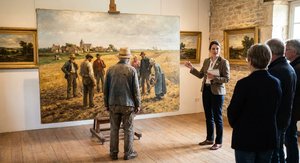
统计数据With hay


 展开全文
展开全文
艺术微喷/版画
博物馆级艺术微喷或帆布版画,制作高效,并提供多种饰面选择。 ( 订购纯手工绘制画作 切换至数字图像销售渠道)




































您可以从与原作比例一致的预设尺寸中进行选择。

请输入您所需的宽度和高度,以适配您的画框或墙面。由于印刷品只能进行裁剪,无法超出原图尺寸,因此若比例不一致,画面的一部分将会被裁切。在正式印刷之前,我们会为您发送一份数字效果图供您确认。本页面显示的图片并非最终裁剪后的效果——只有效果图才能展示真实的裁剪情况。


 玻璃选项仅适用于110厘米以下的尺寸。

With hay
艺术微喷/版画
复刻品尺寸
-


最终结算价
¥ 544
艺术家简介
Jan Antonín Hála: A Painter of Slovak Life and Folklore
Jan Antonín Hála (1890-1959) stands as a pivotal figure in Slovak art, a painter deeply rooted in the traditions and landscapes of his homeland. Born in Blatná, Czech Republic, he spent most of his life immersed in the rural beauty and vibrant culture of Slovakia, particularly the village of Važec nestled beneath the High Tatras mountains. His work transcends mere representation; it’s an evocative tapestry woven with Impressionistic brushstrokes, Realist detail, and a profound respect for Slovak folklore and daily life. Hála's legacy lies not just in his artistic skill but also in his dedication to documenting a vanishing world – a world of communal labor, ancient customs, and the enduring spirit of its people.Early Life and Artistic Training
Hála’s early years were marked by a fascination with both philosophy and art. He initially studied at the Academy of Fine Arts in Prague, gaining a solid foundation in artistic principles. However, it was his travels through rural Slovakia in 1923 that irrevocably shaped his artistic trajectory. He stumbled upon Važec, a village that immediately captivated him with its unique character – its landscape, its people, and the rhythms of their lives. This encounter became the central focus of his work for decades to come. Influenced by the Czech Social Painting Movement, particularly the works of Mikoláš Aleš, Hála initially explored landscapes and social themes, depicting the hardships faced by miners and the realities of rural life. He admired Aleš’s commitment to portraying the dignity and resilience of the working class.The Važec Years: A Celebration of Rural Life
The discovery of Važec proved transformative. Hála established himself there, dedicating his artistic efforts to capturing the essence of this small community. His paintings from this period are characterized by a remarkable warmth and optimism, portraying scenes of everyday life with an almost idyllic quality. He frequently depicted women engaged in traditional tasks – spinning wool, preparing meals, tending to children – always imbued with dignity and grace. Folk festivals, weddings, and communal gatherings became recurring subjects, offering glimpses into the rich tapestry of Slovak customs and traditions. The High Tatras mountains served as a constant backdrop, lending a sense of grandeur and timelessness to his scenes. He wasn't simply painting landscapes; he was capturing a way of life, a spirit of community, and a deep connection to the land.Style and Technique
Hála’s artistic style evolved over time, reflecting both his influences and his deepening understanding of his subject matter. Initially influenced by Impressionism, he gradually incorporated elements of Realism, Secession, and even Expressionism into his work. His use of color was particularly notable – a vibrant palette dominated by warm earth tones, punctuated by bright accents that captured the energy and vitality of Slovak life. He employed loose brushstrokes to convey movement and atmosphere, while meticulously rendering details such as costumes, tools, and facial expressions. His technique became increasingly intuitive and expressive, allowing him to capture not just the appearance but also the feeling of a scene.Legacy and Significance
Jan Antonín Hála’s work holds significant historical importance for several reasons. Firstly, he is considered one of the most important chroniclers of Slovak rural life in the 20th century. His paintings provide invaluable visual records of customs, traditions, and social structures that were rapidly disappearing during a period of profound change. Secondly, his art helped to elevate the status of Slovak folklore and culture within the broader artistic landscape. His depictions of folk festivals and traditional costumes contributed to a renewed appreciation for these elements of Slovak identity. Finally, Hála’s paintings are simply beloved by the public – their warmth, sincerity, and evocative beauty continue to resonate with viewers today. His works are frequently sought after at auctions, demonstrating his enduring artistic value and the lasting impact he had on Slovak art history. His legacy is a testament to the power of art to capture and preserve the essence of a culture and a way of life.
Jan Antonín Hála
1890 - 1959 , Czech Republic
艺术家简介
- Full Name: Jan Antonín Hála
- Nationality: Czech
- Date Of Birth: 1890
- Date Of Death: 1959
- Place Of Birth: Blatna, Czech Republic
- Notable Artworks:
- With Hay
- Uspávanka v poli
- Artistic Movement Or Style: Impressionism & Realism
- Artists Who Influenced This Artist: ['Mikoláš Aleš']
- Artists Or Movements Influenced By This Artist: ['Czech Social Painting']
相关文章

康斯塔布尔大师之作:25幅传世风景画赏析 | OriginalUniqueArt
探索康斯塔布尔的25幅传世杰作!沉浸于英国田园风光,感受浪漫主义绘画大师的光影与色彩。高清油画复制、艺术品购买尽在OriginalUniqueArt.com,为您的家居增添经典之美。立即在线探索完整系列!
Cultivating Visions: Rural Life & Social Commentary in Art History
Explore the rich history of rural life in art! Discover masterpieces from Dutch Masters to Van Gogh & Courbet. Uncover artistic movements, social significance & expert collecting insights at OriginalUniqueArt.
Jan Gossaert (Mabuse): Pioneering Renaissance Style & the Birth of Netherlandish Antiquity
Explore the groundbreaking art of Jan Gossaert (Mabuse), a pioneer of Renaissance painting in the Low Countries. Discover his Romanist style, stunning portraits, and influence on Northern European art history.

Echoes of Rural Life: Art's Enduring Representations of the Countryside
Explore the rich history of rural life in art! Discover masterpieces from Millet to Mauve & beyond. Learn about Realism, Barbizon School & find inspiration for your home with OriginalUniqueArt.
Frederick William Hayes: Transcendental Landscapes & the American Sublime
Explore the captivating landscapes of Frederick William Hayes, a Victorian artist influenced by the Hudson River School & literary utopias. Discover his legacy and artistic techniques at OriginalUniqueArt.