- 首页

- 油画复制品
- james grohé
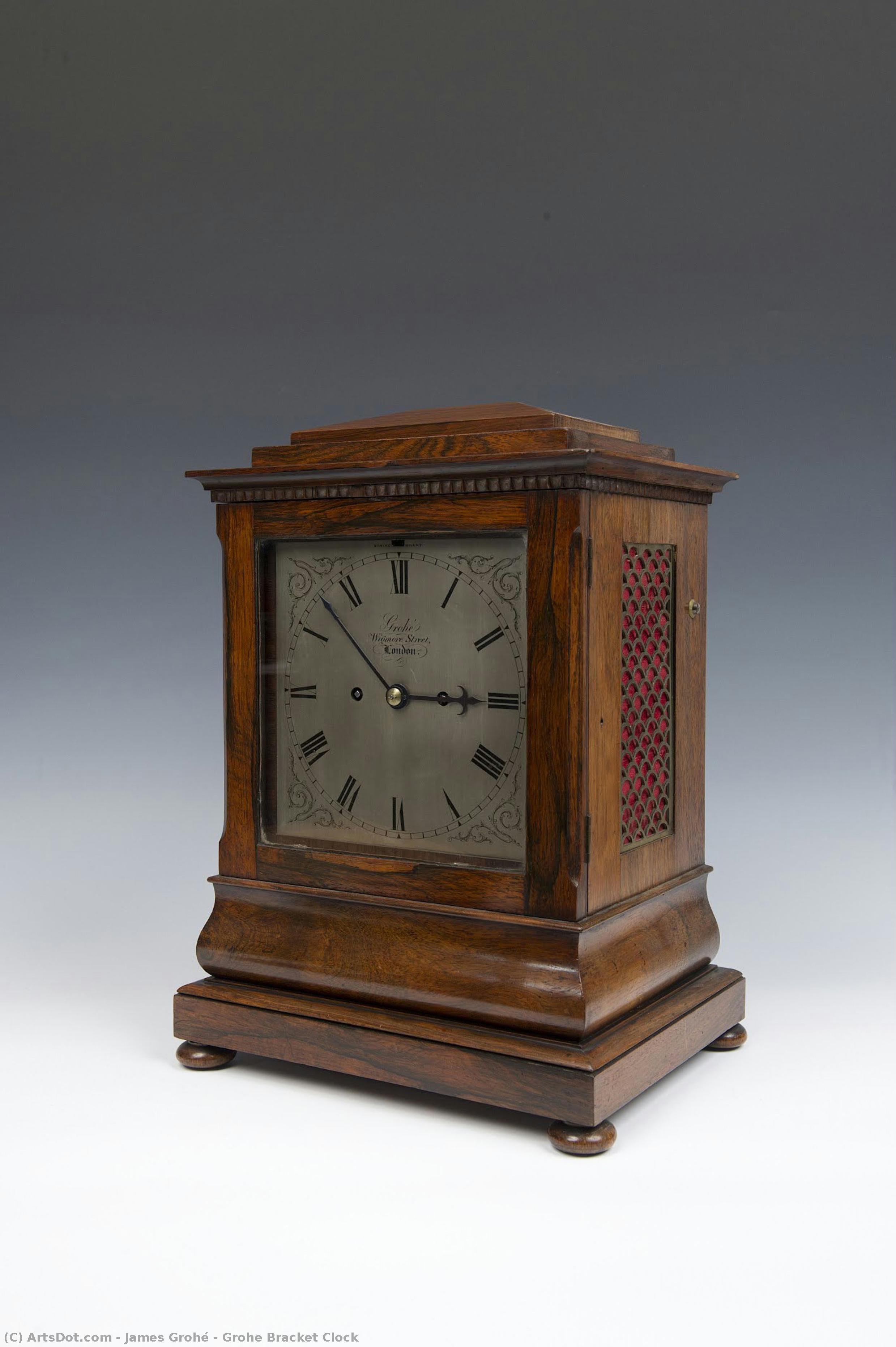
- Grohe Bracket Clock
 效果预览
效果预览
 切换至印刷版
 分享
分享 分享
分享
 详情
详情

 下载
下载
 相似作品
相似作品 X射线
X射线 幻灯片播放
幻灯片播放Grohe Bracket Clock
 1881
1881 39.0 x 29.0 cm
 Bank of England Museum
 展开详情
展开详情




































从与原作比例一致的预设尺寸中进行选择。

您可以输入自定义尺寸,以适配特定的画框或空间。如果所选尺寸与原图比例不符,我们将通过裁剪作品或添加手绘元素来扩展画面。数字样稿将在制作开始前发送给您确认。
请注意,屏幕预览无法准确反映实际的裁剪或扩展效果,只有样稿才能真实呈现最终的构图。
虽然我们提供定制尺寸服务,但为了保留原作比例,建议您从预设列表中选择尺寸。
下单后,OriginalUniqueArt.com 团队将通过电子邮件联系客户获取具体要求,并提供效果预览图。


 玻璃选项仅适用于110厘米以下的尺寸。

Grohe Bracket Clock
复制材质
复制品尺寸
-


最终总价
$ 300
作品详情
艺术家简介
James Grohé: The Clockmaker Who Crafted Victorian Elegance
James Grohé (1803-1881) wasn’t merely a craftsman; he was an architect of time itself. Born in Baden-Württemberg, Germany, Grohé possessed an innate fascination with precision and beauty—qualities that would define his extraordinary career as a clockmaker and ultimately elevate him to the status of Reichskommissar for Belgium and Northern France during the tumultuous years of World War II. His legacy resides not just in the intricate mechanisms he created but also in the enduring aesthetic they embody, reflecting the grandeur and sophistication of Victorian Britain.Early Life and Apprenticeship
Grohé’s formative years instilled within him a meticulous attention to detail—a characteristic that would serve as the bedrock for his lifelong pursuit of excellence. Following his father's footsteps, he apprenticed under Johann Georg Wolffenbüttel in Stuttgart, mastering the art of horology alongside a deep appreciation for sculptural artistry. This dual training fostered an understanding of how form and function could harmonize to produce objects of unparalleled elegance and technical prowess. The influence of Stuttgart’s artistic heritage undoubtedly shaped Grohé's sensibilities, nurturing his inclination towards crafting pieces that transcended mere utility.London Calling: Establishing His Workshop
In 1832, Grohé embarked on a transformative journey to London, establishing his workshop amidst the burgeoning industrial landscape of Victorian England. Recognizing the potential for innovation and collaboration within this vibrant metropolis, he quickly gained renown for producing exceptional carriage clocks—instruments that became synonymous with status and refinement during the era. His designs prioritized both aesthetic appeal and functional accuracy, incorporating innovative techniques like Breguet escapements and guilloché engraving to achieve unparalleled levels of precision. Collaborations with prominent British artists and designers further enriched his creative output, cementing Grohé’s reputation as a visionary craftsman who seamlessly blended artistry and engineering.Technique and Innovation: The Art of Guilloché Engraving
Grohé's mastery extended beyond the construction of clocks; he revolutionized decorative engraving techniques. He pioneered the use of guilloché—a complex process involving precisely etched patterns onto metal surfaces—to create mesmerizing textures and motifs within his clock cases and other ornamental objects. This technique, borrowed from Swiss watchmaking traditions, allowed for unparalleled levels of detail and visual richness, transforming plain metals into canvases of intricate beauty. The resulting surfaces shimmered with subtle variations in tone and texture, capturing the light in ways that conventional engraving methods simply couldn’t achieve—a testament to Grohé's dedication to pushing the boundaries of craftsmanship.A Legacy Beyond Timepieces
While Grohé’s clocks stand as enduring symbols of Victorian elegance, his influence extended far beyond the horological world. He served as Gauleiter of Gau Cologne-Aachen for nearly four decades, wielding considerable political power during the Nazi era—a controversial chapter in his life that underscores the complexities of historical interpretation. Despite this darker period, Grohé’s artistic achievements—particularly his contribution to guilloché engraving and his unwavering commitment to precision craftsmanship—remain firmly rooted in the annals of European art history. He cemented his place as a pivotal figure who shaped both the visual arts and the political landscape of his time, leaving behind an indelible mark on Victorian Britain and German cultural heritage.
james grohé
1803 - , Germany
艺术家简介
- Artistic Movement Or Style: Victorian Clockmaking
- Date Of Birth: 1803
- Full Name: James Grohé
- Nationality: German
- Notable Artworks:
- Carriage Clocks
- Decorative Timepieces
- Place Of Birth: Baden-Württemberg, Germany

