
 实景预览
实景预览
 分享
分享 分享
分享
 详情
详情 指南
指南

 下载作品
下载作品
 相似作品
相似作品 X射线
X射线 幻灯片播放
幻灯片播放 问答
问答 统计数据
统计数据Rue de Flandre in the Snow


 展开全文
展开全文
艺术微喷/版画
博物馆级艺术微喷或帆布版画,制作高效,并提供多种饰面选择。 ( 订购纯手工绘制画作 切换至数字图像销售渠道)




































您可以从与原作比例一致的预设尺寸中进行选择。

请输入您所需的宽度和高度,以适配您的画框或墙面。由于印刷品只能进行裁剪,无法超出原图尺寸,因此若比例不一致,画面的一部分将会被裁切。在正式印刷之前,我们会为您发送一份数字效果图供您确认。本页面显示的图片并非最终裁剪后的效果——只有效果图才能展示真实的裁剪情况。


 玻璃选项仅适用于110厘米以下的尺寸。

Rue de Flandre in the Snow
艺术微喷/版画
复刻品尺寸
-


最终结算价
¥ 544
Introduction to James Ensor and Rue de Flandre in the Snow
James Ensor, a Belgian painter who defied convention and embraced darkness with an unwavering gaze, remains one of the most distinctive voices of Symbolism and Expressionism. His oeuvre is marked by unsettling imagery—masks concealing identities, skeletons looming over landscapes—yet within these disturbing visions lies a profound appreciation for beauty found in unexpected places. Rue de Flandre in the Snow (1880), housed in the Fondation Socindec, exemplifies Ensor’s genius: it's not merely a depiction of winter; it’s an exploration of solitude, contemplation, and the subtle interplay between reality and psychological projection. This oil on canvas masterpiece invites viewers to delve beneath the surface of appearances and confront the anxieties inherent in everyday life.Composition and Visual Elements: A Study in Quiet Tension
The painting presents a deceptively simple scene—a deserted street lined with snow-covered houses against a muted winter sky. Ensor’s masterful use of perspective draws the eye inward, emphasizing the emptiness of the space and amplifying the sense of stillness. The absence of human figures is crucial to conveying this mood; they serve as anchors for our gaze, prompting us to consider what might be hidden beneath the façade of normalcy. Dominating the center of the composition is a fire hydrant—a commonplace object rendered with meticulous detail—which acts as an unsettling focal point, disrupting the serene tranquility and hinting at underlying tension. Ensor’s careful attention to texture—the rough surface of the buildings contrasted with the smooth sheen of the snow—further enhances the visual experience.Stylistic Influences: Expressionism's Embrace of Emotion
Ensor’s artistic style is undeniably rooted in Expressionism, a movement that prioritized conveying inner feelings over objective representation. Like Monet’s evocative landscapes – particularly Vetheuil, Pink Effect and The Boulevard de Pontoise at Argenteuil, Snow Effect – Ensor sought to capture the emotional resonance of his subjects rather than simply reproducing their visual appearance. However, unlike Monet's Impressionistic approach, Ensor deliberately distorted forms and colors to heighten psychological impact. This technique—characterized by bold brushstrokes and jarring juxtapositions—reflects Ensor’s belief that art should confront viewers with uncomfortable truths about the human condition.Symbolism Beyond Surface Appearance
Rue de Flandre in the Snow is laden with symbolic significance. The deserted street represents isolation and alienation, mirroring Ensor's preoccupation with themes of psychological vulnerability. The fire hydrant, seemingly insignificant, symbolizes urban decay and perhaps even a hint of impending doom—a jarring contrast to the pristine snowscape. Ensor’s use of color – predominantly muted blues and whites – contributes to the painting’s melancholic atmosphere, reinforcing its emotional core. These subtle visual cues invite contemplation about mortality, identity, and the anxieties inherent in confronting the complexities of modern life.Comparison with Claude Monet: Shared Landscape Themes, Divergent Visions
While Ensor and Monet shared a fascination with winter landscapes—Monet famously capturing the ethereal beauty of snowy scenes—their artistic approaches differed markedly. Where Monet aimed for luminous impressions of light and color, Ensor deliberately employed distortion and symbolism to express inner turmoil. Rue de Flandre in the Snow stands as testament to Ensor’s singular vision: a haunting portrayal of solitude that transcends mere visual depiction, cementing its place as a cornerstone of Expressionist art and an enduring symbol of artistic innovation.常见问题与解答
哪里可以买到詹姆斯·恩索尔 的《Rue de Flandre in the Snow》的手绘复制品?
您可以在詹姆斯·恩索尔 的《Rue de Flandre in the Snow》的手工油画复刻页面直接订购其手绘复制品:亚麻画布手工油画复制品,按需定制。
詹姆斯·恩索尔 的《Rue de Flandre in the Snow》 传达了怎样的情感?
詹姆斯·恩索尔 的《Rue de Flandre in the Snow》 传达出一种 Reflective 的情感基调。
“Rue de Flandre in the Snow”的作者是谁,创作于何时?
"Rue de Flandre in the Snow" 由 詹姆斯·恩索尔 创作于 1880 年。
艺术家简介
James Ensor:黑暗与疯狂的艺术先锋
詹姆斯·埃诺斯(1860年4月13日出生于奥斯坦德,比利时),是英国父亲和比利时母亲的儿子。这种文化双重可能预示着艺术家毕生对面具和伪装的热爱,这些主题将成为他令人震惊但又迷人的艺术作品的主导力量。在热闹的海滨小镇周围长大,年轻的詹姆斯深受卡尼农节气氛的影响,他的父母经营着一家充满贝壳、面具和异国情趣物品的纪念品店——一个真正的奇迹宝库,点燃了他的想象力并为他未来的艺术创作提供了丰富的视觉词汇。
早期作品与现实主义的探索
埃诺斯早期的绘画反映了更传统的风格,描绘了日常生活场景,采用阴郁的色彩。例如,《俄罗斯音乐》(1881年)和《醉酒者》(1883年),展现了他对现实主义的初步天赋,但即使在这些早期作品中,也存在着令人不安图像的萌芽。一个关键转变发生在埃诺斯的色彩变得鲜艳和主题日益怪诞的过程中。他开始在画布上填充卡尼农节、骷髅、木偶和象征人物——一个充满幻想的世界,经常边缘于疯狂之间。这不仅仅是一种风格上的变化;它是对人类存在黑暗面的有意识的探索,是对社会规范的拒绝以及对非理性拥抱。
从阴郁现实主义到怪诞景象
埃诺斯对艺术的态度并非传统审美主义者所追求的纯粹形式主义。他承认了来自大师们的影响,例如皮特·布鲁格尔长老,他的拥挤场景和道德说教风格与自己的愿景产生共鸣;此外,弗朗西斯科·戈雅对人类痛苦的不畏惧描绘也给埃诺斯艺术审美带来了深刻的印象。威斯斯勒强调了美学主义的重要性,这也在塑造埃诺斯的艺术感觉中发挥了一定的作用。
黑暗与疯狂的艺术先锋
尽管埃诺斯拒绝简单分类,但他的艺术渊源复杂而迷人。他承认了来自大师们的影响,例如皮特·布鲁格尔长老,他的拥挤场景和道德说教风格与自己的愿景产生共鸣;此外,弗朗西斯科·戈雅对人类痛苦的不畏惧描绘也给埃诺斯艺术审美带来了深刻的印象。威斯斯勒强调了美学主义的重要性,这也在塑造埃诺斯的艺术感觉中发挥了一定的作用。
主要成就与历史意义
埃诺斯是一位开创性的艺术家,他大胆地挑战了艺术规范,为后人打开了道路。他的作品继续吸引着观众的目光,并探讨了人类状况的深度和黑暗面。尽管最初面临阻力,埃诺斯最终在晚年获得了认可,被国王阿尔伯特一世封为贵族,并在1933年获得荣誉军团勋章。他于1949年在奥斯坦德去世,留下了一系列作品,这些作品继续激发人们的想象力和热情。

詹姆斯·恩索尔
1860 - 1949 , 比利时
艺术家简介
- Artistic Movement Or Style: 表现主义和超现实主义
- Artists Who Influenced This Artist:
- 布鲁格尔老杰尔
- 弗朗西斯科·戈雅
- 威斯斯勒
- Date Of Birth: 1860年4月13日
- Date Of Death: 1949年11月19日
- Full Name: James Sidney Edouard Ensor
- Nationality: 比利时人
- Notable Artworks:
- 《嘲讽的面具》
- 《圣安东尼的苦难》
- 《基督进入布鲁塞尔》
- Place Of Birth: 比利时奥斯登
相关文章

About Us
Discover our story! We bring world-class art into your life through expert curation, personalized creations, and free previews. Trusted by individuals and businesses since 2000.
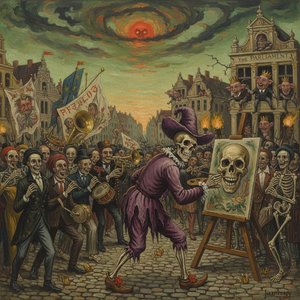
James Ensor's Grotesque Visions: Social Commentary & Artistic Innovation
Explore the unsettling yet captivating world of James Ensor, a pioneer of Expressionism. Discover his satirical masterpieces, symbolic imagery & lasting influence on modern art. High-quality reproductions available at OriginalUniqueArt.

Masterpieces of the English Countryside: Top 25 Sir Alfred James Munnings Artworks
Explore 25 iconic Sir Alfred James Munnings masterpieces. Discover timeless equine art on OriginalUniqueArt.com.

戈雅大师25幅杰作:西班牙灵魂的艺术之旅| OriginalUniqueArt
探索戈雅大师的25幅杰作!深入了解西班牙绘画巨匠Francisco Goya的艺术世界,从洛可可到浪漫主义风格,感受黑加仑时代的情感力量。OriginalUniqueArt.com提供高品质油画复制品和家居装饰灵感。立即在线发现所有名画!

惠斯勒大师25幅杰作:艺术、家居与永恒之美 | OriginalUniqueArt
探索詹姆斯·惠斯勒25幅杰作!深入了解夜曲、静谧和谐等经典油画背后的故事与艺术魅力。OriginalUniqueArt.com提供博物馆级复制品,为您的家居带来永恒之美。立即在线探索完整系列!


