

 实景预览
实景预览
 发送
发送 分享
分享
 详情
详情 指南
指南

 下载图片
下载图片
 相似作品
相似作品 X射线
X射线 幻灯片播放
幻灯片播放 统计数据
统计数据The Calvaryman
 Expressionism
 1949
1949 102.0 x 76.0 cm
 爱丁堡艺术学院
 阅读全文
阅读全文
艺术微喷/版画
博物馆级艺术微喷或帆布版画,制作高效,并提供多种饰面选择。 ( 订购此收藏品的纯手工复刻画作 切换至数字图像销售渠道)




































您可以从与原作比例一致的预设尺寸中进行选择。

请输入您所需的宽度和高度,以适配您的画框或墙面。由于印刷品只能进行裁剪,无法超出原图尺寸,因此若比例不一致,画面的一部分将会被裁切。在正式印刷之前,我们会为您发送一份数字效果图供您确认。本页面显示的图片并非最终裁剪后的效果——只有效果图才能展示真实的裁剪情况。


 玻璃选项仅适用于110厘米以下的尺寸。

The Calvaryman
艺术微喷/版画
复刻品尺寸说明
-


总计金额
¥ 538
Artist Background
James Cumming was a prominent figure in the Scottish art scene, particularly in the post-war period. Born in 1922, Cumming studied at the Edinburgh College of Art and later became a lecturer there until the early 1980s. His work is characterized by its thought-provoking and emotionally charged themes, often exploring the human experience.The Painting
The Calvaryman depicts a man dressed in a military uniform, sitting on a chair with his hands clasped in front of him. The subject's facial expression is contemplative, as if lost in thought. The painting's focus on the subject's face and hands creates an intimate atmosphere, drawing the viewer into the Calvaryman's world. The use of oil on canvas adds a sense of depth and texture to the piece, making it even more engaging. Key Features:- The painting's size: 102 x 76 cm
- The medium used: Oil on Canvas
- The current location: Edinburgh College of Art
The Calvaryman is a remarkable example of James Cumming's skill and artistry. To learn more about the artist and his work, visit https://OriginalUniqueArt.com/@/James-Cumming.
问答详情
“The Calvaryman”整体色调是偏明亮还是偏暗?
James Cumming 的《The Calvaryman》 的亮度记录为 bright,亮度值为 Gentle Luminance。
James Cumming 的《The Calvaryman》 的色彩是鲜艳夺目还是柔和低调?
"The Calvaryman" 的色调饱和度为 Clear Color Presence。
James Cumming 的《The Calvaryman》 的亮度如何?
"The Calvaryman" 的色彩呈现出 Gentle Luminance 的亮度。
艺术家简介
The Melodic Line: The Life and Legacy of James Cumming
James Cumming (1922–1991) was a painter whose work functioned as a bridge between the structured precision of geometry and the profound depths of human emotion. Born in Dunfermline, Scotland, his early life was marked by a remarkable discipline that extended far beyond the canvas. Before he became a cornerstone of the Edinburgh School, Cumming was a gifted musician, excelling at the piano with a level of distinction that suggested a lifelong devotion to technical mastery. This rhythmic sensibility, nurtured under the guidance of influential teachers like George Watson at the Edinburgh College of Art, would later manifest in his brushwork, where every stroke seemed to follow an internal, melodic logic.
His journey through the mid-twentieth century was shaped by both global upheaval and personal discovery. During his wartime service with the RAF Transport Command, Cumming traveled through India and Burma, experiences that expanded his cultural horizons and provided a diverse palette of perspectives. These travels, combined with the profound spiritual influence of Rudolf Steiner’s Anthroposophy, infused his later work with a search for holistic meaning and symbolic depth. The rugged, spiritual landscapes of the Isle of Lewis, explored during his time as an Andrew Grant Scholar, became a cornerstone of his repertoire, resulting in celebrated Hebridean paintings that captured the raw, atmospheric essence of Scotland’s western isles.
A Synthesis of Form and Spirit
As an artist, Cumming refused to be confined by a single movement, instead opting for a sophisticated synthesis of styles. His technique was a masterful dialogue between draughtsmanship and expressive abstraction. In works such as “The White Jug,” one observes a vibrant landscape of overlapping geometric shapes that pulsate with energy, yet the composition retains an underlying stillness. He possessed a rare ability to use color—often in bold, saturated tones—to convey atmospheric depth and a contemplative mood, making his canvases feel both intellectually rigorous and emotionally resonant.
His artistic development can be viewed through several key thematic lenses:
- Geometric Abstraction: A fascination with the structural integrity of form and the interplay of shapes.
- Landscape and Spirit: The translation of the rugged Hebridean terrain into spiritual, symbolic imagery.
- The Human Element: Portraits and figurative works, such as “The Calvaryman,” that explore the psychological weight of the human experience through meticulous detail.
Mentorship and Historical Significance
Beyond his individual contributions to the canvas, Cumming’s impact on the trajectory of Scottish art was profound due to his long-standing tenure as a lecturer at the Edinburgh College of Art from 1950 to 1982. In this role, he was not merely an instructor but a mentor to a new generation of luminaries, including Sandy Moffat and John Bellany. His presence in the academy ensured that the rigorous intellectual exploration and technical excellence he championed would continue to influence the post-war Scottish art scene for decades.
Today, James Cumming is remembered as an independent spirit who stood outside the mainstream of post-war painting, carving out a unique space where the cerebral and the visceral meet. His legacy remains etched in the halls of the Edinburgh College of Art and within the collections of institutions that recognize his role in defining the modern Scottish aesthetic—a legacy defined by a tireless pursuit of beauty through both structure and soul.

James Cumming
1922 - 1991
快速概览
- Artistic Movement Or Style: Edinburgh School
- Artists Or Movements Influenced By This Artist: ['Robin Philipson']
- Artists Who Influenced This Artist: ['George Watson']
- Date Of Birth: 1922
- Date Of Death: 1991
- Full Name: James Cumming
- Nationality: Scottish
- Notable Artworks:
- The Calvaryman
- The White Jug
- Woman with Second Sight
- Place Of Birth: Dunfermline, Scotland
相关文章

Oil on Canvas: A Historical & Technical Exploration of a Timeless Artistic Medium
Explore the rich history & enduring techniques of oil painting on canvas. Discover the science behind its longevity, conservation practices, and contemporary relevance. Expert insights for art enthusiasts.

惠斯勒大师25幅杰作:艺术、家居与永恒之美 | OriginalUniqueArt
探索詹姆斯·惠斯勒25幅杰作!深入了解夜曲、静谧和谐等经典油画背后的故事与艺术魅力。OriginalUniqueArt.com提供博物馆级复制品,为您的家居带来永恒之美。立即在线探索完整系列!

Jack Vettriano: Nostalgia, Narrative & the Poetics of Post-War Scottish Identity
Explore the captivating world of Jack Vettriano! Discover his iconic paintings, cinematic style & the themes shaping his unique vision of post-war Scottish identity. Expert analysis & insights.
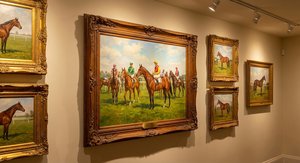
Sir Alfred Munnings' Masterpieces: 25 Paintings That Define Equine Art | OriginalUniqueArt
Explore 25 iconic Sir Alfred Munnings paintings! Discover the beauty of British Impressionism, equine art & rural England. Find museum-quality reproductions and elevate your home decor with OriginalUniqueArt. Explore the full collection online.

The Enduring Legacy of Oil on Canvas: Technique, History & Aesthetic Impact
Explore the rich history & techniques of oil painting – from Renaissance masters to Impressionism. Discover pigments, layering methods, and why this timeless medium endures. Expert insights for artists & art enthusiasts.