切换至版画销售渠道
 展开全文
展开全文







































 对于任何边长超过 105 厘米(约 41 英寸)的艺术品或复制品,画框将以拆解后的组件形式发货。此方法可确保安全送达并防止运输过程中的损坏。


Madame Trudaine: A Portrait Steeped in Revolutionary Ideals
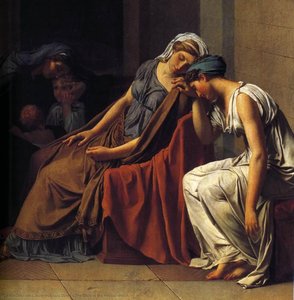
Jacques-Louis David’s “Madame Trudaine,” completed circa 1792, stands as a testament to the artistic fervor of the French Revolution—a moment when neoclassicism wrestled with burgeoning romantic sensibilities. This unfinished portrait captures Marie Louise Trudaine, wife of Charles Louis Trudaine, a prominent figure in Parisian society and David’s close friend, offering a glimpse into the refined tastes and aspirations of the era.
David's stylistic approach firmly rooted itself within the neoclassical tradition championed by Joseph-Marie Vien. The painting adheres to strict geometric principles—a deliberate rejection of Rococo frivolity—emphasizing clarity, balance, and idealized beauty. Notice the careful positioning of Madame Trudaine’s figure on a simple red wall; this minimalist backdrop serves to heighten the impact of her presence and directs the viewer's gaze directly onto her serene countenance.
The composition is notable for its subtle layering of figures—Madame Trudaine dominates the central space, flanked by two smaller individuals positioned on either side. These secondary figures contribute to a sense of grandeur and formality, mirroring the artistic conventions of the time. They represent not merely companions but symbols of social status and intellectual engagement – characteristics highly valued during the revolutionary period.
Technique and Material Considerations
David meticulously executed “Madame Trudaine” using oil paints on canvas—a technique favored by neoclassical artists for its ability to achieve luminous tonal gradations and precise detail. The artist’s brushstrokes are deliberate and controlled, conveying a sense of composure and restraint that aligns perfectly with the painting's overarching aesthetic. Careful attention was paid to capturing Madame Trudaine’s skin tone and drapery folds, demonstrating David’s mastery of anatomical accuracy.
Furthermore, the choice of red as the wall color is significant. Red symbolized power and nobility during the Revolution—a deliberate allusion to the monarchy overthrown by Napoleon Bonaparte. It underscores the painting's connection to the political landscape of its time and elevates it beyond a mere depiction of portraiture into a statement about artistic ideals.
Symbolism and Emotional Resonance
"Madame Trudaine" transcends its formal conventions to convey a profound sense of dignity and inner peace. The woman’s gaze is direct, conveying confidence and composure—qualities considered essential for portraying virtue and moral fortitude within the neoclassical framework. Despite being unfinished, the painting captures an essence of timeless beauty, reflecting David's belief in art as a vehicle for elevating human spirit.
As noted in scholarly research, this portrait exemplifies David’s commitment to capturing emotional truth amidst the turbulent backdrop of revolutionary France. It serves as a poignant reminder that even in times of upheaval, artists strive to embody ideals of harmony and nobility—a legacy that continues to inspire admiration and appreciation today.
常见问题与解答
在哪里可以观赏到 雅克-路易·大卫 的《Madame Trudaine》 的原作?
您可以在 卢浮宫, Paris, France 欣赏到原件《Madame Trudaine》。
雅克-路易·大卫 的《Madame Trudaine》 是运用了强烈的对比,还是呈现出柔和的和谐?
雅克-路易·大卫 的《Madame Trudaine》 的色彩构成将 Gentle 的对比与 Unified Palette 的和谐融为一体。
在哪里可以找到关于“Madame Trudaine”的指南?
雅克-路易·大卫 的《Madame Trudaine》 的 指南 页面提供了一份可打印的两页式学生资料单:包含作品及其基本信息表、将其置于艺术家生平中的年代轴、艺术家的其他作品、经测量的色板,以及四种格式的即用型引用文献。
 实景预览
实景预览
 分享
分享 分享
分享
 详情
详情 指南
指南

 下载作品
下载作品
 相似作品
相似作品 X射线
X射线 幻灯片播放
幻灯片播放 问答
问答 统计数据
统计数据