切换至版画销售渠道
 展开全文
展开全文







































 对于任何边长超过 105 厘米(约 41 英寸)的艺术品或复制品,画框将以拆解后的组件形式发货。此方法可确保安全送达并防止运输过程中的损坏。


A Gaze Through Time: The Introspective Soul of Jacques-Émile Blanche
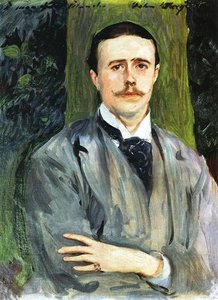
In the quiet, shadowed corners of late nineteenth-century Parisian art, few works capture the profound weight of identity as poignantly as this 1898 portrait. While the title suggests a connection to the gritty realism of Walter Richard Sickert, the hand behind this masterful oil on canvas is none other than Jacques-Élamile Blanche, a painter whose lineage and training placed him at the very heart of the French Belle Époque. This piece serves as more than just a depiction of a man; it is an invitation into a private moment of contemplation. The subject sits in a poised, seated pose, his presence commanding the space through a subtle, angled perspective that pulls the viewer directly into his steady, searching gaze. It is a composition that feels both intimate and monumental, perfect for a collector seeking a centerpiece that breathes life and history into a sophisticated interior.
The technique employed here is a masterclass in the use of light and texture, reminiscent of the great masters who preceded him. Blanche utilizes a directional light source originating from the upper left, a choice that does not merely illuminate but actively sculpts the subject's features. This chiaroscuro effect creates deep, dramatic shadows that define the contours of the face and the heavy folds of the clothing, lending the figure a three-dimensional vitality. The artist’s brushwork is remarkably tactile; through an impasto-like application of oil paint, he achieves a rich, layered texture that invites the eye to wander over the canvas. One can almost feel the weight of the fabric and the warmth of the skin, as the organic curves of the subject's hands and face are set against the more structured, geometric lines of his attire.
Beyond its technical brilliance, the painting resonates with a deep sense of psychological depth. The background is intentionally dark and indistinct, a void that strips away the distractions of the outside world to focus entirely on the subject's internal state. This stylistic choice fosters an atmosphere of introspection and perhaps a touch of artistic vanity, as if the sitter is acutely aware of his own legacy being captured for eternity. Subtle symbolic elements, such as the formal hat, hint at the social standing and professional dignity of the era, yet the overall mood remains grounded in a raw, human realism. For the interior designer or art enthusiast, this work offers a profound emotional impact—it is a piece that does not merely decorate a wall but anchors a room with its silent, powerful narrative of character and permanence.
常见问题与解答
雅克·埃米尔·布兰什 (Yǎkè Āimǐ'Ěr Bùlánshì) 的《Walter Richard Sickert》 的色彩饱和度如何?
"Walter Richard Sickert" 的色彩饱和度为 Muted。
在 雅克·埃米尔·布兰什 (Yǎkè Āimǐ'Ěr Bùlánshì) 的《Walter Richard Sickert》 中,艺术流派与时代背景是如何交汇的?
雅克·埃米尔·布兰什 (Yǎkè Āimǐ'Ěr Bùlánshì) 的《Walter Richard Sickert》 属于 Realism 流派,创作于其作者的 19世纪 时期。
建议将“Walter Richard Sickert”打印成多大的尺寸?
建议为 雅克·埃米尔·布兰什 (Yǎkè Āimǐ'Ěr Bùlánshì) 的《Walter Richard Sickert》 制作 Medium 的复制品。尺寸可以在保持比例不变的情况下进行调整。
 实景预览
实景预览
 分享
分享 分享
分享
 详情
详情 指南
指南

 下载作品
下载作品
 相似作品
相似作品 X射线
X射线 幻灯片播放
幻灯片播放 Q&A
Q&A 统计数据
统计数据