切换至版画销售渠道
 展开全文
展开全文







































 对于任何边长超过 105 厘米(约 41 英寸)的艺术品或复制品,画框将以拆解后的组件形式发货。此方法可确保安全送达并防止运输过程中的损坏。


A Descent into Eternity: Exploring Tintoretto’s “The Last Judgment”
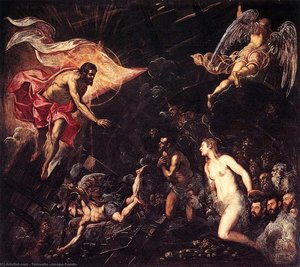
Jacopo Tintoretto's "The Last Judgment," completed in 1560, is not merely a painting; it’s an immersive experience. Born Jacopo Robusti in Venice around 1518 and known as Tintoretto – ‘little dyer’ reflecting his family’s trade – he forged a path of unparalleled dramatic intensity within the Venetian Renaissance. This monumental mural, measuring an imposing 1450 x 590 cm, transcends its physical dimensions to become a visceral representation of humanity's confrontation with mortality and divine judgment. It’s a work that continues to resonate centuries later, demanding attention and provoking profound contemplation.
Tintoretto’s style was revolutionary for his time, a dramatic departure from the more restrained elegance favored by many of his contemporaries. He eschewed the polished surfaces and delicate color palettes of the Venetian School, instead embracing a dynamic, almost chaotic composition filled with swirling figures, intense light, and deep shadows. This approach, fueled by an obsessive study of anatomy and a fascination with theatrical spectacle – evident in his stage design commissions – created a sense of overwhelming movement and emotional turbulence. The painting’s scale alone contributes to this effect; the viewer is drawn into a vortex of action, swept along by the torrent of souls being judged.
The Anatomy of Judgment: Composition and Technique
The scene unfolds within a vast, receding space, dominated by a towering stone wall that serves as both backdrop and symbolic barrier. Figures are arranged in a complex pyramid structure, converging towards Christ at the center, who holds aloft his cross – a potent symbol of sacrifice and redemption. The composition is deliberately unbalanced, reflecting the chaotic nature of judgment itself. To the left of Christ, angels, rendered with powerful musculature and expressive gestures, actively guide the souls of the righteous to salvation. Conversely, on the right, demons drag the damned into an inferno of flames, their faces contorted in agony.
Tintoretto’s masterful use of *chiaroscuro* – the dramatic contrast between light and dark – is central to the painting's impact. He employs a technique known as ‘tenebrism,’ where deep shadows engulf much of the scene, highlighting key figures and creating an atmosphere of suspense and dread. Light streams from unseen sources, illuminating faces in moments of terror or ecstasy, emphasizing the emotional weight of each individual’s fate. The artist utilized oil paint on a large scale, allowing for rich color saturation and layering of detail – a hallmark of his technique that would become increasingly pronounced throughout his career.
Symbolism and Spiritual Weight
“The Last Judgment” is laden with religious symbolism, drawing heavily from biblical narratives. The central figure of Christ embodies divine authority and mercy, while the angels represent grace and guidance. The deceased are depicted in various states of suffering – some pleading for forgiveness, others resigned to their fate. Note the meticulous detail lavished upon the folds of clothing, the expressions on faces, and the textures of skin and flesh; these elements contribute to a profound sense of realism that amplifies the painting’s emotional impact. The inclusion of figures recognizable as contemporary Venetian citizens adds another layer of meaning, suggesting that judgment extends to all humanity.
A Timeless Masterpiece: Reproduction and Beyond
OriginalUniqueArt offers meticulously crafted hand-painted reproductions of Tintoretto's “The Last Judgment,” capturing the artist’s dramatic intensity and masterful technique with unparalleled fidelity. These reproductions are not mere copies; they are artistic interpretations, created by skilled artisans who understand the nuances of Tintoretto’s style. Whether adorning a grand salon or a contemplative study, this monumental work continues to inspire awe and provoke reflection on themes of mortality, faith, and redemption. Investing in a OriginalUniqueArt reproduction allows you to bring this iconic masterpiece into your space, experiencing its power and beauty firsthand.
常见问题与解答
"The Last Judgment" 的主题与 丁托列多 常有的创作主题有何关联?
"The Last Judgment" 描绘了 last judgment, divine justice, hellscape, angels, humanity, drama, tintoretto, renaissance,而 丁托列多 的创作主题则以 titian’s dramatic lighting, venetian style, religious judgment, salvation, damnation, venetian civic patronage, power dynamics, tintoretto's dynamic composition 见长。通过两者的对比,可以发现此作与艺术家惯用题材之间的内在联系。
馆藏于 Madonna dell'Orto 的 丁托列多 的《The Last Judgment》 是否可以进行合法复制?
《The Last Judgment》的原作收藏于Madonna dell'Orto,该作品属于属于公有领域 —— 其版权已过期。
丁托列多 的《The Last Judgment》 的主导色是什么?
Black (#1c1113) 是 丁托列多 的《The Last Judgment》 的主导色。
 实景预览
实景预览
 分享
分享 分享
分享
 详情
详情 指南
指南

 下载作品
下载作品
 相似作品
相似作品 X射线
X射线 幻灯片播放
幻灯片播放 Q&A
Q&A 统计数据
统计数据