
 实景预览
实景预览
 分享
分享 分享
分享
 详情
详情 指南
指南

 下载作品
下载作品
 相似作品
相似作品 X射线
X射线 幻灯片播放
幻灯片播放 问答
问答 统计数据
统计数据Alessandro de' Medici


 展开全文
展开全文
艺术微喷/版画
博物馆级艺术微喷或帆布版画,制作高效,并提供多种饰面选择。 ( 订购纯手工绘制画作 切换至数字图像销售渠道)




P118B ¥10

P118H ¥10

P118W ¥10

P438Z ¥10

P508JH ¥12

P508YH ¥12

P805H ¥10

P805Z ¥10

P919BZ ¥10

P919G ¥10

P919XJ ¥10

P959ZH ¥10

P968JZ ¥12

W106C ¥8

W218G ¥10

W218JH ¥8

W218Y ¥10

W307PJ ¥10

W316G ¥10

W316PJ ¥8

W316Y ¥10

W398PJ ¥8

W4111J ¥10

W500HY ¥15

W500JH ¥15

W692G ¥12

W849H ¥8

W940BG ¥15

W953PJ ¥8




您可以从与原作比例一致的预设尺寸中进行选择。

请输入您所需的宽度和高度,以适配您的画框或墙面。由于印刷品只能进行裁剪,无法超出原图尺寸,因此若比例不一致,画面的一部分将会被裁切。在正式印刷之前,我们会为您发送一份数字效果图供您确认。本页面显示的图片并非最终裁剪后的效果——只有效果图才能展示真实的裁剪情况。


 玻璃选项仅适用于110厘米以下的尺寸。

Alessandro de' Medici
艺术微喷/版画
复刻品尺寸
-


最终结算价
¥ 543
The Soul Beneath the Crown: A Study in Mannerist Melancholy
In the quiet, tension-filled corridors of 16th-century Florence, a new kind of portraiture began to emerge—one that sought not to flatter the sitter with outward glory, but to expose the profound psychological tremors beneath their skin. Jacopo Carucci, known more evocatively as Pontormo, achieved this feat masterfully in his 1535 masterpiece, Alessandro de' Medici. This is not merely a record of a ruler’s likeness; it is an intimate encounter with a soul caught in the crosswinds of political instability and personal introspection. As one gazes upon the face of the first Duke of Florence, there is an immediate sense of being drawn into a private moment of contemplation, where the weight of a turbulent reign is visible in the very shadows of the eyes.
The composition eschews the grand, sweeping landscapes and opulent backdrops typical of High Renaissance portraiture. Instead, Pontormo employs a deliberate simplicity, focusing the viewer’s entire attention on the upper torso and the hauntingly expressive face of Alessandro. By stripping away the distractions of worldly wealth, the artist forces an encounter with the subject's humanity. The minimal background serves to isolate the Duke, creating a vacuum of space that amplifies his sense of solitude. This stylistic choice is quintessential to the Mannerist movement, where the goal was to move beyond mere anatomical accuracy toward a more heightened, expressive, and often unsettling emotional truth.
Technique and the Language of Light
To behold this work is to witness the exquisite technical prowess of Pontormo’s brush. Utilizing oil on canvas, the artist layered pigments with a meticulous sensitivity that allows for breathtaking tonal gradations. The lighting is soft, almost diffused, as if filtered through the heavy atmosphere of a Tuscan twilight. This gentle illumination does not strike the subject with dramatic force; rather, it caresses the contours of the face, creating subtle transitions between light and shadow that lend a startling three-dimensional vitality to the skin. Such mastery of sfumato and tonal modulation allows the viewer to perceive the slight tension in the brow and the reflective depth within the gaze.
The color palette is a sophisticated arrangement of muted earth tones—deep browns, creamy highlights, and somber blacks, punctuated by subtle, bruised reds. These colors do not shout; they whisper of gravity and importance. The textures, though appearing smooth to the eye, possess an underlying complexity that suggests the heavy, fine fabrics of ducal attire. For the discerning collector or interior designer, this painting offers a profound sense of gravitas. It is a piece that does not demand attention through garishness but commands it through its quiet, undeniable presence, making it an ideal centerpiece for spaces designed for reflection, study, or sophisticated conversation.
A Legacy of Emotional Resonance
Beyond the technical brilliance lies the historical and symbolic heartbeat of the piece. Alessandro de' Medici lived a life defined by transition and uncertainty, and Pontormo captures this zeitgeist with uncanny precision. The elongated forms and slightly distorted perspectives characteristic of Mannerism serve as visual metaphors for a world where the stable proportions of the Renaissance were fracturing. There is an inherent ambiguity in the subject’s expression—is it pride, or is it sorrow? Is it the composure of a leader, or the mask of a man burdened by his station?
This ambiguity is precisely what gives the portrait its enduring power. It invites the viewer to participate in the interpretation, making every encounter with the artwork a new discovery. For those seeking to adorn their homes or galleries with works of significant intellectual and emotional depth, a high-quality reproduction of this Pontormo masterpiece offers more than just aesthetic beauty; it offers a window into the complexities of the human condition. It is an invitation to dwell in the presence of greatness, even in its most vulnerable and melancholic moments.
常见问题与解答
雅科波·蓬托尔莫 (Yǎkèbó Péngtuǒ'Ěrmò) 的《Alessandro de' Medici》 的整体基调是什么?
雅科波·蓬托尔莫 (Yǎkèbó Péngtuǒ'Ěrmò) 的《Alessandro de' Medici》 的整体基调为 Dramatic,这种基调传达了作品的整体氛围。
是否有关于 雅科波·蓬托尔莫 (Yǎkèbó Péngtuǒ'Ěrmò) 的《Alessandro de' Medici》 的幻灯片展示?
您可以在作品的幻灯片展示页面上观看“Alessandro de' Medici”的幻灯片展示。
芝加哥艺术学院馆藏作品“Alessandro de' Medici”的复制权归属如何?
馆藏于 芝加哥艺术学院 的 雅科波·蓬托尔莫 (Yǎkèbó Péngtuǒ'Ěrmò) 的《Alessandro de' Medici》 属于 属于公有领域 —— 其版权已过期。这一状态决定了该图像是否可以进行复制。
艺术家简介
忧郁的远见者:雅科波·蓬托尔莫的一生与遗产
雅科波·卡鲁奇,在历史上以那充满情感色彩的绰号蓬托尔莫为人所知,是一位用画笔捕捉时代转型本质的艺术家。他于1494年左右出生在托斯卡纳的小村庄蓬托尔莫,早年生活笼罩在深沉的孤独与忧郁之中,正是这些特质,后来为他的画布注入了无与伦比的心理深度。作为佛罗伦萨的一名年轻学徒,他在艺术范式不断更迭的世界中穿行,最终脱颖而出,成为佛罗伦萨风格主义运动的核心人物。不同于那些试图通过平衡与数学和谐来追求完美的盛期文艺复兴大师,蓬托尔莫转向内心,力求表达人类灵魂中动荡且往往令人不安的复杂性。 他的成长岁月深受巨匠阴影的影响。在多梅尼科·德尔·波莱乌奥洛的教导以及米开朗基罗·博纳罗蒂那丰碑式的深刻影响下,他掌握了文艺复兴大师所必需的解剖学精准度,但他内心却有一种无法抑制的冲动,想要为了情感效果而扭曲这种现实。他的灵感不仅源自米开朗基罗作品中那种雕塑般的厚重感,也汲取自阿尔布雷希特·丢勒那些细腻且富有情感的版画。这种意大利形式与北欧表现主义细节的独特融合,使他开创了一种全新的风格——画中的人物仿佛失去了重力的束缚,在模糊而如梦似幻的空间中漂浮。风格主义的构筑:风格与创新
观赏蓬托尔莫的绘画,仿佛进入了一个物理定律与透视法则被悬置的领域。他的作品代表了对前人那种宁静、规整透视法的刻意背离。在诸如《受访》或那幅令人震撼的《降架》等杰作中,人们可以观察到他革命性风格主义美学的标志:细长的肢体、扭曲且不自然的姿态,以及一组充满活力、近乎酸性的色调,这些色彩在超凡脱俗的光影下交织闪烁。他用旋转、拥挤的构图取代了文艺复兴时期稳定的三角形结构,从而唤起一种躁动不安的能量与精神上的动荡感。 蓬托尔莫的技术才华在于他能够将色彩与形式作为心理工具。他的人物往往漂浮在不确定的环境中,不受重量的阻碍,营造出一种深刻的不稳定性。这并非单纯的技巧矫饰,而是一种蓄意的尝试,旨在传达那个处于文艺复兴的确定性与巴洛克即将到来的戏剧性之间的时代所特有的精神焦虑。无论是通过《艾马us的晚餐》中戏剧性的光影,还是在他对基督的研究中所展现出的那种冷峻而强烈的情感强度,蓬托尔莫利用每一笔触都在探索悲恸、虔诚与神圣的主题。在艺术史上留下的持久印记
雅科波·蓬托尔莫的历史意义不言而喻。他充当了一座至关重要的桥梁,将15世纪的古典理想转化为定义了16世纪大部分艺术的、极具表现力且戏剧化的语言。他的影响力在佛罗伦萨画派中激荡,塑造了如布隆齐诺等继任者的作品,并确保了美与人工技巧之间的张力始终是欧洲绘画中的核心对话。 他的全部作品集至今仍是个人视觉力量战胜传统的明证。通过他的肖像画,例如那幅庄严的《科西莫一世·德·美第奇》,以及他那些具有深刻象征意义的宗教作品,他证明了艺术可以不仅仅是现实的镜像,更可以是通往潜意识的窗口。尽管他的生活常被个人的哀伤所笼罩,但他色彩的绚烂与构图的复杂性至今仍能俘获人心,邀请每一位观者沉浸在这位佛罗伦萨大师那美丽、扭曲且充满人性深度的世界之中。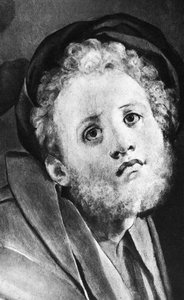
雅科波·蓬托尔莫 (Yǎkèbó Péngtuǒ'Ěrmò)
1494 - 1557 , 意大利
艺术家简介
- 代表作品:
- 探亲拜访
- 降架圣母
- 哈伯代尔
- 全名: 雅科波·蓬托尔莫
- 出生地: 意大利托斯卡纳蓬托尔莫
- 出生日期: 约1494年
- 受此画家影响的艺术家:
- 米开朗基罗
- 罗索·菲奥伦蒂诺
- 国籍: 意大利
- 影响此画家的艺术家:
- 达芬奇
- 安德烈亚·索尔托
- 艺术运动或风格: 曼涅里主义
- 逝世日期: 1557/7年
相关文章

About Us
Discover our story! We bring world-class art into your life through expert curation, personalized creations, and free previews. Trusted by individuals and businesses since 2000.

戈雅大师25幅杰作:西班牙灵魂的艺术之旅| OriginalUniqueArt
探索戈雅大师的25幅杰作!深入了解西班牙绘画巨匠Francisco Goya的艺术世界,从洛可可到浪漫主义风格,感受黑加仑时代的情感力量。OriginalUniqueArt.com提供高品质油画复制品和家居装饰灵感。立即在线发现所有名画!

The Enduring Legacy of Fine Art Prints: Technique, History & Aesthetic Impact
Explore the rich history & techniques of fine art prints. Discover investment potential, assess authenticity, and learn how to preserve your collection with expert guidance. Trusted insights for discerning collectors.

Jacopo Pontormo: A Bridge Between Renaissance Tradition & Mannerist Emotion
Explore the captivating world of Jacopo Pontormo, a pivotal Italian Mannerist painter. Discover his unique style, influences & masterpieces – and find museum-quality reproductions at OriginalUniqueArt.

高檔藝術品複製技術:Giclée微噴的檔案品質與鑑賞細節
深入了解Giclée微噴技術:檔案品質、色彩還原的專業解析。探索高檔藝術品複製的細節與保存技巧,為您的收藏提供博物館級別的選擇。專家指導,確保完美呈現原作神韻。

