
 实景预览
实景预览
 分享
分享 分享
分享
 详情
详情 指南
指南

 下载作品
下载作品
 相似作品
相似作品 X射线
X射线 幻灯片播放
幻灯片播放 问答
问答 统计数据
统计数据Wheat Fields

- 100.0 x 130.0 cm


 展开全文
展开全文
艺术微喷/版画
博物馆级艺术微喷或帆布版画,制作高效,并提供多种饰面选择。 ( 订购纯手工绘制画作 切换至数字图像销售渠道)




P118B ¥10

P118H ¥10

P118W ¥10

P438Z ¥10

P508JH ¥12

P508YH ¥12

P805H ¥10

P805Z ¥10

P919BZ ¥10

P919G ¥10

P919XJ ¥10

P959ZH ¥10

P968JZ ¥12

W106C ¥8

W218G ¥10

W218JH ¥8

W218Y ¥10

W307PJ ¥10

W316G ¥10

W316PJ ¥8

W316Y ¥10

W398PJ ¥8

W4111J ¥10

W500HY ¥15

W500JH ¥15

W692G ¥12

W849H ¥8

W940BG ¥15

W953PJ ¥8




您可以从与原作比例一致的预设尺寸中进行选择。

请输入您所需的宽度和高度,以适配您的画框或墙面。由于印刷品只能进行裁剪,无法超出原图尺寸,因此若比例不一致,画面的一部分将会被裁切。在正式印刷之前,我们会为您发送一份数字效果图供您确认。本页面显示的图片并非最终裁剪后的效果——只有效果图才能展示真实的裁剪情况。


 玻璃选项仅适用于110厘米以下的尺寸。

Wheat Fields
艺术微喷/版画
复刻品尺寸
-


最终结算价
¥ 543
Jacob van Ruisdael’s “Wheat Fields”: A Symphony of Light and Landscape
“Wheat Fields,” painted circa 1670 by Jacob Jansz van Ruisdael, stands as arguably the most arresting depiction of Dutch pastoralism from the Golden Age. More than just a scenic vista, it's a masterful orchestration of atmospheric perspective and compositional dynamism—a painting that continues to resonate with viewers centuries later. Examining its intricacies reveals not only Van Ruisdael’s technical prowess but also his profound understanding of conveying emotion through visual language.A Masterclass in Atmospheric Perspective
Van Ruisdael's signature style is characterized by a deliberate flattening of depth, achieved through subtle gradations of color and tonal variation. The distant wheat field recedes into hazy blues and greens—a technique known as atmospheric perspective—creating an illusion of vastness and conveying the serenity of rural life. Unlike many contemporaries who prioritized detailed realism, Ruisdael prioritized capturing the essence of a landscape rather than meticulously recreating every blade of grass. This approach aligns perfectly with the prevailing philosophical currents of the time, where contemplation and reflection on nature held considerable sway. The artist skillfully uses light—particularly diffused sunlight filtering through clouds—to sculpt the forms of the field and its inhabitants, imbuing the scene with an ethereal quality.Compositional Drama: Figures Amidst Vastness
The inclusion of two figures—a man carrying a bag and a woman accompanied by a child—adds a crucial element of narrative complexity to the landscape. Their placement at the forefront draws the eye inward, anchoring the viewer’s gaze amidst the expansive expanse of wheat and sky. The figures aren't merely decorative additions; they serve as symbols of human presence within the natural world, prompting contemplation about our relationship with the environment. Furthermore, Van Ruisdael employs a dynamic diagonal line that bisects the canvas, guiding the eye across the scene and enhancing its visual impact. This compositional device contributes to the painting’s dramatic tension—the subtle interplay between light and shadow emphasizing the contours of the landscape and the figures alike.Symbolism Rooted in Dutch Identity
“Wheat Fields” embodies the spirit of the Dutch Golden Age, reflecting a fascination with idealized representations of national identity. The wheat field itself symbolizes fertility and prosperity—themes central to Dutch agricultural traditions and economic success during this period. The inclusion of livestock reinforces these associations, grounding the scene in tangible realities while simultaneously elevating it to a realm of symbolic significance. Van Ruisdael’s depiction of the sky—dominated by swirling clouds illuminated by sunlight—suggests both beauty and vulnerability—a motif that resonates with broader anxieties about the unpredictable forces of nature.Emotional Resonance: Tranquility and Reflection
Ultimately, “Wheat Fields” succeeds in evoking a profound sense of tranquility and contemplation. The muted palette—primarily blues, greens, and browns—creates an atmosphere of calm repose, inviting viewers to immerse themselves in the stillness of the countryside. Yet, beneath this surface serenity lies a subtle undercurrent of drama—the interplay of light and shadow hinting at hidden complexities. As Gavin Finney eloquently describes it, Ruisdael “picks the moment you’d want to press the shutter on a camera,” capturing not just what is seen but also what is felt—a testament to Van Ruisdael's ability to transform visual observation into emotionally resonant art.- Artist: Jacob Jansz van Ruisdael
- Date: Circa 1670
- Medium: Oil on Canvas
- Dimensions: 39 3/8 x 51 1/4 in. (100 x 130.2 cm)
常见问题与解答
雅各布·伊萨克松·范勒伊斯达尔 的《Wheat Fields》 为室内空间增添了怎样的氛围?
雅各布·伊萨克松·范勒伊斯达尔 的《Wheat Fields》 营造出一种 Serene 的氛围,推荐用于 Living Room。作品的情绪感即是其为周围空间带来的意境。
如何下载 雅各布·伊萨克松·范勒伊斯达尔 的《Wheat Fields》 的图片?
"Wheat Fields" 可供下载:您可以在该作品的 下载数字图像 页面进行 高分辨率数字图像下载。
雅各布·伊萨克松·范勒伊斯达尔 的《Wheat Fields》 的亮度如何?
雅各布·伊萨克松·范勒伊斯达尔 的《Wheat Fields》 的记录亮度为 Gentle Luminance。
艺术家简介
早年生活、家族与艺术启蒙
1628年,雅各布·伊萨克松·范·鲁伊斯代尔出生于荷兰哈勒姆,那是一个艺术被视为家族传承的时代。作为伊萨克·范·鲁伊斯代尔与梅肯·科内利斯多赫的儿子,他自幼便在充满匠心传承的家庭氛围中成长。他的祖父雅各布·德·戈耶曾是一位家具匠人,这种对工艺精湛程度与技术精准度的极致追求,为他日后投身视觉艺术领域奠定了坚实的生命底色。
他艺术生命的轨迹,很大程度上受到了身边亲人的深刻塑造。作为当时杰出的风景画家萨洛蒙·范·鲁伊斯代尔的侄子,人们普遍认为,雅各布·伊萨克松·范·鲁伊斯代尔是在叔父的悉心指导下接受了正式的艺术训练。通过这种直接的学徒制传承,他不仅吸收了荷兰风景画的细微神韵,更通过这份家族纽带,与哈勒姆画派那深厚的艺术传统建立了直接的血脉联系。
到了1648年,随着正式加入哈勒姆画家协会,他的职业地位得到了官方认可。这一身份的转变,标志着他已从家族手艺的学徒,蜕变为一名拥有独立艺术造诣的实践者。在那个竞争激烈的艺术中心,他度过了建立声望的早期岁月,为日后那段将他带离故土、走向更广阔艺术舞台的辉煌生涯做好了准备。
在阿姆斯特丹的生活与事业
从哈勒姆的宁静转向阿姆斯特丹的繁华,标志着雅各布·伊萨克松·范·鲁伊斯代尔人生中一个决定性的转折点。大约在1656年或1657年间,为了追寻荷兰共和国商业心脏所提供的更广阔的市场,他移居到了这座城市。这段迁徙岁月也伴随着他个人生命中的重要时刻,例如1657年6月17日在纳尔登附近的安克维恩接受洗礼。定居之后,他余生都留在了阿姆斯特丹,并在这座他日后频繁描绘的城市景观中,逐渐确立了自己的地位。
他在城市中的职业生涯以持续不断的创作为特征,题材极其丰富,从宏大的城市全景到达姆河(Damrak)错综复杂的细节,无所不包。随着岁月的沉淀,他的兴趣似乎逐渐超越了画布的边界。据说在晚年,他曾从事医生工作,这一追求暗示了他在进行视觉观察之余,还拥有着丰富多样的智力生活。这种在城市中的双重生活,折射出一位深植于荷兰黄金时代社会与职业结构中的艺术家的多面特质。
技法与艺术风格
雅各布·伊萨克松·范·鲁伊斯代尔对画布的驾驭,展现出一种永不满足的变幻万千。他从未止步于单一的创作模式,而是以极其丰硕的产出,在静谧的乡村风光与宏大壮阔的英雄式景观之间游走。他的技法极其精准,这在很大程度上归功于他对薄层油彩罩染法的精妙运用。通过这种层层叠加的技法,他能够实现色彩与色调之间极其细腻的过渡,从而营造出一种仿佛具有生命力、真实存在而非仅仅是笔墨堆砌的深度感。凭借这种耐心的笔触,他完美掌握了大气透视法,利用空气中朦胧的质感,将远处的山峦与森林推向一片柔和而银亮的深远意境之中。
他作品中的情感基调往往拥有一种超越单纯地形描绘的厚重感。他拥有一种天赋,能将诗意、忧郁甚至悲剧性的特质注入构图之中。这种情感的传达,得益于他对光影近乎大师级的掌控。他并不依赖于那种生硬、刺眼的对比,而是巧妙地利用光线来塑造场景的情感温度。他的构图往往极具戏剧性,常以浩瀚无垠的天空来衬托下方渺小的尘世元素。在他许多晚期的作品中,天空占据了画面的极大比例,成为了驱动作品内在张力与氛围的核心力量。
《岩石景观中的瀑布》 Waterfall in a Rocky Landscape
《一缕阳光》 The Ray of Sunlight
《山间激流》 Mountain Torrent
传世名作与艺术巅峰
在艺术生涯的早期,雅各布·伊萨克松·范·鲁伊斯代尔的作品便已展现出他对荷兰乡村肌理的深刻洞察。1646年,他创作了《林中空地》与《远处的村庄风景》,这些杰作确立了他将自然元素有机整合为连贯且富有氛围感的场景的能力。到了1649年,他的创作重心开始转向家乡特有的地形地貌,正如《灌木丛(哈勒姆沙丘小径)》所展现的那样。在这些早期的岁月里,他对于茂密植被与开阔视野中光影交织的掌控力,正随着创作的深入而日益精进。
随着技艺的日臻成熟,他的创作题材也随之扩展,开始涉足更为戏剧化且多变的自然环境。1650年无疑是他创作的高产期,诞生了如《修道院》以及更具动感与波澜的《码头边的汹涌海浪》等作品。在这一时期,他还在《辛格拉文附近的两个水磨坊与一个开闸》中,探索了人类工业与自然力量的交汇点,并在《有旅人的风景》中捕捉到了景观中那份静谧的孤独感。这些构图展现了他对空间尺度精妙的理解,以及如何利用光线来定义特定的瞬间。
而在他后期的构图创作中,往往更加强调自然界内在的结构之美。1656年的《森林边缘与麦田》,完美展示了他平衡森林厚重感与农田开阔感的高超技巧。他这种描绘多变透视关系的能力,不仅丰富了艺术的表现力,更在很大程度上定义了荷兰黄金时代的视觉语言。
- 《林中空地》(1646)
- 《远处的村庄风景》(1646)
- 《灌木丛(哈勒姆沙丘小径)》(1649)
- 《修道院》(1650)
- 《码头边的汹涌海浪》(1650)
- 辛格拉文附近的《两个水磨坊与一个开闸》 (1650)
遗产与影响
雅各布·伊萨克松·范·鲁伊斯代尔的艺术视野远超荷兰国境,其深远的触角深入到了后世风景画传统的根基之中。在浪漫主义运动兴起之前,他便已是一位“浪漫主义者”,他赋予自然界一种道德上的厚重感,以及一种忧郁而富有诗意的氛围,这种情感的张力预示了数个世纪后艺术表现的高度。这种为画面注入特定心理氛围的能力,使得他的作品在逝世多年后,依然能与各种艺术运动产生共鸣。他的影响力不仅塑造了英国浪漫主义和法国巴比松画派,其精神甚至跨越了大西洋,深刻影响了美国的哈德逊河画派。
在荷兰本土,他激励了一代又一代的荷兰风景画家,为如何通过光影来诠释乡村风光树立了典范。他对环境的描绘从未仅仅停留在地形的记录;他更致力于捕捉土地的本质,常通过戏剧性的天空和厚重的肌理来传达一种“崇高”的意境。这种对自然大气特质的专注,确保了他的艺术风格成为了后来者追随其足迹时不可或缺的基石。
今日何处寻觅其踪迹
雅各布·伊萨克松·范·鲁伊斯代尔的画布如今散落在欧洲与美洲各大艺术殿堂之中,静静诉说着往昔的辉煌。在荷兰本土,坐落于阿姆斯特丹的国立博物馆珍藏了大量他的作品,为人们提供了一个深度审视其艺术演进历程的绝佳窗口。而在海牙,著名的莫里茨皇家美术馆亦收藏有数幅其代表作,让我们得以窥见那些定义了他艺术生涯的壮丽景观。他的艺术影响力跨越国界,延伸至伦敦的国家美术馆,在那里,他的杰作与众多荷兰黄金时代的艺术大师并列,共同构筑起艺术史的丰碑。
目光投向荷兰之外,在多家国际顶尖机构的永久馆藏中,依然能感受到这位大师留下的深刻印记。巴黎的卢浮宫与圣彼得堡的冬宫博物馆均珍藏有他的画作,确保了他的视觉语言能够作为全球艺术经典的一部分,在时空中永存。而在大洋彼岸的美国,纽约的大都会艺术博物馆悉心保存着他的绘画作品,让后世学者得以不断深入研究他对于光影与大气氛围那近乎神迹的掌控力。
- 《瀑布景观》,约1668年
- 《维克拜迪杜斯特德的风车》,1670年
- 《带有漂白场的哈勒姆全景》,1675年
- 阿姆斯特丹的堤坝广场(细节图),1670年

雅各布·伊萨克松·范勒伊斯达尔
1628 - 1682 , 荷蘭
艺术家简介
- Artistic Movement Or Style: 荷兰黄金时代
- Artists Or Movements Influenced By This Artist:
- 英国浪漫主义
- 巴比松画派
- 哈德逊河画派
- Artists Who Influenced This Artist:
- 科内利斯·弗鲁姆
- 阿拉特·范·埃弗丁根
- Date Of Birth: 1628年
- Date Of Death: 1682年
- Full Name: 雅各布·伊萨克松·范·鲁伊斯代尔
- Nationality: 荷兰
- Notable Artworks:
- 林中空地
- 远处的村庄风景
- 灌木丛
- 修道院
- 码头边的汹涌海浪
- 两座水磨坊和一道开闸
- 带旅人的风景
- 乡村
- 森林边缘的麦田
- 带湖泊的林中场景
- 森林溪流
- 岩石景观中的瀑布
- 牧羊人与农民的风景
- 麦田
- 带有废墟城堡的广阔风景
- 带有教堂和村庄的风景
- 瀑布
- 带瀑布的风景
- 维克拜迪杜斯特德的风车
- 带有废墟城堡和教堂的风景
- 冬景
- 麦田
- 防波堤
- 山间激流
- 瀑布旁的礼拜堂
- 海滩景观
- 哈勒姆漂白场景观
- 阿姆斯特丹堤坝和堤道景观
- Place Of Birth: 荷兰,哈勒姆
相关文章

The Golden Harvest: Examining Vincent van Gogh’s Wheat Field Landscapes from Saint-Rémy
Explore the vibrant textures and colors of Van Gogh's Saint-Rémy wheat fields. Dive into this expert analysis of Post-Impressionist mastery.
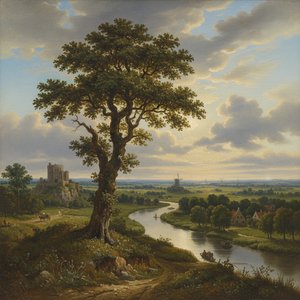
Jacob van Ruisdael: Master of Dutch Landscape & the Evocation of National Identity
Explore the life & work of Jacob van Ruisdael, the preeminent Dutch landscape painter. Discover his technical brilliance, symbolic depth, and lasting influence on art history. Learn about collecting Ruisdael's masterpieces.

Dutch Golden Age Landscapes: The Art of Atmospheric Realism and the Pastoral Ideal
Explore the mastery of Dutch Golden Age landscapes and atmospheric realism. Discover the secrets of these 17th-century masters now.

Jan van Goyen: Master of Dutch Landscape & Atmospheric Perspective
Discover Jan van Goyen, the master of Dutch landscape painting. Explore his subtle technique, atmospheric realism & lasting influence on art history. Learn about this 17th-century pioneer at OriginalUniqueArt.

Dutch Baroque Masters: 10 Paintings That Shaped an Era | OriginalUniqueArt
Journey through the Golden Age with our guide to the Top 10 Dutch Baroque masterpieces! Explore iconic paintings by Rembrandt, Vermeer & Frans Hals. Find museum-quality art reproductions and elevate your home decor at OriginalUniqueArt.com.

