
 效果预览
效果预览
 分享
分享 分享
分享
 详情
详情

 下载
下载
 相似作品
相似作品 X射线
X射线 幻灯片播放
幻灯片播放 统计数据
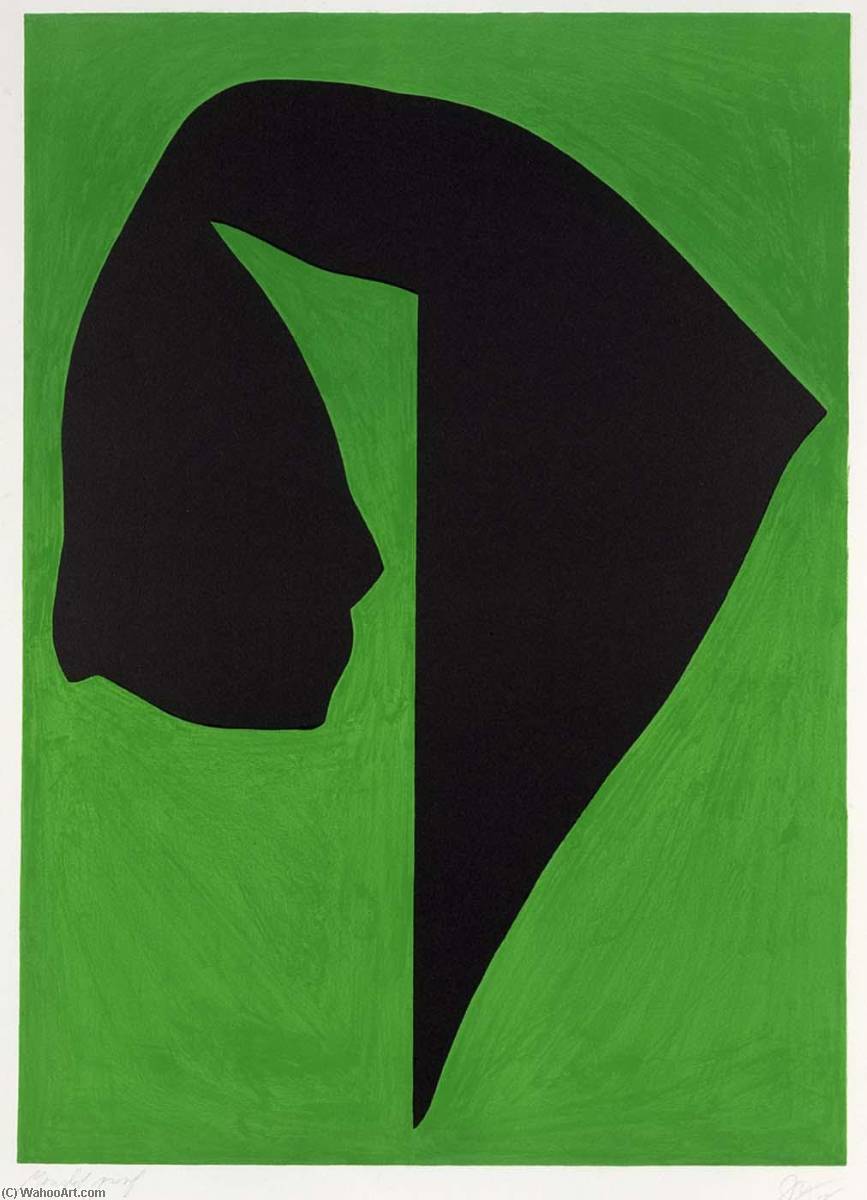
统计数据Green Around
 1968
1968 77.0 x 55.0 cm
 展开详情
展开详情
手工油画复制品
由我们的艺术家按需定制,为您提供您所选尺寸及画框的布面手工油画。 ( 切换至版画销售渠道 切换至数字图像销售渠道)




































从与原作比例一致的预设尺寸中进行选择。

您可以输入自定义尺寸,以适配特定的画框或空间。如果所选尺寸与原图比例不符,我们将通过裁剪作品或添加手绘元素来扩展画面。数字样稿将在制作开始前发送给您确认。
请注意,屏幕预览无法准确反映实际的裁剪或扩展效果,只有样稿才能真实呈现最终的构图。
虽然我们提供定制尺寸服务,但为了保留原作比例,建议您从预设列表中选择尺寸。
下单后,OriginalUniqueArt.com 团队将通过电子邮件联系客户获取具体要求,并提供效果预览图。


 玻璃选项仅适用于110厘米以下的尺寸。

Green Around
复制材质
复制品尺寸
-


最终总价
$ 300
Artist Background
Jack Youngerman was an American artist known for his constructions and paintings. He lived in the XX – XXI cent., a remarkable figure of American modern art. Youngerman studied art at the University of North Carolina from 1944 to 1946 and later graduated from the University of Missouri in 1947.Painting Style and Technique
The painting Green Around features a green triangle with black lines, creating an interesting visual effect. The triangle appears to be made up of two triangles that have been cut in half and then put together. This unique composition is a testament to Youngerman's experimentation with abstract forms and colors.- The use of bold colors and geometric shapes is characteristic of modern art movement.
- The painting's simplicity and elegance make it a standout piece in the collection of the Smithsonian American Art Museum.
- Youngerman's work has been compared to that of other notable artists, such as Ellsworth Kelly and Robert Indiana, who are also known for their contributions to the pop art movement.
The Smithsonian American Art Museum is home to an extensive collection of modern and contemporary art, including works by Robert Indiana, such as his iconic LOVE series. To learn more about the museum's collection and exhibitions, visit /art/list/?Filter=smithsonian+american+art+museum,smithsonian,american,museum&.
艺术家简介
A Parisian Pioneer of Geometric Abstraction
Jack Youngerman (1926 – 2020) stands as a singular figure in the landscape of mid-century American art, recognized primarily for his sculptural constructions and meticulously crafted paintings that championed geometric abstraction. Born in Webster Groves, Missouri, his early years were shaped by a journey through Louisville, Kentucky, before destiny pulled him toward the vibrant intellectual centers of the world. His academic foundation was forged under unique circumstances; fueled by a G.I. scholarship, he pursued studies at the University of North Carolina under wartime naval training programs, later graduating from the University of Missouri in 1947. This period of rigorous training provided the technical scaffolding upon which he would later build a radical new visual language.
The true metamorphosis of Youngerman’s spirit occurred in the autumn of 1947, when another prestigious G.I. grant facilitated his arrival in Paris. This transatlantic adventure was far more than a change in geography; it was an immersion into the very heart of the post-war avant-garde. Enrolling at the École des Beaux-Arts, he studied under Jean Souverbie, absorbing the complex intellectual currents of Surrealism and Dada. During these formative Parisian years, Youngerman did not merely observe the art world—he became a part of its living fabric. He forged enduring friendships with fellow students such as Ellsworth Kelly and César, forming a cohort of artists committed to an uncompromising and modern visual vocabulary.
The Language of Form and Color
Youngerman’s artistic evolution was deeply intertwined with his travels across Europe. His excursions through the Netherlands, Belgium, Spain, Italy, and Greece were deliberate investigations into both classical heritage and contemporary trends. He sought profound inspiration from the sculptural mastery of Constantin Brancusi and Jean Arp, whose explorations of organic form and spatial relationships resonated with his own growing preoccupation with the relationship between shape and surface. The influence of Alexander Calder and Max Bill was equally palpable, reflecting a deep engagement with the radical experimentation unfolding in Parisian studios and exhibitions like the Salon des Réalités Nouvelles.
As his style matured, Youngerman developed a signature approach that blended the precision of geometric abstraction with a certain rhythmic vitality. His work often features:
- Dynamic Geometric Constructions: A mastery of interlocking shapes and structural balance that bridges the gap between painting and sculpture.
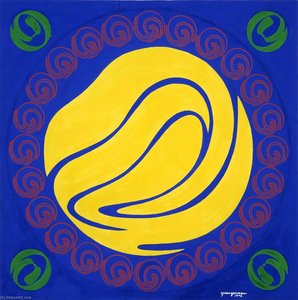
- Vibrant Color Palettes: The use of bold, energetic hues—seen in works like July 26—to evoke movement and a sense of modern dynamism.
- Organic and Abstract Interplay: A unique ability to marry rigid geometric forms with more fluid, organic motifs, reminiscent of biological or celestial patterns.
Legacy and Historical Significance
Throughout his long and prolific career, Youngerman remained dedicated to the pursuit of pure abstraction. From his early lithographs like Inside Ultramarine to his large-scale oil paintings and intricate tapestry maquettes, his work serves as a testament to the power of shape and color to communicate without the need for representational narrative. His contribution to the movement of Post-Painterly Abstraction helped redefine the boundaries of American art in the mid-20th century.
Today, Youngerman is remembered not just as an American expatriate, but as a bridge between the traditions of Europe and the burgeoning energy of the New York art scene. His legacy lives on in the permanent collections of prestigious institutions such as the Smithsonian American Art Museum and the Museum of Modern Art (MoMA). He remains a vital figure for anyone seeking to understand the era when abstraction became a universal language, celebrating the profound beauty found in the intersection of geometry and light.
Jack Youngerman
1926 - 2020 , United States of America
艺术家简介
- Artistic Movement Or Style: Geometric Abstraction
- Artists Or Movements Influenced By This Artist: ['Minimalism']
- Artists Who Influenced This Artist:
- Ellsworth Kelly
- Alexander Calder
- Date Of Birth: 1926
- Date Of Death: 2020
- Full Name: Jack Youngerman
- Nationality: American
- Notable Artworks:
- Untitled
- July 26
- Place Of Birth: St. Louis, United States