

 发送
发送 分享
分享
 详情
详情 指南
指南

 下载图片
下载图片
 相似作品
相似作品 幻灯片播放
幻灯片播放 统计数据
统计数据Copo d’água


 阅读全文
阅读全文
手工油画复制品
由我们的艺术家按需定制,为您提供您所选尺寸及画框的布面手工油画。 ( 切换至版画销售渠道 切换至数字图像销售渠道)




































您可以从与原作比例一致的预设尺寸中进行选择。

请输入您需要的宽度和高度,以适配您的画框或墙面。由于作品为手工绘制,若您选择不同的尺寸比例,艺术家可能会在画面边缘多画一些或稍作裁剪 —— 由您决定。在开始绘画之前,我们会为您发送一份数字效果图供您确认。本页面上展示的图片并非最终实物 —— 只有效果图才能反映真实结果。
下单后,OriginalUniqueArt.com 团队将通过电子邮件联系客户获取具体要求,并提供效果预览图


 玻璃选项仅适用于110厘米以下的尺寸。

Copo d’água
复制品材质
复刻品尺寸说明
-


总计金额
¥ 2016
The Ethereal Clarity of Copo d’água
In the quiet intersection of light and transparency, Iran do Espírito Santo invites us into a meditative space with his 2007 work, Copo d’água. At first glance, the piece presents a profound simplicity: a clear glass cup resting upon a pristine white surface. Yet, beneath this minimalist exterior lies a complex dialogue between presence and absence. The image captures a moment of stillness so absolute that it transcends mere photography, becoming an exploration of how light interacts with the void. As the eye wanders across the reflective surfaces of the glass, one discovers a world of subtle distortions and luminous highlights that breathe life into the seemingly empty vessel.
The artist’s mastery lies in his ability to manipulate the viewer's perception through the lens of Brazilian Modernism and Minimalism. Drawing from his roots in the industrial and architectural landscapes of São Paulo, Espírito Santo utilizes a palette of near-monochromatic tones—whites, greys, and crystalline clears—to strip away the noise of the external world. The technique employed here is one of extreme focus; by isolating the object against an undifferentiated white background, the artist forces a confrontation with the essence of form. The glass does not merely sit on the table; it interacts with the light, bending it, refracting it, and creating a rhythmic play of shadows that suggests a deeper, hidden structure within the emptiness.
For the discerning collector or interior designer, Copo d’água offers more than just visual beauty; it provides an emotional anchor of tranquility. The symbolism of the water cup—a vessel meant to hold life-sustaining liquid—now stands as a symbol of potentiality and pure form. There is a poetic tension in its emptiness, a suggestion that what is not seen is just as vital as what is visible. This piece serves as a sophisticated centerpiece for contemporary spaces, particularly those characterized by clean lines, natural light, and an appreciation for the "less is more" philosophy. It is an invitation to slow down, to observe the overlooked, and to find grandeur in the most delicate of reflections.
Integrating a high-quality reproduction of this work into a curated collection allows one to bring this sense of sculptural serenity into the home. Whether placed in a minimalist study or a bright, airy gallery-style living room, the artwork acts as a window into a state of Zen-like clarity. It challenges the viewer to reassemble the "latent form" of their own surroundings, much like the deconstructed geometries found in Espírito Santo’s larger sculptural installations. In Copo d’água, we find a timeless testament to the power of light, the elegance of geometry, and the profound beauty of the singular, unadorned moment.
问答详情
哪里可以买到Iran Do Espírito Santo 的《Copo d’água》的手绘复制品?
Iran Do Espírito Santo 的《Copo d’água》 的手绘复制品正在 本网站 发售:您可以通过其 手工油画复刻 页面进行订购:亚麻画布手工绘制油画复制品。
Iran Do Espírito Santo 的《Copo d’água》 中描绘了哪些主题?
Iran Do Espírito Santo 的《Copo d’água》 中呈现的主题包括 glass cup, still life, reflections, minimalism, transparency, clear glass。这些主题共同构成了该艺术作品的主旨。
Iran Do Espírito Santo 的《Copo d’água》 传达了怎样的情感?
Iran Do Espírito Santo 的《Copo d’água》 在整体 Minimalist 的氛围中,传达出一种 Calm 的情感。
艺术家简介
Iran do Espírito Santo: Sculpting Tranquility from Industrial Echoes
Born in Mococa, Brazil, in 1963, Iran do Espírito Santo’s artistic journey began amidst the industrial landscapes of São Paulo – a region that would profoundly shape his aesthetic sensibility. His early exposure to photography laboratories instilled within him an acute awareness of light and its transformative power, laying the groundwork for his later exploration of form and space. This initial fascination with the subtle nuances of grey tones evolved into a deliberate engagement with the stark geometries and muted palettes characteristic of Brazilian modernist architecture, influencing the restrained elegance that defines much of his work. He received his Bachelor of Arts degree in 1986 from the Fundação Armando Alvares Penteado in São Paulo, an institution renowned for its commitment to fostering innovative artistic practices within Brazil.The Minimalist Revelation: A Subversion of Tradition
Espírito Santo’s art gained prominence during the resurgence of contemporary Latin American art in the 1990s. His work stands as a subtle yet powerful subversion of Minimalism, eschewing overt displays of scale or conceptual complexity. Instead, he meticulously transforms commonplace industrial objects – often anonymous and readily available – into sculptures imbued with an ethereal purity. These aren’t mere reproductions; they are carefully constructed abstractions that evoke a meditative tranquility. He employs materials such as glass, stainless steel, plaster, and stone, not to mimic their original forms, but to reveal the inherent beauty of their geometry and texture. This deliberate distancing from direct representation allows viewers to engage with the sculptures on a purely sensory level, prompting contemplation about form, space, and material itself. His approach aligns with Constructivist principles, emphasizing geometric precision and a focus on the object’s essential qualities rather than narrative or emotional content.Materiality and Illusion: Crafting Ethereal Spaces
A key element of Espírito Santo's artistic practice lies in his masterful manipulation of materials and his skillful use of illusionistic techniques. He doesn’t simply assemble objects; he orchestrates a dialogue between them, creating spaces that seem to defy their physical limitations. His works often feature subtle gradations of tone, achieved through meticulous layering of paint or sgraffito, generating hypnotic patterns that draw the eye and invite prolonged observation. The surfaces of his sculptures are rarely smooth or polished; instead, they retain a tactile quality, inviting viewers to trace their fingers along the contours and appreciate the inherent imperfections of the materials. This commitment to materiality—the weight, texture, and color of each element—is central to his ability to evoke a sense of both familiarity and otherworldliness.Recognition and Legacy: Exhibitions and Collections
Iran do Espírito Santo’s work has garnered significant international acclaim over the past two decades. He has been featured in prestigious exhibitions at institutions such as the Museum of Modern Art in New York, the San Francisco Museum of Modern Art, the Museum of Contemporary Art in San Diego, and the Istanbul Biennal. His sculptures are included in the collections of numerous prominent museums worldwide, a testament to his enduring influence on contemporary art. Notably, he was awarded a public installation in Central Park in New York City in 2013 by The Public Art Fund, further solidifying his position as a leading figure in minimalist sculpture. His work has been consistently recognized for its quiet power and profound engagement with the fundamental principles of form, space, and material.Key Works and Continuing Exploration
Among his most celebrated pieces are “Bowl,” “Copo d”, and “Copo d’água” – each a study in simple geometry and the evocative potential of everyday objects. The series "Santo Domingo de la Calzada," "Santo Spirito," and "Santo Stefano" demonstrate his interest in exploring architectural forms and their relationship to religious iconography, often through abstracted representations. His ongoing exploration of industrial design elements continues to yield compelling works that challenge conventional notions of beauty and invite viewers to reconsider the familiar objects that surround them. Iran do Espírito Santo’s legacy lies not only in his individual creations but also in his ability to inspire a new generation of artists to engage with the world through a lens of quiet contemplation and meticulous craftsmanship.
Iran Do Espírito Santo
1963 - , Brazil
快速概览
- Artistic Movement Or Style: Minimalist sculpture
- Artists Or Movements Influenced By This Artist:
- Minimalism
- Constructivism
- Artists Who Influenced This Artist:
- Concrete Art Brazil
- Modernist architecture
- Date Of Birth: 1963
- Full Name: Iran do Espírito Santo
- Nationality: Brazilian
- Notable Artworks:
- Bowl
- Copo d
- Copo d’água
- Place Of Birth: São Paulo, Brazil
相关文章

Beyond the Lens: Photography's Enduring Influence on Modern & Contemporary Art
Explore photography's pivotal role in shaping modern & contemporary art. Discover key movements, influential artists like Stieglitz, and expert collecting advice from OriginalUniqueArt.
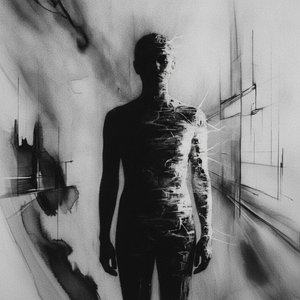
Shadow & Soul: Why Black & White Photography Remains the Ultimate Power Move in Modern Art
Discover why black & white photography remains a powerful force in contemporary art. Explore the impact of light, shadow, and texture through a visual journey of monochrome mastery and learn how to elevate your space with timeless grayscale aesthetics.

Monochrome Visions: Exploring the Aesthetic & Historical Significance of Black & White Photography
Explore the rich history & artistic power of black and white photography. From early techniques to iconic masters like Ansel Adams, discover why monochrome continues to captivate art lovers today. Expert insights for collectors.

Beyond Color: The Timeless Power and Artistry of Black and White Photography
Explore the profound artistry of black and white photography. From the chemistry of gelatin silver to the chiaroscuro of the Old Masters, discover how monochrome captures the eternal essence of light, form, and emotion for the discerning art collector.

White on Canvas: 10 Masterpieces & Timeless Elegance for Your Home Decor
Explore 10 iconic white paintings by Monet, Whistler & Rothko! Discover the stories behind these serene masterpieces and their impact on art history. Find museum-quality reproductions for your home decor at .