

 实景预览
实景预览
 发送
发送 分享
分享
 详情
详情 指南
指南

 下载图片
下载图片
 相似作品
相似作品 X射线
X射线 幻灯片播放
幻灯片播放 统计数据
统计数据Self Portrait
 Academic Realism
 57.0 x 48.0 cm
 阅读全文
阅读全文
艺术微喷/版画
博物馆级艺术微喷或帆布版画,制作高效,并提供多种饰面选择。 ( 订购此收藏品的纯手工复刻画作 切换至数字图像销售渠道)




P118B $10

P118H $10

P118W $10

P438Z $10

P508JH $12

P508YH $12

P805H $10

P805Z $10

P919BZ $10

P919G $10

P919XJ $10

P959ZH $10

P968JZ $12

W106C $8

W218G $10

W218JH $8

W218Y $10

W307PJ $10

W316G $10

W316PJ $8

W316Y $10

W398PJ $8

W4111J $10

W500HY $15

W500JH $15

W692G $12

W849H $8

W940BG $15

W953PJ $8




您可以从与原作比例一致的预设尺寸中进行选择。

您可以输入自定义尺寸,以适配特定的画框或空间。如果您选择的尺寸与原图比例不符,我们将对作品进行裁剪,或通过镜像填充/纯色填充边缘的方式来扩展图像。在开始制作之前,我们会向您发送一份数字效果图供您确认。
请注意,屏幕上的预览并不能反映实际的裁剪或扩展效果。只有效果图才能准确展示最终的构图。
虽然我们提供定制尺寸,但为了保持原图比例,我们建议您从预设列表中选择尺寸。


 玻璃选项仅适用于110厘米以下的尺寸。

Self Portrait
艺术微喷/版画
复刻品尺寸说明
-


总计金额
$ 80
艺术家简介
Hugh Ford Crighton (1824–1886): Sheffield’s Civic Portraitist
Hugh Ford Crighton (1824–1886) stands as a testament to Victorian portraiture, specifically its dedication to commemorating prominent figures within the burgeoning industrial cities of Britain. Born in Sheffield, Yorkshire, his artistic journey unfolded against the backdrop of rapid urbanization and social change—a period acutely aware of documenting success and upholding tradition simultaneously. While biographical details remain somewhat sparse – largely due to the limitations of archival records from the era – Crighton’s legacy rests firmly on his prolific output of meticulously rendered portraits of Mayors, JP's (Justices of the Peace), and other civic leaders, primarily focused on Sheffield and East Retford.- Early Life & Training: Little is known about Crighton’s formative years beyond confirmation that he apprenticed under William Henry Haywood, a respected artist based in Sheffield. This apprenticeship instilled foundational skills in oil painting and anatomical accuracy—essential components for capturing the likenesses of his subjects with remarkable fidelity.
- Sheffield's Patronage & Artistic Style: Crighton’s career flourished during Sheffield’s golden age – fueled by coal mining and steel production. The city’s civic elite actively commissioned portraits, recognizing their importance in bolstering prestige and reinforcing social hierarchy. His style is characterized by a commitment to realism—a painstaking attention to detail achieved through careful observation and meticulous brushwork. He favored muted palettes, prioritizing tonal harmony over flamboyant color schemes, reflecting the sensibilities of his time.
- Notable Commissions & Technique: Among Crighton’s most celebrated works are portraits of Thomas Jessop (Mayor of Sheffield 1865–1868) and Thomas Moore (Mayor of Sheffield 1868–1871). These canvases exemplify his mastery of capturing not merely physical appearance but also conveying character—a subtle nuance achieved through expressive poses and nuanced facial expressions. He skillfully employed sfumato – a technique pioneered by Leonardo da Vinci – to soften contours and create atmospheric depth, lending an air of dignity and solemnity to his subjects.
- East Retford Legacy: Beyond Sheffield, Crighton established himself as a respected artist in East Retford. His contribution to the town’s artistic heritage is evident in several portraits adorning local buildings—a testament to his versatility and enduring appeal.
Influences & Artistic Context
Crighton’s artistic sensibilities were undoubtedly shaped by the prevailing currents of Victorian art—particularly the influence of Academic painting, which championed idealized representations and adhered to strict compositional conventions. The Royal Academy in London served as a crucial incubator for stylistic ideas during his formative years, fostering an appreciation for classical ideals and meticulous technique. Furthermore, he absorbed inspiration from artists like George Frederic Watts and John Everett Millais, whose works explored themes of spirituality and natural beauty—elements subtly present in some of Crighton’s quieter portraits.- Academic Tradition: Like many artists of his era, Crighton embraced the Academic style's emphasis on anatomical accuracy and idealized form. This approach ensured that his portraits conveyed respect for tradition while simultaneously capturing the essence of his subjects.
- Contemporary Artists: Studying Watts’s emotive landscapes and Millais’s depictions of rural life broadened Crighton’s artistic horizons—introducing concepts of tonal harmony and atmospheric perspective that enriched his oeuvre.
Major Achievements & Recognition
Hugh Ford Crighton achieved considerable renown during his lifetime, securing commissions from prominent Sheffield families and civic officials. His portraits became treasured possessions—serving as visual records of significant individuals and bolstering the reputations of their respective institutions. Although he lacked formal academic acclaim – a common characteristic of artists operating outside established institutions – Crighton’s enduring legacy resides in the quality and integrity of his work—a testament to his unwavering dedication to craftmanship and artistic excellence.- Sheffield Civic Portraits: His portraits of Jessop and Moore stand as iconic representations of Sheffield's civic leadership during a pivotal period of industrial expansion.
Historical Significance
Crighton’s contribution to Victorian portraiture extends beyond mere aesthetic beauty—he embodies the spirit of his time—a commitment to documenting social status and upholding cultural values. His meticulous technique and stylistic choices reflect the broader artistic trends prevalent in Britain during the latter half of the 19th century—solidifying his place as a pivotal figure within the visual culture of Victorian England.
hugh ford crighton
1824 - 1886
快速概览
- Artistic Movement Or Style: Realism
- Date Of Birth: 1824
- Date Of Death: 1886
- Full Name: Hugh Ford Crighton
- Nationality: British
- Notable Artworks:
- Thomas Moore (1809–1880), Mayor of Sheffield (1868–1871)
- Thomas Jessop (1804–1887), JP, Mayor of Sheffield (1865–1868)
- Place Of Birth: Sheffield
相关文章

19th Century Masterpieces: 10 Paintings That Defined an Era | OriginalUniqueArt
Journey through 19th century art with OriginalUniqueArt! Explore 10 iconic paintings – from Monet & Renoir to Courbet – and discover the stories behind Romanticism, Realism & Impressionism. Find museum-quality reproductions for your home decor. Explore the full collection online!

Arthur Hughes: Pre-Raphaelite Visions of Beauty & Melancholy
Explore the captivating world of Arthur Hughes (1832-1915), a leading Pre-Raphaelite painter. Discover his dreamy landscapes, poetic narratives & iconic Victorian artworks. Learn about his life, style & collecting today.
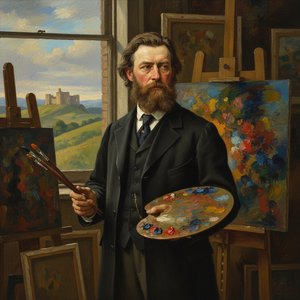
George Paul Chalmers: Rediscovering the Angus Rembrandt & Scottish Colourist Roots
Explore the captivating world of George Paul Chalmers (1833-1878), a pivotal Scottish painter. Discover his landscapes, portraits & connection to the Aesthetic Movement and Colourists. Learn about this 'Angus Rembrandt's' legacy with OriginalUniqueArt.
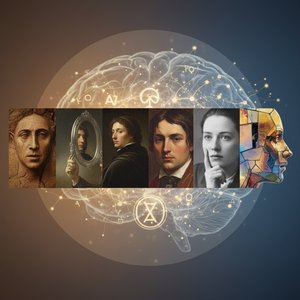
Reflecting the Self: A History of Portraiture & Psychological Insight
Explore the fascinating history of self-portraiture from Renaissance masters like Dürer & Rembrandt to modern interpretations. Discover the psychological insights and artistic techniques behind these iconic works. Expert analysis for art enthusiasts.

William Brassey Hole: A Victorian Master of Narrative Watercolour & Scottish Life
Explore the captivating paintings of William Brassey Hole, a Victorian master renowned for his dramatic biblical scenes, Scottish landscapes & industrial life. Discover his technique and lasting legacy.