
 效果预览
效果预览
 切换至印刷版
 分享
分享 分享
分享
 详情
详情

 下载
下载
 相似作品
相似作品 X射线
X射线 幻灯片播放
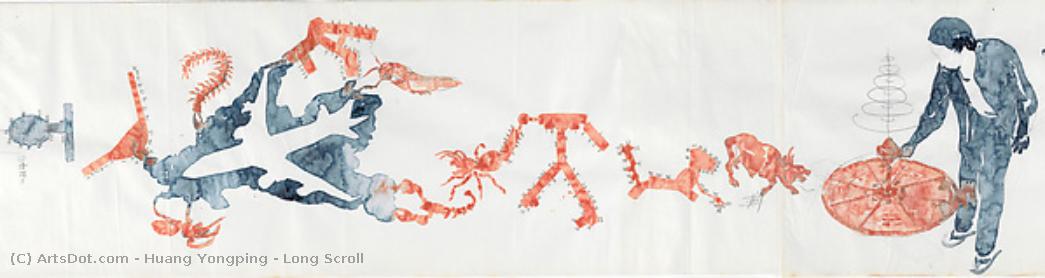
幻灯片播放Long Scroll
 Contemporary Dada
 2001
2001 34.0 x 1532.0 cm
Explore Huang Yongping’s ‘Long Scroll,’ a dynamic watercolor installation blending traditional & contemporary art. A visual record of his provocative work, featuring Duchamp & Chan Buddhism influences.
 展开详情
展开详情
Huang Yongping was a pivotal Chinese Conceptual artist known for his large-scale installations and critiques of power structures like 'Theatre of the World,' challenging conventional artistic boundaries with provocative works that invite contemplation and discovery.
购买高分辨率增强版数字图像,其品质远超在线预览。
每一份文件都由我们的内部专家使用先进工具与专业的后期润色技术精心打造。我们确保每一张图像都具备卓越的清晰度、精准的色彩还原度以及细腻的细节表现。
最终文件将在 72 小时内通过电子邮件交付,并针对专业、编辑及印刷用途进行了优化。其品质与顶级设计工作室、出版社和画廊所信赖的标准完全一致。
每份数字图像订单均包含
专业数字图像交付,品质保障
选择 OriginalUniqueArt.com,您获得的不仅仅是一张图像——您收到的是经过专业级增强、精雕细琢的数字艺术作品,并享有满意保证。以下是您的订单中自动包含的所有内容:

邮件快速送达
您的高分辨率数字图像文件将在下单后 72 小时内通过电子邮件发送给您 —— 即可立即使用。

AI 增强型数字文件
您的艺术品经过专业优化,结合先进的 AI 技术与人工修饰,确保呈现极致的细节、清晰度与色彩准确度。

终身免费重发服务
不小心删除了文件或找不到了?没关系——我们将随时为您免费重发。

无需进口费用,始终如一
即刻拥有您的艺术作品,无需支付任何关税、税费或运费——数字下载始终免税。

色彩精准保证
我们通过专业工具与色彩管理技术,确保您的数字图像尽可能真实地还原原作色彩。

60天满意保证
如果您对所购买的数字图像不满意,我们将在60天内为您进行修改或退还100%的款项——无需任何解释。

100% 退款保证
如果不满意?在收到数字文件后的60天内,我们为您提供全额退款——无需任何理由。

批量订单优惠
购买 3 张图片可享 10% 折扣 - 购买 5 张可享 15% 折扣 - 购买 10+ 张可享 20% 折扣。非常适合创意项目、画廊和机构使用。
藏品详情
A leading figure in the radical art collective Xiamen Dada during the 1980s, Huang has relentlessly challenged notions of art, geopolitics, and the viability of cultural interchange through his conceptual installations, many of which are documented in Long Scroll, a remarkable visual record of his artistic output from 1985 to 2001. Adopting the traditional handscroll format, the painting consists of images of these installations drawn in pencil and tinted with a simple palette of orange and blue watercolors. Huang’s photography-based drawings are juxtaposed without regard for chronology or scale and include a fortune-telling device the artist used to automatize the process of painting and an American spy plane that collided with a Chinese fighter jet—a cultural collision of sorts that inspired Huang’s highly controversial Bat Project (2001–5). Besides referencing his own works, Huang also illuminates connections to important influences for him such as Marcel Duchamp (1887–1968), a key figure of the twentieth-century avant-garde, and Chan Buddhism.
艺术家简介
A Provocateur of Perception: The Life and Art of Huang Yongping
Huang Yongping, a name synonymous with conceptual audacity and philosophical inquiry in contemporary Chinese art, emerged as a pivotal figure challenging established norms and prompting critical reflection on history, culture, and the very nature of artistic creation. Born in Xiamen, Fujian Province, China, in 1954, his journey began amidst the tumultuous final years of Mao Zedong’s rule and unfolded through decades of profound societal transformation. Unlike many artists who followed a traditional academic path, Huang's early exposure to art was largely self-directed, fueled by an insatiable curiosity and a rebellious spirit. He initially studied mechanical engineering at Xiamen University, a background that would later profoundly influence his sculptural installations and his fascination with deconstruction. The Cultural Revolution cast a long shadow over his formative years, instilling in him a deep skepticism towards authority and a desire to dismantle conventional ideologies—themes that permeate his entire oeuvre. His early artistic endeavors were rooted in the avant-garde movement of the 1980s, specifically within the Xiamen Dada group, where he experimented with performance art and installation, often employing provocative imagery and challenging materials. This period was characterized by a rejection of socialist realism and an embrace of Western conceptual art practices, though Huang never simply adopted these ideas wholesale; instead, he filtered them through his own unique cultural lens.Deconstructing History: The Evolution of a Unique Aesthetic
Huang Yongping’s artistic development is marked by a consistent interrogation of power structures and the narratives they construct. He quickly moved beyond purely formal experimentation to create works that directly confronted China's complex history, particularly its relationship with Western imperialism and traditional cultural values. A turning point came in the late 1980s with his large-scale installations, which often involved meticulously recreating historical artifacts or iconic objects—only to then subject them to a process of deliberate destruction or alteration. “The Bridge,” created in 1988, exemplifies this approach. The work consisted of a painstakingly reconstructed replica of a traditional Chinese bridge, built from discarded materials and destined for eventual decay, symbolizing the fragility of cultural heritage and the inevitable passage of time. This act wasn’t merely destructive; it was a symbolic dismantling of idealized notions of history and tradition. His fascination with Western philosophy, particularly Nietzsche and Derrida, further informed his deconstructive practice. He sought to expose the inherent contradictions within systems of thought and representation, questioning the very foundations upon which knowledge is built. This philosophical underpinning led him to explore themes of chaos, randomness, and the limitations of human understanding. He wasn’t interested in offering solutions or definitive answers; rather, he aimed to provoke dialogue and encourage viewers to question their own assumptions about the world around them.Major Achievements and Iconic Works
Throughout his career, Huang Yongping produced a series of groundbreaking works that cemented his reputation as one of China’s most important contemporary artists. “The Theatre of the World” (1993), perhaps his most ambitious project, stands as a testament to his conceptual rigor and theatrical sensibility. This monumental installation comprised a vast landscape populated by hundreds of live animals—snakes, lizards, birds, and insects—interacting with miniature replicas of famous monuments from around the world. The work was presented within a darkened space, creating an unsettling atmosphere that evoked both wonder and anxiety. It served as a powerful metaphor for the interconnectedness of all living things and the precarious balance between civilization and nature. Another significant achievement is his series of “Wash Paintings,” which involved meticulously painting traditional Chinese landscapes onto large sheets of industrial plastic, then crumpling or folding them, disrupting their serene beauty with deliberate acts of distortion. These works challenged the conventional aesthetics of Chinese ink painting while simultaneously acknowledging its enduring power. “Lady from the Southern Dynasties” (1996), a life-sized sculpture of a reclining female figure constructed from metal and found objects, further exemplifies his exploration of cultural identity and gender roles. The work’s fragmented form and unsettling materiality challenged traditional representations of femininity in Chinese art history.Historical Significance and Lasting Legacy
Huang Yongping's impact on contemporary Chinese art is undeniable. He played a crucial role in challenging the dominance of socialist realism and paving the way for a more diverse and experimental artistic landscape. His work resonated with a generation of artists grappling with questions of identity, history, and cultural change in post-Mao China. He was among the first to openly address sensitive political issues and critique the legacy of colonialism, setting a precedent for greater freedom of expression within the art world.- His deconstructive approach influenced countless artists exploring themes of fragmentation, memory, and representation.
- Huang’s willingness to embrace unconventional materials and techniques expanded the boundaries of sculptural practice in China.
- He fostered a critical dialogue about the relationship between art, philosophy, and politics.

基本信息
- Artistic Movement Or Style: Neo-Conceptual Art
- Date Of Death: Living
- Full Name: Huang Yongping
- Nationality: Chinese
- Notable Artworks:
- The Bridge
- Lady from the Southern Sea
- War Machine

