
 效果预览
效果预览
 购买印刷品
购买印刷品 分享
分享 分享
分享
 详情
详情

 下载
下载
 相似作品
相似作品 X射线
X射线 幻灯片播放
幻灯片播放Landscape


 展开详情
展开详情




P118B $10

P118H $10

P118W $10

P438Z $10

P508JH $12

P508YH $12

P805H $10

P805Z $10

P919BZ $10

P919G $10

P919XJ $10

P959ZH $10

P968JZ $12

W106C $8

W218G $10

W218JH $8

W218Y $10

W307PJ $10

W316G $10

W316PJ $8

W316Y $10

W398PJ $8

W4111J $10

W500HY $15

W500JH $15

W692G $12

W849H $8

W940BG $15

W953PJ $8




从与原作比例一致的预设尺寸中进行选择。

您可以输入自定义尺寸,以适配特定的画框或空间。如果所选尺寸与原图比例不符,我们将通过裁剪作品或添加手绘元素来扩展画面。数字样稿将在制作开始前发送给您确认。
请注意,屏幕预览无法准确反映实际的裁剪或扩展效果,只有样稿才能真实呈现最终的构图。
虽然我们提供定制尺寸服务,但为了保留原作比例,建议您从预设列表中选择尺寸。
下单后,OriginalUniqueArt.com 团队将通过电子邮件联系客户获取具体要求,并提供效果预览图。


 玻璃选项仅适用于110厘米以下的尺寸。

Landscape
复制材质
复制品尺寸
-


最终总价
$ 300
作品详情
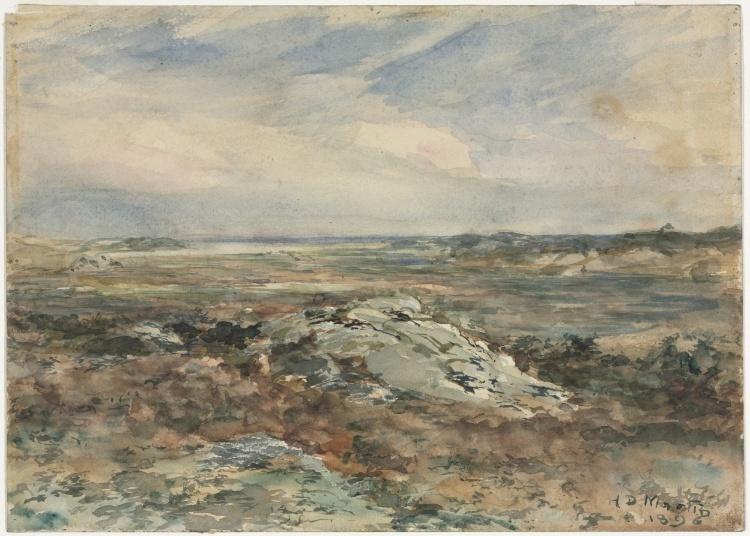
A Moment Frozen: The Poetic Landscape of Homer Dodge Martin
Homer Dodge Martin's "Landscape," painted circa 1865, isn’t merely a depiction of a vista; it’s an immersion into a specific mood—a quiet contemplation of the vastness and solitude of nature. Born in Albany, New York, in 1836, Martin navigated the shifting currents between the established realism of the Hudson River School and the burgeoning possibilities of Impressionism, forging a unique style characterized by a profound sensitivity to light, atmosphere, and the emotional resonance of the natural world. This particular work exemplifies his mastery of capturing fleeting impressions, prioritizing feeling over precise representation – a hallmark of his artistic journey.
The scene unfolds across rolling hills that recede into a hazy horizon, dominated by an overcast sky pregnant with suggestion rather than explicit detail. There’s no dramatic sun or sharp delineation of form; instead, Martin employs a masterful use of wet-on-wet watercolor techniques, allowing colors to bleed and mingle seamlessly. The brushstrokes are loose and expressive, creating a sense of movement and fluidity that mirrors the gentle undulations of the landscape itself. The foreground is particularly textured, utilizing dry brushwork to suggest the roughness of rocks and vegetation – tangible elements grounding the viewer in this imagined space.
Echoes of the Barbizon School: Light, Color, and a Sense of Place
Martin’s approach bears a clear kinship with the Barbizon school of French landscape painters, who sought to capture the essence of nature through direct observation and a focus on atmospheric effects. Like his contemporaries, he eschewed meticulous detail in favor of conveying the *feeling* of a place – its light, its air, its inherent stillness. The muted palette—dominated by browns, greens, grays, and subtle blues—contributes significantly to this effect. The colors aren’t vibrant or saturated; they are subdued and atmospheric, creating a sense of depth and distance through the application of *atmospheric perspective*. Distant elements appear paler and less distinct, reinforcing the illusion of vastness.
Furthermore, Martin's work reflects a growing interest in capturing the ephemeral qualities of light. The overcast sky casts a diffuse glow across the landscape, softening edges and lending an air of melancholy to the scene. The lack of strong highlights or shadows creates a sense of quiet contemplation, inviting the viewer to lose themselves in the atmosphere. It’s a deliberate choice that elevates the painting beyond a simple topographical representation, transforming it into a meditation on light, color, and the sublime beauty of nature.
Symbolism and Emotional Resonance: Solitude and the Vastness of Nature
“Landscape” isn't simply a pretty picture; it’s imbued with a subtle sense of symbolism. The solitary hills and distant horizon evoke feelings of solitude, introspection, and perhaps even a touch of melancholy. The vastness of the landscape can be interpreted as a metaphor for the power and indifference of nature – a reminder of humanity’s smallness in the face of the immense forces that shape our world. The painting's quietude speaks to a deeper longing for connection with something larger than oneself, a sentiment deeply resonant within the Romantic tradition.
Considered alongside Martin’s biography—a man who sought to bridge the gap between traditional and modern artistic approaches—this work becomes more than just a landscape; it's a testament to his artistic vision. It invites us to pause, breathe, and contemplate the beauty and mystery of the natural world, offering a moment of quiet reflection in an increasingly complex world.
艺术家简介
连接两个世界:霍默·道奇·马丁的生命与艺术
1836年出生于纽约奥尔巴尼,霍默·道奇·马丁(Homer Dodge Martin)作为美国风景画领域的一位关键人物脱颖而出。他是一位承上启下的过渡型艺术家,优雅地穿梭于哈德逊河派那宏伟稳健的传统与新兴印象派那蓬勃创新的浪潮之间。他的早年生活充满了艺术天赋的曙光;在威廉·哈特(William Hart)的短期指导下,他迅速吸收了当时盛行的审美倾向——即对细腻写实主义的崇敬以及对美国荒野壮丽之美的向往。马丁的成长岁月也深受奥尔布尼充满活力的艺术家群体的影响,包括乔治·博顿(George Boughton)和爱德华·盖伊(Edward Gay),这种创作交流的环境对其艺术发展起到了至关重要的作用。这些早期风景画笔触细腻,反映了哈德逊河派致力于捕捉自然伟力的使命,但即便在那个时期,一种更加私人化且富有氛围感的视觉意向已开始悄然浮现。他常在夏季前往阿迪朗达克山脉、卡茨基尔山脉和白山脉写生,并将这些外光画研究转化为纽约工作室中的完成作品——这种做法在当时寻求自然灵感与城市生活便利的艺术家中十分普遍。凭借这份专注,他赢得了广泛认可;被选为美国国家设计学院(National Academy of Design)的准会员,并随后晋升为正式院士,这巩固了他在19世纪后期艺术界的地位。欧洲觉醒与艺术蜕变
马丁艺术生涯中的一个分水岭出现在1876年那次具有变革意义的欧洲之旅中。这不仅仅是一次观光游历,更是一场深入前卫艺术核心的沉浸式体验。通过接触巴比松画派——其强调直接观察和对乡村生活的自然主义描绘——以及初露锋芒的印象派运动,他的艺术感官发生了深刻的变化。他早期作品中那些构图严谨、表面细腻的风格,开始向更松散的笔触、更具感染力的色彩运用以及对大气效应更敏锐的捕捉转变。他并非只是在机械地采纳这些新技术,而是在将其内化,通过自己独特的视角进行过滤与重塑。这种转变并非一蹴而就,而是一个渐进的演变过程,是对于美国风景画既定规范的一次微妙而重大的背离。这种影响并非单纯的模仿,而是一种灵感的注入——一种视野的拓宽,让马丁得以在艺术中探索全新的可能性。晚年岁月、传承与持久魅力
尽管取得了如此辉煌的艺术成就,马丁在晚年却面临着艰辛。贫困与视力的衰退迫使他在1893年迁往明尼苏达州的圣保罗,与亲戚同住。令人惊叹的是,即便视力日渐模糊,他的创作精神依然未减半分。《阿迪朗达克风景》(Adirondack Scenery)是在他近乎失明时凭记忆绘制而成的,这成为了他持久激情与艺术造诣的见证——它深刻地提醒着世人,真正的艺术能够超越肉体的局限。虽然他在生前获得的商业成功有限,但马丁的名声在逝世后却日益增长。在他1897年去世后不久,《阿迪朗达克风景》以惊人的5500美元成交,标志着对其才华迟来的认可。如今,他的画作收藏于众多美国顶尖博物馆——大都会艺术博物馆、史密森尼美国艺术博物馆、艾迪逊美国艺术画廊等——确保了他的作品能够持续激励并吸引观众。霍默·道奇·马丁现在被理所当然地视为一位过渡性的艺术大师,他是连接哈德逊河派严谨写实主义与美国印象派大气诗意的桥梁。他那以感性氛围和松散笔触为特征的创新风景画创作手法,确立了他在19世纪美国艺术中作为重要且持久的声音地位。
霍默·道奇·马丁
1836 - 1897 , 美国
艺术家简介
- Artistic Movement Or Style: 哈德逊河派与印象派
- Artists Or Movements Influenced By This Artist: ['美国印象派']
- Artists Who Influenced This Artist:
- 威廉·哈特
- 巴比松画派
- 卡米耶·科罗
- Date Of Birth: 1836年10月28日
- Date Of Death: 1897年2月12日
- Full Name: 霍默·多奇·马丁
- Nationality: 美国
- Notable Artworks:
- 风之竖琴
- 利兹大桥
- 纽波特附近
- 森林小屋
- Place Of Birth: 美国,奥尔巴尼
相关文章
温斯洛·荷马:25幅大师级画作,重现美国精神与自然之美 | OriginalUniqueArt
探索温斯洛·荷马25幅杰作,领略美国绘画大师的海洋风情与自然主义魅力。从经典油画到水彩风景,每一幅作品都讲述着动人故事。OriginalUniqueArt.com提供高品质艺术复制品,点亮您的家居空间!立即探索完整系列。

Watercolor Wonders: 10 Masterpieces That Redefined Art History | OriginalUniqueArt
Journey through 10 legendary watercolor masterpieces by Sargent, Turner & Homer! Explore iconic landscapes, portraits & floral art that redefined history. Find museum-quality reproductions and curated decor ideas at OriginalUniqueArt.com.

American Realism's Defining Works: 10 Masterpieces for Your Home
Explore 10 defining American Realism masterpieces – Hopper, Homer & more. Discover the stories behind these iconic paintings and bring timeless art to your home with OriginalUniqueArt's museum-quality reproductions. Explore the full collection online.

Ephemeral Visions: Exploring the Artistic Legacy & Contemporary Practice of Watercolor Painting
Explore the captivating world of watercolor painting! Discover its rich history, essential techniques, influential artists & collecting tips. A comprehensive guide for art enthusiasts from OriginalUniqueArt.
Beyond the Horizon: 10 Landscape Masterpieces for Your Home Decor
Journey through 10 breathtaking landscape paintings by Monet, Van Gogh & more! Explore iconic artworks, artistic techniques & find inspiration for your home decor. Museum-quality reproductions at OriginalUniqueArt.com. Discover all masterpieces on OriginalUniqueArt.com

