

 效果预览
效果预览
 分享
分享 分享
分享
 详情
详情

 下载
下载
 相似作品
相似作品 X射线
X射线 幻灯片播放
幻灯片播放 统计数据
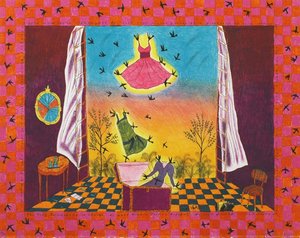
统计数据There Is a Doubt, She Could Be Right
 1982
1982 66.0 x 76.0 cm
 展开详情
展开详情
艺术微喷/版画
博物馆级艺术微喷或帆布版画,制作高效,并提供多种饰面选择。 ( 购买手绘画作 切换至数字图像销售渠道)




































从与原作比例一致的预设尺寸中进行选择。

您可以输入自定义尺寸,以适配特定的画框或空间。如果您选择的尺寸与原图比例不符,我们将对作品进行裁剪,或通过镜像填充/纯色填充边缘的方式来扩展图像。在开始制作之前,我们会向您发送一份数字效果图供您确认。
请注意,屏幕上的预览并不能反映实际的裁剪或扩展效果。只有效果图才能准确展示最终的构图。
虽然我们提供定制尺寸,但为了保持原图比例,我们建议您从预设列表中选择尺寸。


 玻璃选项仅适用于110厘米以下的尺寸。

There Is a Doubt, She Could Be Right
艺术微喷/版画
复制品尺寸
-


最终总价
$ 80
艺术家简介
A Visionary of the Interior: The Life and Legacy of Hollis Sigler
In the vibrant, often turbulent landscape of late twentieth-century American art, few voices resonated with as much intimate intensity as Hollis Sigler. Born Suzanne Hollis Sigler in 1948 in Gary, Indiana, her journey was one of profound transformation—not only of the self but of the very medium through which she communicated. Moving to Cranbury, New Jersey, during her childhood, she developed an early sensitivity to the domestic sphere, a theme that would later become the stage for her most poignant explorations of femininity and mortality. After honing her craft at the Moore College of Art in Philadelphia and earning her MFA from the prestigious School of the Art Institute of Chicago in 1973, Sigler emerged as a formidable presence in the Chicago art scene, ready to challenge the established hierarchies of the art world.
Sigler’s artistic evolution was marked by a deliberate and radical departure from the prevailing norms of her era. In the mid-1970s, she made the courageous decision to abandon the rigorous demands of photorealism, a style often associated with the patriarchal traditions of art education. Instead, she embraced a faux naïve aesthetic—a deceptively simple, almost childlike manner of painting that utilized whimsical imagery and skewed, theatrical perspectives. This stylistic choice was far from accidental; it was a feminist manifesto. By adopting an "unschooled" look, Sigler sought to reclaim the narrative of women’s experiences, rejecting the "machismo" of technical perfection in favor of a style that could more authentically convey complex emotional truths. Her works often featured meticulously crafted dollhouse interiors and suburban landscapes, where the absence of human figures was compensated for by traces of life: an open dresser, scattered clothing, or the lingering shadow of an event, all serving to generate a palpable sense of visual tension and psychological depth.
The Intersection of Personal Struggle and Universal Truth
The trajectory of Sigler’s work underwent its most profound shift in 1985, following her diagnosis with breast cancer. This personal crisis did not silence her voice but rather amplified its emotional resonance. The domestic spaces that once served as stages for exploring gender roles became arenas for confronting the fragility of life and the inevently encroaching presence of death. Her paintings from the 1990s onward grew increasingly charged, characterized by more frenetic brushstrokes and agitated, vibrant colors. Through her art, Sigler transformed her private battle into a broader meditation on the human condition, connecting her personal fears of impermanence with larger ecological and societal anxieties.
Her ability to weave together the deeply personal with the universally symbolic earned her widespread acclaim and significant historical importance. The following elements defined the essence of her mature period:
- The Faux Naïf Technique: A rejection of realism used to bypass traditional masculine aesthetics and engage directly with the viewer's empathy.
- Symbolic Domesticity: Utilizing dollhouse-like settings to explore themes of confinement, sanctuary, and the female experience.
- Narrative Text: The integration of titles and written words within her compositions to provide layers of meaning and guide the emotional journey.
- The Presence of Absence: Using traces of activity and shadows to suggest the profound impact of illness and loss on the individual and the family unit.
A Lasting Impression on the Feminist Canon
Hollis Sigler’s contributions to art extend far beyond the canvas. As a dedicated educator, she played a vital role in shaping the perspectives of subsequent generations of artists, instilling in them the importance of authenticity and social engagement. Her accolades, including the Distinguished Artist Award for Lifetime Achievement from the College Art Association in 2001, stand as a testament to her impact on both the academic and professional art communities. Even as she faced the physical decline brought on by her illness, her commitment to her feminist ideals remained unshakable.
Today, Sigler’s work is preserved in esteemed institutions such as the Smithsonian American Art Museum and the National Museum of Women in the Arts, ensuring that her "feminist vision" continues to provoke thought and inspire emotion. She remains a pivotal figure in the history of Chicago art, remembered not just for her unique aesthetic, but for her courage in turning the most intimate struggles of life into a powerful, enduring language of hope and resilience.
Hollis Sigler
1948 - 2001 , United States of America
艺术家简介
- Artistic Movement Or Style: Faux naïve painting
- Artists Or Movements Influenced By This Artist: ['Surrealism']
- Artists Who Influenced This Artist:
- Florine Stettheimer
- The Hairy Who
- Date Of Birth: March 2, 1948
- Date Of Death: March 29, 2001
- Full Name: Suzanne Hollis Sigler
- Nationality: American
- Notable Artworks:
- I Ride High with My Heart
- Haunted by the Ghosts of Our Own Making
- Place Of Birth: Gary, United States