
 效果预览
效果预览
 购买印刷品
购买印刷品 分享
分享 分享
分享
 详情
详情

 下载
下载
 相似作品
相似作品 X射线
X射线 幻灯片播放
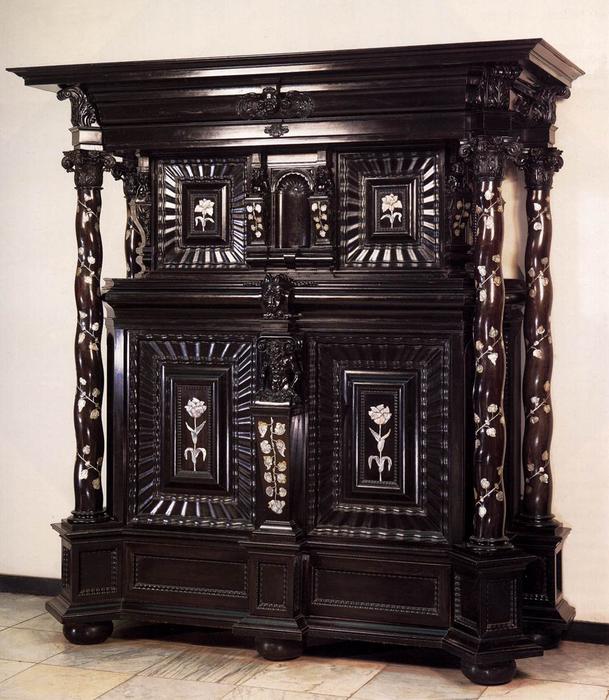
幻灯片播放Cupboard
 Dutch Golden Age
 1640
1640- Early Modern
 218.0 x 196.0 cm
 国家博物馆 (Rijksmuseum)
 展开详情
展开详情
购买高分辨率增强版数字图像,其品质远超在线预览。
每一份文件都由我们的内部专家使用先进工具与专业的后期润色技术精心打造。我们确保每一张图像都具备卓越的清晰度、精准的色彩还原度以及细腻的细节表现。
最终文件将在 72 小时内通过电子邮件交付,并针对专业、编辑及印刷用途进行了优化。其品质与顶级设计工作室、出版社和画廊所信赖的标准完全一致。
每份数字图像订单均包含
专业数字图像交付,品质保障
选择 OriginalUniqueArt.com,您获得的不仅仅是一张图像——您收到的是经过专业级增强、精雕细琢的数字艺术作品,并享有满意保证。以下是您的订单中自动包含的所有内容:

邮件快速送达
您的高分辨率数字图像文件将在下单后 72 小时内通过电子邮件发送给您 —— 即可立即使用。

AI 增强型数字文件
您的艺术品经过专业优化,结合先进的 AI 技术与人工修饰,确保呈现极致的细节、清晰度与色彩准确度。

终身免费重发服务
不小心删除了文件或找不到了?没关系——我们将随时为您免费重发。

无需进口费用,始终如一
即刻拥有您的艺术作品,无需支付任何关税、税费或运费——数字下载始终免税。

色彩精准保证
我们通过专业工具与色彩管理技术,确保您的数字图像尽可能真实地还原原作色彩。

60天满意保证
如果您对所购买的数字图像不满意,我们将在60天内为您进行修改或退还100%的款项——无需任何解释。

100% 退款保证
如果不满意?在收到数字文件后的60天内,我们为您提供全额退款——无需任何理由。

批量订单优惠
购买 3 张图片可享 10% 折扣 - 购买 5 张可享 15% 折扣 - 购买 10+ 张可享 20% 折扣。非常适合创意项目、画廊和机构使用。
藏品详情
The Grandeur of Domestic Artistry
To stand before this magnificent depiction of a cupboard is to be enveloped in an atmosphere of opulent history. It is not merely furniture rendered on canvas; it is a testament to the meticulous craftsmanship and profound decorative sensibilities of a bygone era. The piece commands attention with its sheer scale, measuring an impressive 218 by 196 centimeters, suggesting it was intended as a centerpiece for a room of considerable stature. One cannot help but trace the eye across its surface, captivated by the density of detail that speaks to hours, perhaps lifetimes, of skilled labor.
A Study in Dark Elegance and Carved Narrative
The dominant palette—a deep, rich darkness, suggestive of aged ebony or stained oak—lends an immediate air of gravitas and mystery. Against this somber backdrop, the lighter accents emerge like whispered secrets, illuminating the intricate carvings that cover every visible plane. The structure is a symphony of architectural elements: multiple doors framed by elaborate panels, all contributing to a cohesive, overwhelming sense of richness. Observe the floral motifs; they are not simply decorative filler but appear woven into the very grain of the imagined wood, suggesting an organic life force contained within rigid geometry.
Historical Echoes and Stylistic Resonance
Dating to approximately 1640, this cupboard anchors itself firmly in the Baroque period's fascination with material wealth and dramatic ornamentation. While the artist information provided points toward a different master, the style itself evokes the grand decorative arts of the early to mid-seventeenth century. The symmetry is almost overwhelming, yet the individual panels possess enough unique character—the stylized figures or animals subtly integrated into the woodwork—to prevent the piece from feeling monotonous. It speaks to a time when domestic objects were imbued with high art status, functioning as both storage and profound statements of owner pedigree.
Symbolism and Emotional Impact for the Modern Collector
For the contemporary collector or designer, this reproduction offers more than just visual beauty; it offers an emotional anchor. The cupboard symbolizes accumulated history, the weight of tradition, and the enduring value of masterful human skill. Its complexity invites contemplation—one might wonder about the objects once housed within its dark recesses, or the hands that carved its elaborate cornice. Reproducing such a piece allows one to infuse a modern space with an undeniable sense of permanence and storied depth, transforming a mere wall hanging into a focal point steeped in imagined grandeur.
艺术家简介
Michelangelo Merisi da Caravaggio: A Life Painted in Shadow and Fire
Michelangelo Merisi da Caravaggio, more famously known simply as Caravaggio, remains one of the most compelling and controversial figures in art history. Born in Milan in 1571, his life was a whirlwind of artistic brilliance, violent outbursts, and ultimately, premature death at the age of thirty-nine. His impact on Western painting is immeasurable; he shattered conventional approaches to representation, introducing a dramatic realism that profoundly influenced generations of artists – from Rembrandt and Velázquez to Picasso and beyond. Caravaggio’s legacy isn't just about his paintings; it’s about the turbulent spirit that fueled their creation.
Caravaggio’s early life was marked by profound loss. Orphaned at eleven following the devastating impact of the plague, he spent his formative years in a state of instability and hardship. This experience, coupled with the sudden death of both his father and grandfather on the same day in 1577, profoundly shaped his worldview – a world where beauty was often intertwined with brutality, and innocence frequently shattered by violence. He apprenticed briefly under Simone Peterzano in Milan before relocating to Rome around 1592, seeking opportunity and a fresh start. It was in this vibrant, chaotic city that he began to forge his unique artistic identity.
The Revolutionary Technique: Chiaroscuro and Naturalism
Caravaggio’s artistic revolution stemmed from two key innovations: the masterful use of chiaroscuro – a dramatic contrast between light and dark – and his radical embrace of naturalism. Unlike the polished, idealized figures prevalent in much of Renaissance art, Caravaggio depicted his subjects with unflinching honesty. He drew models directly from the streets of Rome—beggars, prostitutes, laborers—and rendered them with all their imperfections: wrinkles, dirt, and a palpable sense of humanity. These weren’t heroic saints or noble patrons; they were ordinary people caught in extraordinary moments.
His technique involved painting directly onto the canvas without preparatory sketches, often working quickly and impulsively. He utilized a limited palette, favoring dark browns, reds, and blacks, which he layered to create an intense sense of depth and volume. The dramatic lighting – typically originating from a single, unseen source – sculpted his figures, highlighting their musculature and emphasizing their emotional states. This technique, known as chiaroscuro, wasn’t merely a stylistic choice; it was integral to Caravaggio's storytelling, creating a sense of immediacy and drawing the viewer directly into the scene.
Key Works: A Gallery of Dramatic Moments
Caravaggio’s output during his relatively short career was prolific. Several works stand out as particularly significant examples of his revolutionary style. “The Musicians” (1595), commissioned by Cardinal Francesco Maria del Monte, exemplifies his pioneering realism and intense use of chiaroscuro. The painting depicts four male figures engaged in a musical performance, their faces illuminated by a dramatic spotlight while the background remains shrouded in darkness. The scene is not merely a depiction of music; it’s an allegory of love and life, subtly interwoven with the characters' gestures and expressions.
“The Calling of St. Matthew” (1599-1600), part of the Contarelli Chapel cycle in San Luigi dei Francesi, is arguably his most famous work. It portrays the moment when Jesus calls Matthew to follow him, a scene brimming with emotional intensity and dramatic realism. The light streams through a window, illuminating Matthew’s astonished face as he recognizes himself among the tax collectors. The painting's composition—with figures emerging from darkness into a pool of light—is both visually arresting and profoundly symbolic.
Other notable works include “David with the Head of Goliath” (1609-10), a brutal depiction of David’s triumph over the giant, and “Supper at Emmaus” (1605-1606), which captures the moment of recognition when the resurrected Christ reveals himself to his disciples. Each painting is a testament to Caravaggio's ability to infuse ordinary scenes with extraordinary drama and emotional depth.
A Turbulent Life and Violent End
Caravaggio’s life was as turbulent as his art. He was known for his volatile temper, engaging in frequent brawls and earning numerous arrests for violent behavior. His clashes with authority—including a notorious incident involving a police officer—led to his flight from Rome in 1606. He spent the remaining years of his life wandering through Naples, Malta, and Sicily, continuing to paint but always under threat of renewed conflict.
In May 1606, Caravaggio was involved in a street fight that resulted in the death of Ranuccio Tomassoni, a young man he had reportedly insulted. Despite attempts to flee, he was apprehended and sentenced to death. However, his connections within Rome’s elite secured his pardon, allowing him to return to the city in 1610. He died shortly thereafter, likely from a wound sustained during his flight.
Legacy: The Father of Modern Painting
Despite his tragically short life and violent tendencies, Caravaggio's influence on Western art is undeniable. His innovations in realism, dramatic lighting, and psychological depth revolutionized painting and paved the way for future generations of artists. He shifted the focus from idealized beauty to a more honest and emotionally resonant portrayal of human experience. Caravaggio’s legacy continues to inspire awe and debate, solidifying his position as one of the most important and influential figures in art history – a painter who captured not just images but also the very essence of human drama.

herman doomer
1595 - 1650

