
 Preview
 购买版画
购买版画 分享
分享 分享
分享
 详情
详情

 下载
下载
 相似作品
相似作品 X射线
X射线 幻灯片播放
幻灯片播放Badman
 Fiberglass
- Contemporary Art
 Contemporary
 64.0 x 58.0 cm
 福岡亞洲美術館
 展开详情
展开详情
购买高分辨率增强版数字图像,其品质远超在线预览。
每一份文件都由我们的内部专家使用先进工具与专业的后期润色技术精心打造。我们确保每一张图像都具备卓越的清晰度、精准的色彩还原度以及细腻的细节表现。
最终文件将在 72 小时内通过电子邮件交付,并针对专业、编辑及印刷用途进行了优化。其品质与顶级设计工作室、出版社和画廊所信赖的标准完全一致。
每份数字图像订单均包含
专业数字图像交付,品质保障
选择 OriginalUniqueArt.com,您获得的不仅仅是一张图像——您收到的是经过专业级增强、精雕细琢的数字艺术作品,并享有满意保证。以下是您的订单中自动包含的所有内容:

邮件快速送达
您的高分辨率数字图像文件将在下单后 72 小时内通过电子邮件发送给您 —— 即可立即使用。

AI 增强型数字文件
您的艺术品经过专业优化,结合先进的 AI 技术与人工修饰,确保呈现极致的细节、清晰度与色彩准确度。

终身免费重发服务
不小心删除了文件或找不到了?没关系——我们将随时为您免费重发。

无需进口费用,始终如一
即刻拥有您的艺术作品,无需支付任何关税、税费或运费——数字下载始终免税。

色彩精准保证
我们通过专业工具与色彩管理技术,确保您的数字图像尽可能真实地还原原作色彩。

60天满意保证
如果您对所购买的数字图像不满意,我们将在60天内为您进行修改或退还100%的款项——无需任何解释。

100% 退款保证
如果不满意?在收到数字文件后的60天内,我们为您提供全额退款——无需任何理由。

批量订单优惠
购买 3 张图片可享 10% 折扣 - 购买 5 张可享 15% 折扣 - 购买 10+ 张可享 20% 折扣。非常适合创意项目、画廊和机构使用。
藏品详情
A Mechanical Symphony of Tradition and Satire
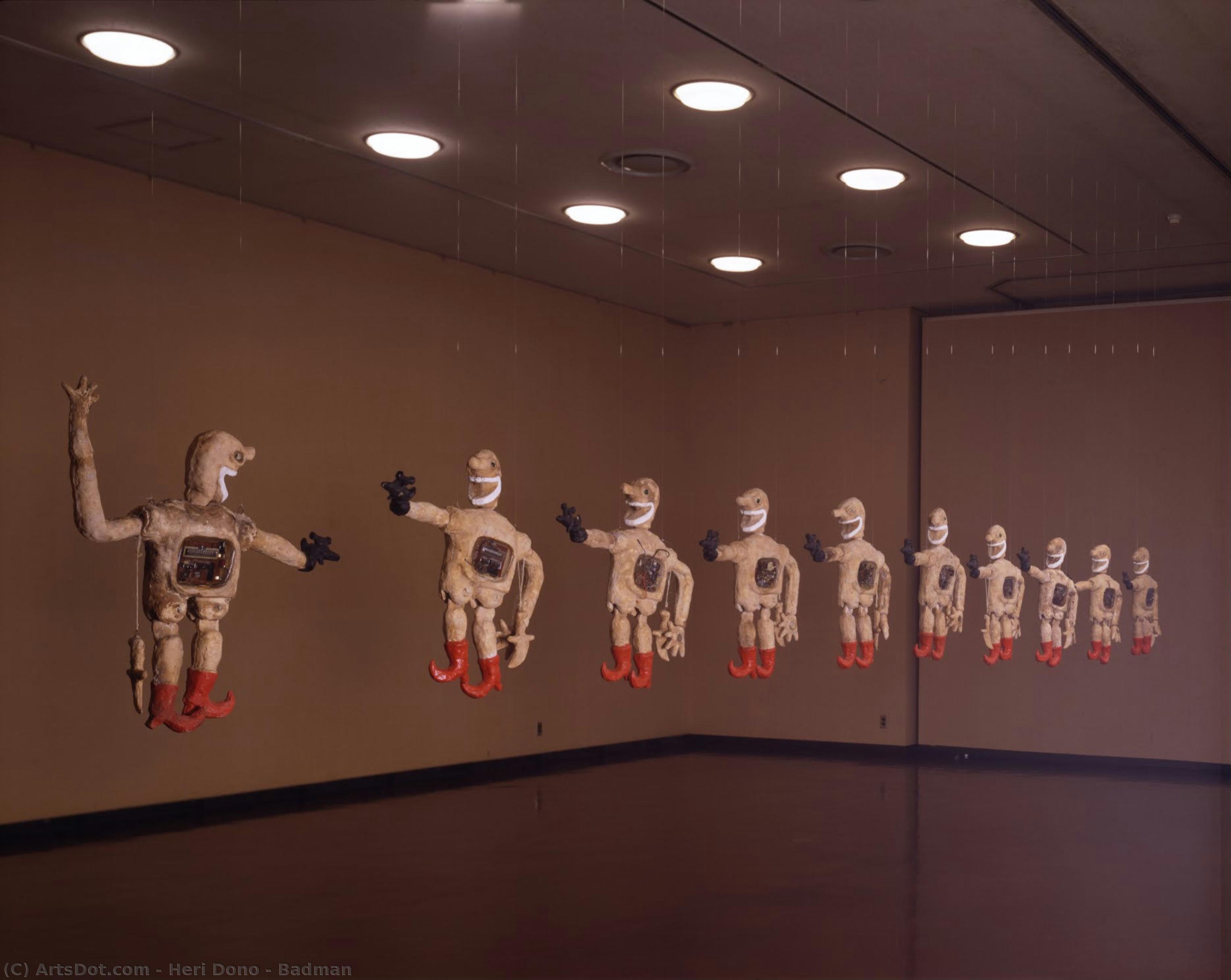
In the evocative realm of contemporary Indonesian art, few works capture the tension between ancient heritage and modern anxiety as poignantly as Heri Dono’s "Badman." This mesmerizing installation transcends the boundaries of traditional painting, presenting a kinetic world where the shadows of the past meet the cold, robotic pulse of the future. At first glance, the viewer is greeted by a troupe of figures—robotic, yet strangely soulful—suspended in a state of perpetual motion. These are not merely sculptures; they are characters in a silent, mechanical drama that reflects the artist's profound connection to wayang kulit, the traditional Javanese shadow puppetry. Through these fiberglass forms, Dono breathes life into a narrative that feels both deeply rooted in the soil of Yogyakarta and strikingly relevant to our globalized, technological age.
The technique employed in "Badman" is a masterclass in multidisciplinary innovation. By integrating electronic circuits with sculptural elements, Dono creates an immersive experience where movement becomes a language of its own. The figures, meticulously painted and arranged in a rhythmic row, possess a whimsical yet unsettling quality. Each robot, though part of a collective, carries a unique expression and pose, suggesting a fragmented society caught in the gears of progress. For the discerning collector or interior designer, this piece offers more than just visual interest; it provides a conversational centerpiece that challenges the stillness of a room, inviting onlookers to contemplate the delicate dance between organic tradition and synthetic innovation.
The Shadow of History and Social Critique
To understand "Badman," one must look through the lens of Indonesia’s complex sociopolitical landscape. Growing up in the shadow of the New Order authoritarian regime, Heri Dono learned to use the subtle language of puppetry to bypass censorship and deliver biting social critiques. In this work, the robotic figures serve as metaphors for the loss of individual agency within larger, often oppressive, systems. The "badman" of the title suggests a confrontation with the darker aspects of human nature and governance, yet the execution remains layered with a sense of playfulness and satire. It is this duality—the ability to be simultaneously playful and profound—that makes Dono’s work so enduringly captivating.
The emotional impact of the piece lies in its uncanny ability to evoke nostalgia and apprehension simultaneously. There is a haunting beauty in the way these mechanical puppets hang, reminiscent of the flickering shadows on a traditional wayang screen, yet their metallic, robotic nature speaks to the alienation of the modern era. For those seeking to adorn a space with art that possesses intellectual depth and emotional resonance, a high-quality reproduction of "Badman" offers an opportunity to bring this powerful dialogue into the home. It is a piece that does not merely decorate a wall; it invites a deeper reflection on where we have come from and the mechanical trajectories of where we are headed.
艺术家简介
Heri Dono: Bridging Tradition and Innovation in Indonesian Art
Heri Dono (born June 12, 1960) stands as a pivotal figure in contemporary Indonesian art, recognized for his distinctive approach that seamlessly blends the rich heritage of Javanese folklore—particularly wayang kulit shadow puppetry—with influences from Western artistic movements and global cultural dialogues. His journey began amidst the vibrant intellectual landscape of Yogyakarta’s Indonesian Art Institute (ISI), where he honed his skills and established a foundational understanding of both traditional aesthetics and experimental techniques.
- Early Influences: Dono's formative years were marked by exposure to the artistic legacy of Indonesia’s masters, notably Sukarno’s collection at the Presidential Palace in Bogor. This early encounter instilled within him a profound appreciation for visual art and fueled his ambition to emulate the celebrated painters whose canvases adorned the palace walls.
- Formal Education: He pursued undergraduate studies in Painting at ISI Yogyakarta from 1980 to 1987, immersing himself in rigorous artistic training and developing a mastery of painting techniques that would underpin his subsequent creative endeavors.
- Exploration Beyond Painting: Recognizing the limitations of solely focusing on painting, Dono ventured into sculpture and installation art, experimenting with diverse materials—from reclaimed wood to found objects—to convey complex narratives and engage audiences in immersive experiences.
His artistic vision is characterized by a deliberate juxtaposition of seemingly disparate elements: traditional Indonesian motifs like wayang kulit figures and tau tau sculptures alongside references to Western pop culture, animation, and comics. This fusion reflects Dono’s belief that art should transcend cultural boundaries and challenge conventional perspectives on artistic expression.
- Wayang Kulit Inspiration: The profound influence of wayang kulit performances—characterized by storytelling, music, visual spectacle, and symbolic representation—is evident throughout his oeuvre. He seeks to capture the essence of these traditions while simultaneously incorporating multimedia elements to amplify their impact on viewers.
- Social Commentary: Dono’s artworks frequently grapple with pressing social issues, addressing themes of identity, displacement, and cultural preservation. His artistic practice serves as a conduit for critical reflection and encourages dialogue about societal concerns.
Throughout his prolific career spanning decades, Dono has garnered international acclaim, participating in numerous exhibitions and biennales across continents—from Asia Pacific Triennial to Venice Biennale—and securing prestigious awards recognizing his contributions to the art world. Notably, he was awarded the Dutch Prince Claus Award for Culture and Development in 1998, acknowledging his commitment to fostering intercultural understanding and promoting artistic innovation.
- Notable Exhibitions: Dono’s work has graced venues worldwide including Asia Pacific Triennial (1993 & 2000), Gwangju Biennale (1995 & 2006), Sydney Biennale (1996), Shanghai Biennale (2000), Venice Biennale (2003 & 2015), Sharjah Biennial (2005 & 2023), Guangzhou Triennale (2011), Kochi-Muziris Biennale (2018), Bangkok Art Biennale (2018), and Gangwon Kids Triennale (2020).
- Awards Recognition: He received UNESCO Prize in 2000, Indonesian Art Award by the Government of Republic of Indonesia (2014)
Heri Dono’s enduring legacy resides not only in his artistic output but also in his role as a champion of intercultural dialogue and a visionary artist who dared to reimagine art's capacity for social transformation. His distinctive style—characterized by bold colors, dynamic compositions, and evocative imagery—continues to inspire artists globally and solidify his position as one of Indonesia’s most influential contemporary voices.

heri dono
1960 - , Indonesia
基本信息
- Artistic Movement Or Style: Contemporary Installation Art
- Artists Or Movements Influenced By This Artist: ['Animism']
- Artists Who Influenced This Artist:
- Walt Disney
- Hanna-Barbera
- Date Of Birth: June 12, 1960
- Full Name: Heri Dono
- Nationality: Indonesian
- Notable Artworks:
- In the Fridge and Fire (Di dalam Kulkas dan..., 2009)
- A Small Dog With His Guardian (Seekor Anjing , 2015)
- Place Of Birth: Jakarta, Indonesia

