

 购买版画
购买版画 分享
分享 分享
分享
 详情
详情

 下载
下载
 相似作品
相似作品 X射线
X射线 幻灯片播放
幻灯片播放EonhaeTaesanjibyo


 展开详情
展开详情




P118B $10

P118H $10

P118W $10

P438Z $10

P508JH $12

P508YH $12

P805H $10

P805Z $10

P919BZ $10

P919G $10

P919XJ $10

P959ZH $10

P968JZ $12

W106C $8

W218G $10

W218JH $8

W218Y $10

W307PJ $10

W316G $10

W316PJ $8

W316Y $10

W398PJ $8

W4111J $10

W500HY $15

W500JH $15

W692G $12

W849H $8

W940BG $15

W953PJ $8




从与原作比例一致的预设尺寸中进行选择。

您可以输入自定义尺寸,以适配特定的画框或空间。如果所选尺寸与原图比例不符,我们将通过裁剪作品或添加手绘元素来扩展画面。数字样稿将在制作开始前发送给您确认。
请注意,屏幕预览无法准确反映实际的裁剪或扩展效果,只有样稿才能真实呈现最终的构图。
虽然我们提供定制尺寸服务,但为了保留原作比例,建议您从预设列表中选择尺寸。
下单后,OriginalUniqueArt.com 团队将通过电子邮件联系客户获取具体要求,并提供效果预览图。


 玻璃选项仅适用于110厘米以下的尺寸。

EonhaeTaesanjibyo
复制材质
复制品尺寸
-


最终总价
-
艺术家简介
Heo Jun (1539 – 9 October 1615): The Silent Architect of Korean Medicine
Heo Jun (허준), born in Seoul around 1539, stands as a monumental figure within the annals of Korean history—not for military conquest or political maneuvering, but for an unparalleled dedication to healing and the preservation of traditional medicine. His legacy extends far beyond his lifetime, cementing him as arguably Korea’s most influential physician and shaping the trajectory of Donguibogam (동의보감), a medical encyclopedia that continues to resonate with scholars and practitioners today.
Born into a family steeped in Confucian scholarship and ethical conduct—a hallmark of Joseon society—Heo Jun demonstrated exceptional aptitude for learning from an early age. He excelled at the Confucian examinations, securing a prestigious position within the royal court during King Seonjo’s reign. This initial foray into official service provided him with invaluable access to knowledge and experience that would prove crucial in his subsequent endeavors.
- Early Life & Education: Heo Jun's formative years were marked by rigorous study of Confucian classics and medical texts, establishing a foundation for his lifelong pursuit of holistic healing. His family’s emphasis on moral virtue instilled within him a deep understanding of the interconnectedness between mind, body, and spirit—principles that would permeate his approach to medicine.
- Service Under King Seonjo: Ascending to the role of Royal Physician under King Seonjo, Heo Jun swiftly gained renown for his diagnostic acumen and compassionate care. Recognizing the limitations of Western medicine in addressing complex ailments prevalent during the Joseon era, he championed a comprehensive system rooted in observation, herbal remedies, acupuncture, and dietary considerations—a paradigm shift that prioritized patient well-being above all else.
- Donguibogam: A Synthesis of Tradition
However, Heo Jun’s enduring fame rests upon his magnum opus – Donguibogam (동의보감), literally “Eastern Medicine Compendium.” Completed in 1615, shortly before his death, this monumental text represents the culmination of decades of meticulous research and clinical practice. Unlike contemporary medical treatises focused solely on anatomical dissection and pharmacological formulas, Donguibogam embraced a holistic worldview—integrating humoral theory with empirical observation to diagnose illnesses and prescribe treatments.
Donguibogam’s influence extends far beyond Korea's borders. It became the cornerstone of Korean medical education for centuries and garnered considerable acclaim in China and Japan. Its detailed descriptions of herbal medicines, acupuncture techniques, and dietary regimens continue to inform modern practitioners striving to harmonize mind and body—a testament to Heo Jun’s visionary understanding of human physiology.
Legacy & Significance: Heo Jun's contribution to Korean culture is undeniable. Donguibogam isn't merely a medical text; it embodies the spirit of Joseon Confucian ethics, emphasizing compassion, balance, and respect for natural harmony. More than 400 years later, Donguibogam remains a vital resource for understanding Korea’s cultural heritage and continues to inspire debates about preventative medicine and holistic wellness.
His unwavering commitment to preserving Korean medical tradition solidified his place as one of the nation's most revered figures—a silent architect who shaped the intellectual landscape of his time and whose wisdom persists in shaping our comprehension of health and healing today.

heo jun
1539 - 1615 , South Korea
艺术家简介
- Artistic Movement Or Style: Donguibogam
- Artists Or Movements Influenced By This Artist: ['']
- Artists Who Influenced This Artist: ['']
- Date Of Death: 1615
- Full Name: Heo Jun
- Nationality: Korean
- Notable Artworks: ['']
- Place Of Birth: South Korea
相关文章
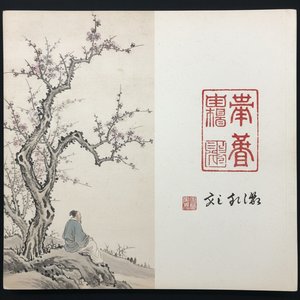
Xie Zhiliu: A Legacy of Ink Wash Painting & Modern Chinese Literati Tradition
Explore the legacy of Xie Zhiliu, a master of Chinese ink wash painting & prominent figure in modern art. Discover his techniques, influences, and contributions to literati tradition. A guide for discerning collectors.

The Art of Emphasis: Scaling Artwork for Impactful Statement Walls
Elevate your interiors with impactful statement walls! Expert guide on scaling artwork for perfect proportions & design harmony. Custom solutions & free consultations at OriginalUniqueArt.


Deconstructing Form & Feeling: A Comprehensive Exploration of Modernist Artworks
Explore the profound evolution of Modernist art with OriginalUniqueArt. Discover key movements like Abstract Expressionism & Analytical Realism, artist insights, and expert collecting guidance. Invest in museum-quality reproductions today.

The Art of Layered Narratives: Spatial Harmony & Visual Cohesion in Multi-Piece Artwork Arrangements
Explore the art of multi-panel arrangements for impactful interiors. Expert guidance on spatial harmony, visual storytelling & psychological impact – perfect for luxury hotels and discerning collectors. Elevate your space with curated artwork.

