

 发送
发送 分享
分享
 详情
详情 指南
指南

 下载图片
下载图片
 相似作品
相似作品 幻灯片播放
幻灯片播放 统计数据
统计数据Two Piece Sculpture No. 7; Pipe


 阅读全文
阅读全文
手工油画复制品
由我们的艺术家按需定制,为您提供您所选尺寸及画框的布面手工油画。 ( 切换至版画销售渠道 切换至数字图像销售渠道)




































您可以从与原作比例一致的预设尺寸中进行选择。

请输入您需要的宽度和高度,以适配您的画框或墙面。由于作品为手工绘制,若您选择不同的尺寸比例,艺术家可能会在画面边缘多画一些或稍作裁剪 —— 由您决定。在开始绘画之前,我们会为您发送一份数字效果图供您确认。本页面上展示的图片并非最终实物 —— 只有效果图才能反映真实结果。
下单后,OriginalUniqueArt.com 团队将通过电子邮件联系客户获取具体要求,并提供效果预览图


 玻璃选项仅适用于110厘米以下的尺寸。

Two Piece Sculpture No. 7; Pipe
复制品材质
复刻品尺寸说明
-


总计金额
¥ 2019
A Dance of Forms: Exploring Henry Moore’s ‘Two Piece Sculpture No. 7; Pipe’
This captivating bronze sculpture by Henry Moore exemplifies his mastery of abstract figurative form and his enduring exploration of the human figure and its relationship to landscape. Created in an unknown year, *Two Piece Sculpture No. 7; Pipe* presents two reclining figures intertwined in a dynamic embrace. The composition isn't about literal representation; rather, it’s a poetic suggestion of connection, intimacy, and the inherent tension between individual forms. Moore deliberately avoids precise definition, allowing the viewer to complete the narrative through their own interpretation. The sculpture rests upon a dark brown base, grounding the flowing bronze and providing visual contrast.Modernist Sensibility & Sculptural Technique
Moore’s style is firmly rooted in Modernism, drawing influence from both Surrealism and Abstract Expressionism. However, he forged his own unique path, characterized by simplified forms and a deep engagement with the material itself. Direct carving, a technique Moore championed early in his career, isn't immediately evident here as this is a cast bronze – but the spirit of that approach remains. The sculpture *feels* hand-worked; subtle variations in texture and surface finish suggest the artist’s intimate involvement with the process. The warm gold tones of the bronze, ranging from honey hues to rich browns, are not merely aesthetic choices but integral to conveying a sense of warmth, organic life, and timelessness. The ‘pipe’ element of the title alludes to the way the forms connect and flow into one another, like sections of piping joined together.Moore's Legacy: Reclining Figures & Abstracted Humanity
Henry Moore (1898-1986) is arguably Britain’s greatest sculptor of the 20th century. He revolutionized sculpture by moving away from traditional representational forms and embracing abstraction. His recurring motif – the reclining figure – became synonymous with his name, often evoking primordial landscapes and the enduring power of the human spirit. Two Piece Sculpture No. 7; Pipe builds upon this legacy, presenting a fragmented yet harmonious vision of the body. Moore’s work frequently explores themes of motherhood and family, though in this piece, the connection feels more universal – a celebration of partnership and shared existence. His sculptures are often monumental in scale, but even in an unknown size, this piece possesses a powerful presence.Emotional Resonance & Interior Impact
While abstract, *Two Piece Sculpture No. 7; Pipe* evokes a profound emotional response. The flowing lines and intertwined forms suggest comfort, support, and a sense of belonging. It’s a sculpture that invites contemplation and encourages viewers to project their own feelings onto its ambiguous shapes.- For collectors, this piece represents an investment in a cornerstone of Modern art.
- Interior designers will appreciate its ability to add sophistication and artistic depth to any space.
- Its warm tones and organic forms make it particularly well-suited for modern or contemporary interiors, but its timeless quality allows it to complement a variety of styles.
问答详情
"Two Piece Sculpture No. 7; Pipe" 是 亨利·摩尔 最受欢迎的作品之一吗?
亨利·摩尔 的《Two Piece Sculpture No. 7; Pipe》 的知名度处于 Iconic 水平。这一分类反映了该作品被广泛认可的程度。
"Two Piece Sculpture No. 7; Pipe" 的明暗对比是否强烈?
"Two Piece Sculpture No. 7; Pipe" 的明暗对比度记录为 Statement。对比度描述了明亮区域与阴影区域之间的差异强度。
亨利·摩尔 的《Two Piece Sculpture No. 7; Pipe》 适合作为什么场合的礼物?
建议将“Two Piece Sculpture No. 7; Pipe”作为送给 Anniversary 的礼物。
艺术家简介
Henry Moore (1898–1986): Sculptural Process and Public Identity
Henry Spencer Moore, born on July 30, 1898, in Castleford, Yorkshire, England, was an English visual artist who profoundly reshaped the landscape of modern British sculpture. His formative years amidst the rugged beauty of his birthplace instilled a lifelong fascination with organic forms—particularly those mirroring the undulating hills and valleys of Yorkshire—a fascination that would permeate his artistic vision throughout his prolific career. Raymond Spencer Moore (1848–1922), his father, was a self-taught man who championed education, steering young Henry away from the traditional path of a miner towards formal schooling; this early influence nurtured a belief in intellectual exploration and laid the groundwork for Moore’s artistic pursuits.Early Artistic Exploration and Formal Education
Moore's innate talent for modeling clay and carving wood emerged early on, foreshadowing his future vocation. Recognizing his exceptional aptitude, Castleford Secondary School’s art teacher fostered his burgeoning creativity—a pivotal moment that propelled him toward a deeper engagement with artistic principles. He pursued further studies at Leeds School of Art before embarking on a transformative journey to the Royal College of Art in London, immersing himself in the study of classical sculpture alongside pioneering movements like Cubism. However, Moore wasn’t merely adopting stylistic trends; he synthesized these influences into something wholly original—a synthesis characterized by an unwavering commitment to exploring form and space through abstraction.The Influence of Mexican Pre-Columbian Art
A pivotal encounter occurred during Moore's visit to Mexico in 1925, where he was captivated by the monumental sculptures of the Aztec civilization. The striking simplicity and geometric precision of these works liberated him from representational constraints—a liberation that fueled his experimentation with abstraction and solidified his fascination with exploring fundamental artistic concepts. This experience profoundly impacted his aesthetic sensibilities, inspiring him to embrace forms devoid of explicit detail while retaining a palpable sense of dynamism and visual interest.Sculptural Style and Recurring Themes
Moore’s sculptural style evolved over time—characterized by rounded, organic shapes that echoed the natural world and often incorporating voids or openings—a stylistic hallmark that distinguished his oeuvre from conventional artistic practices. He consistently revisited two central themes: the reclining figure and the mother and child—motifs imbued with profound emotional depth and reflecting universal human experiences. These sculptures weren’t idealized representations but honest explorations of form, volume, and spatial relationships—demonstrating Moore's ability to translate sculptural principles into evocative visual narratives.Public Commissions and Legacy
The Second World War spurred Moore’s artistic endeavors—particularly his documentation of Londoners sheltering from the Blitz in Underground stations—resulting in a series of poignant drawings that captured the resilience, fear, and communal spirit of the era. These *Shelter Drawings* stand as testament to Moore's capacity for translating sculptural vision into two-dimensional form—a feat that cemented his reputation as one of Britain’s foremost sculptors. Subsequently, he received numerous prestigious public commissions—allowing him to create monumental sculptures for educational institutions and civic spaces—reflecting his conviction that art should serve the broader community and fostering artistic innovation across generations. Henry Moore's enduring influence on twentieth-century art remains undeniable—a legacy characterized by a courageous challenge to conventional sculptural norms and an unwavering devotion to exploring form, space, and human connection.- Notable Sculptures: *Reclining Figure*, *Family Group*, *Shelter Drawings*
- Influences: Classical Sculpture, Cubism, Mexican Pre-Columbian Art
- Key Characteristics: Rounded Forms, Organic Shapes, Void Spaces

亨利·摩尔
1898 - 1986 , 英国
快速概览
- Artistic Movement Or Style: 现代主义,抽象雕塑
- Date Of Birth: 1898年7月30日
- Date Of Death: 1986年8月31日
- Full Name: 亨利·斯宾塞尔·摩尔
- Nationality: 英国
- Notable Artworks:
- 卧姿人物
- 庇护画作
- Place Of Birth: 英国约克郡卡斯特福德
相关文章
The Enduring Legacy of Bronze: A Historical & Artistic Exploration for the Collector
Explore the rich history & enduring appeal of bronze sculpture with expert insights for collectors at OriginalUniqueArt. Learn about casting techniques, iconic artists, collecting tips & contemporary interpretations.
青铜艺术的永恒遗产:历史、技艺与收藏家的鉴赏之道
探索青铜艺术的辉煌历史、精湛技艺与收藏价值。深入了解失蜡法铸造工艺,掌握青铜器鉴赏技巧,规避市场风险。OriginalUniqueArt.com为您提供专业的艺术咨询和定制服务。

Bronze Age to Modern Masters: 10 Sculptures That Redefined Art | OriginalUniqueArt
Journey through art history with 10 legendary bronze sculptures – from Michelangelo's David to Rodin’s Thinker. Explore the stories, techniques & timeless beauty of these masterpieces. Find museum-quality reproductions & elevate your home decor on OriginalUniqueArt.com.

Bronze Sculptures That Defined Art History | OriginalUniqueArt
Journey through art history with our Top 10 bronze sculptures! Explore masterpieces by Rodin, Michelangelo & more. Discover stories behind iconic statues and find museum-quality reproductions for your home decor at OriginalUniqueArt.com.
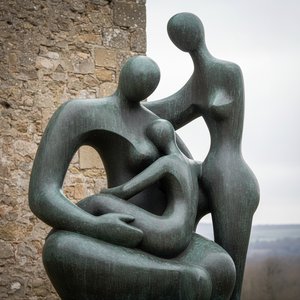
Henry Moore: Sculpting Modernity – Form, Emotion & the Human Condition
Explore the revolutionary sculptures of Henry Moore – abstract forms, reclining figures & powerful expressions of the human condition. Discover his legacy & artistic process with OriginalUniqueArt.


