

 效果预览
效果预览
 分享
分享 分享
分享
 详情
详情

 下载
下载
 相似作品
相似作品 X射线
X射线 幻灯片播放
幻灯片播放 统计数据
统计数据The Artist's Hand V
 Lithograph
- WallArt
- Neo-Romanticism
 1979
1979- Modern
 26.0 x 19.0 cm
 泰特不列顛美术馆
 展开详情
展开详情
艺术微喷/版画
博物馆级艺术微喷或帆布版画,制作高效,并提供多种饰面选择。 ( 购买手绘画作 切换至数字图像销售渠道)




P118B $10

P118H $10

P118W $10

P438Z $10

P508JH $12

P508YH $12

P805H $10

P805Z $10

P919BZ $10

P919G $10

P919XJ $10

P959ZH $10

P968JZ $12

W106C $8

W218G $10

W218JH $8

W218Y $10

W307PJ $10

W316G $10

W316PJ $8

W316Y $10

W398PJ $8

W4111J $10

W500HY $15

W500JH $15

W692G $12

W849H $8

W940BG $15

W953PJ $8




从与原作比例一致的预设尺寸中进行选择。

您可以输入自定义尺寸,以适配特定的画框或空间。如果您选择的尺寸与原图比例不符,我们将对作品进行裁剪,或通过镜像填充/纯色填充边缘的方式来扩展图像。在开始制作之前,我们会向您发送一份数字效果图供您确认。
请注意,屏幕上的预览并不能反映实际的裁剪或扩展效果。只有效果图才能准确展示最终的构图。
虽然我们提供定制尺寸,但为了保持原图比例,我们建议您从预设列表中选择尺寸。


 玻璃选项仅适用于110厘米以下的尺寸。

The Artist's Hand V
艺术微喷/版画
复制品尺寸
-


最终总价
$ 80
A Poignant Meditation on Creation
In the quiet intimacy of Henry Moore’s “The Artist's Hand V,” created in 1979, we are invited into a profound dialogue between the creator and his medium. This exquisite lithograph serves as more than a mere anatomical study; it is a soulful meditation on the very act of making. Through the outstretched gesture of Moore’s own hand, the artwork captures a moment of suspended animation, where the boundary between the sculptor and his subject begins to dissolve. The piece resonates with a sense of reaching—a physical manifestation of the human desire to touch, to shape, and to leave an indelible mark upon the world. For the discerning collector or interior designer, this work offers a sophisticated focal point that brings both intellectual depth and a serene, contemplative energy to any curated space.
Executed in the evocative style of Neo-Romanticism, the print eschews clinical precision in favor of emotional resonance and organic truth. Moore, a master of capturing the essence of form, utilizes a delicate four-color lithograph process—incorporating shades of black, brown, light-brown, and yellow-brown—to breathe life into the Rives paper. This careful selection of tones allows for subtle gradations of shadow and light, creating a sculptural depth that mimics the three-dimensional qualities of his famous bronze works. The texture of the print, achieved through the meticulous printing technique of Curwen Prints Ltd., London, provides a tactile quality that invites the eye to linger on every crease and contour of the reaching fingers.
The Legacy of Form and Nature
To understand the gravity of this work, one must look to the landscape of Moore’s soul. Born in the rugged mining town of Castleford, Yorkshire, Moore’s aesthetic was forever shaped by the undulating hills and weathered stones of his homeland. In “The Artist's Hand V,” we see the echoes of that landscape reflected in the organic, almost geological rhythm of the hand itself. His ability to bridge the gap between the human figure and the natural world is at its zenith here; the hand does not merely represent flesh and bone, but rather a force of nature, much like the trees and animal skeletons that defined his monumental sculptures.
The historical significance of this piece is further heightened by its rarity. As part of an edition of only 50 numbered prints, it carries the prestige of a limited treasure, making it an exceptional acquisition for those who value exclusivity and art historical importance. Whether placed in a sunlit studio or a formal gallery setting, this lithograph acts as a bridge to the twentieth century's most significant sculptural legacy. It is a piece that does not demand attention through loudness, but commands it through its quiet, enduring strength—a timeless tribute to the enduring spirit of human creativity.
艺术家简介
Henry Moore (1898–1986): Sculptural Process and Public Identity
Henry Spencer Moore, born on July 30, 1898, in Castleford, Yorkshire, England, was an English visual artist who profoundly reshaped the landscape of modern British sculpture. His formative years amidst the rugged beauty of his birthplace instilled a lifelong fascination with organic forms—particularly those mirroring the undulating hills and valleys of Yorkshire—a fascination that would permeate his artistic vision throughout his prolific career. Raymond Spencer Moore (1848–1922), his father, was a self-taught man who championed education, steering young Henry away from the traditional path of a miner towards formal schooling; this early influence nurtured a belief in intellectual exploration and laid the groundwork for Moore’s artistic pursuits.Early Artistic Exploration and Formal Education
Moore's innate talent for modeling clay and carving wood emerged early on, foreshadowing his future vocation. Recognizing his exceptional aptitude, Castleford Secondary School’s art teacher fostered his burgeoning creativity—a pivotal moment that propelled him toward a deeper engagement with artistic principles. He pursued further studies at Leeds School of Art before embarking on a transformative journey to the Royal College of Art in London, immersing himself in the study of classical sculpture alongside pioneering movements like Cubism. However, Moore wasn’t merely adopting stylistic trends; he synthesized these influences into something wholly original—a synthesis characterized by an unwavering commitment to exploring form and space through abstraction.The Influence of Mexican Pre-Columbian Art
A pivotal encounter occurred during Moore's visit to Mexico in 1925, where he was captivated by the monumental sculptures of the Aztec civilization. The striking simplicity and geometric precision of these works liberated him from representational constraints—a liberation that fueled his experimentation with abstraction and solidified his fascination with exploring fundamental artistic concepts. This experience profoundly impacted his aesthetic sensibilities, inspiring him to embrace forms devoid of explicit detail while retaining a palpable sense of dynamism and visual interest.Sculptural Style and Recurring Themes
Moore’s sculptural style evolved over time—characterized by rounded, organic shapes that echoed the natural world and often incorporating voids or openings—a stylistic hallmark that distinguished his oeuvre from conventional artistic practices. He consistently revisited two central themes: the reclining figure and the mother and child—motifs imbued with profound emotional depth and reflecting universal human experiences. These sculptures weren’t idealized representations but honest explorations of form, volume, and spatial relationships—demonstrating Moore's ability to translate sculptural principles into evocative visual narratives.Public Commissions and Legacy
The Second World War spurred Moore’s artistic endeavors—particularly his documentation of Londoners sheltering from the Blitz in Underground stations—resulting in a series of poignant drawings that captured the resilience, fear, and communal spirit of the era. These *Shelter Drawings* stand as testament to Moore's capacity for translating sculptural vision into two-dimensional form—a feat that cemented his reputation as one of Britain’s foremost sculptors. Subsequently, he received numerous prestigious public commissions—allowing him to create monumental sculptures for educational institutions and civic spaces—reflecting his conviction that art should serve the broader community and fostering artistic innovation across generations. Henry Moore's enduring influence on twentieth-century art remains undeniable—a legacy characterized by a courageous challenge to conventional sculptural norms and an unwavering devotion to exploring form, space, and human connection.- Notable Sculptures: *Reclining Figure*, *Family Group*, *Shelter Drawings*
- Influences: Classical Sculpture, Cubism, Mexican Pre-Columbian Art
- Key Characteristics: Rounded Forms, Organic Shapes, Void Spaces

亨利·摩尔
1898 - 1986 , 英国
艺术家简介
- Artistic Movement Or Style: 现代主义,抽象雕塑
- Date Of Birth: 1898年7月30日
- Date Of Death: 1986年8月31日
- Full Name: 亨利·斯宾塞尔·摩尔
- Nationality: 英国
- Notable Artworks:
- 卧姿人物
- 庇护画作
- Place Of Birth: 英国约克郡卡斯特福德
相关文章

Designing Your Forever Space: An Expert Guide to Elevating Your New Home with Neo-Abstract Art
Elevate your first home with the bold energy of Neo-Abstract Art. Our expert guide helps newlyweds master modern geometric compositions, textures, and color palettes. Discover how custom hand-painted oils and multi-panel designs can transform your new space into a curated masterpiece.

Neo-Abstract Art: The High-Impact Evolution of Modern Visual Energy and Geometric Sophistication
Discover the power of Neo-Abstract art. Explore how bold geometric forms and high-impact visual energy are redefining modern design. Learn to curate sophisticated, high-energy spaces with the latest trends in contemporary abstraction and structural color.

Bronze Sculptures That Defined Art History | OriginalUniqueArt
Journey through art history with our Top 10 bronze sculptures! Explore masterpieces by Rodin, Michelangelo & more. Discover stories behind iconic statues and find museum-quality reproductions for your home decor at OriginalUniqueArt.com.
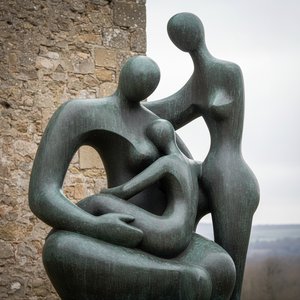
Henry Moore: Sculpting Modernity – Form, Emotion & the Human Condition
Explore the revolutionary sculptures of Henry Moore – abstract forms, reclining figures & powerful expressions of the human condition. Discover his legacy & artistic process with OriginalUniqueArt.
马蒂斯大师25幅杰作:色彩与光影的艺术传奇 | OriginalUniqueArt
探索亨利·马蒂斯25幅杰作,感受野兽派色彩的魅力!从《舞蹈》到《红色和谐》,揭秘大师背后的故事与艺术灵感。OriginalUniqueArt.com提供博物馆级高质量油画复制品,为您的家居增添奢华艺术气息。立即在线探索完整系列!


