
 实景预览
实景预览
 分享
分享 分享
分享
 详情
详情 指南
指南

 下载作品
下载作品
 相似作品
相似作品 X射线
X射线 幻灯片播放
幻灯片播放 问答
问答 统计数据
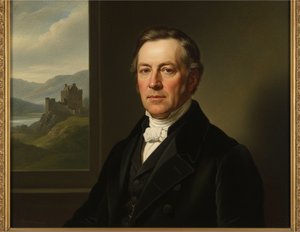
统计数据Those Were the Days

- 92.0 x 61.0 cm


 展开全文
展开全文
艺术微喷/版画
博物馆级艺术微喷或帆布版画,制作高效,并提供多种饰面选择。 ( 订购纯手工绘制画作 切换至数字图像销售渠道)




































您可以从与原作比例一致的预设尺寸中进行选择。

请输入您所需的宽度和高度,以适配您的画框或墙面。由于印刷品只能进行裁剪,无法超出原图尺寸,因此若比例不一致,画面的一部分将会被裁切。在正式印刷之前,我们会为您发送一份数字效果图供您确认。本页面显示的图片并非最终裁剪后的效果——只有效果图才能展示真实的裁剪情况。


 玻璃选项仅适用于110厘米以下的尺寸。

Those Were the Days
艺术微喷/版画
复刻品尺寸
-


最终结算价
¥ 544
艺术家简介
Henry Macbeth-Raeburn: A Glasgow Movement Master of Light and Line
Henry Macbeth-Raeburn (1860-1947) stands as a quietly significant figure within the vibrant tapestry of late 19th and early 20th century British art. Born in Helensburgh, Scotland, into an artistic lineage tracing back to Norman Macbeth, a renowned portraitist, Henry’s journey was one of dedicated craft, evolving from a student of the Royal Academy to a respected printmaker deeply connected with the Glasgow Movement. His work, often characterized by meticulous detail and a subtle yet powerful use of light and shadow, reflects both his formal training and his engagement with the innovative spirit of his time.
Early life provided Henry with an immediate immersion in artistic practice. His father’s profession as a mechanical engineer instilled a keen eye for precision, while his family's artistic heritage—including his uncle Robert Walker Macbeth and grandfather Norman Macbeth – fostered a deep appreciation for the visual arts. He began his formal training at the Glasgow School of Art, absorbing the influences of masters like William Cruikshank and developing a distinctive style that blended academic rigor with a growing interest in contemporary trends. Crucially, he adopted “Macbeth-Raeburn” as his surname, a deliberate choice to honor both his artistic idol, Henry Raeburn, and distinguish himself within his family’s established artistic circle.
The Glasgow Movement and the Rise of a Printmaker
Henry Macbeth-Raeburn's career truly flourished during his association with the Glasgow Movement – a collective of artists, designers, and craftspeople centered around Charles Rennie Mackintosh and Margaret MacDonald. This movement sought to revitalize British design through a synthesis of craftsmanship, functionality, and artistic expression, rejecting the prevailing Victorian aesthetic in favor of a more modern and democratic approach. Macbeth-Raeburn’s work became inextricably linked with this ethos, particularly his contributions to the production of suffragette banners for the Women's Social and Political Union. These bold, graphic designs—characterized by their striking imagery and powerful messages – demonstrated his commitment to social causes and showcased his burgeoning skills in reproductive engraving.
His involvement extended beyond mere decoration; he actively taught needlework at the Glasgow School of Art, disseminating his innovative techniques and advocating for a shift in perceptions of craft. He championed the use of humble materials like cotton and linen, arguing that beauty could be found not only in luxurious fabrics but also in the skillful manipulation of everyday resources. This philosophy reflected a broader movement towards accessibility and inclusivity within the art world.
Technique and Subject Matter
Macbeth-Raeburn’s technical prowess is immediately apparent in his prints, which demonstrate an extraordinary command of mezzotint and etching techniques. He meticulously rendered details with remarkable precision, capturing subtle nuances of light and texture. His subjects ranged from portraits – often inspired by the works of Henry Raeburn himself—to scenes of Scottish landscapes and historical figures. A key element of his style was his ability to evoke atmosphere through careful manipulation of tonal values and line weight. He frequently employed a limited palette, prioritizing clarity and impact over excessive color.
His portraiture, in particular, reveals an astute understanding of character and psychological depth. Rather than simply replicating surface appearances, he sought to capture the essence of his subjects—their personalities, emotions, and inner lives. This is evident in works such as his print after Raeburn’s “Dr. Nathaniel Spens,” where Macbeth-Raeburn skillfully translated the master's masterful use of light and shadow into a contemporary medium.
Legacy and Recognition
Despite often working behind the scenes, Henry Macbeth-Raeburn earned considerable recognition during his lifetime. He was elected an Associate of the Royal Academy in 1922 and a full member in 1933, solidifying his place within the established British art world. His work has been exhibited at prestigious institutions including the Royal Academy and the Ipswich Art Club, and is now held by collections such as the British Museum. His influence can be seen in the work of subsequent generations of printmakers and designers, particularly those associated with the Glasgow Movement.
Today, Henry Macbeth-Raeburn’s legacy endures as a testament to the power of dedication, innovation, and social engagement. His meticulous prints offer a window into a fascinating period of British art history—a time of experimentation, reform, and a renewed appreciation for the beauty of craft.

Henry Macbeth Raeburn
1860 - 1947
艺术家简介
- Full Name: Henry Macbeth-Raeburn
- Nationality: British
- Date Of Birth: 1860
- Date Of Death: 1947
- Place Of Birth: Helensburgh, Scotland
- Notable Artworks:
- Sir John Sinclair
- Dr Nathaniel Spens
- Artistic Movement Or Style: Glasgow Movement
- Artists Who Influenced This Artist: ['Henry Raeburn']
- Artists Or Movements Influenced By This Artist:
- Margaret MacDonald
- Charles Rennie Mackintosh
相关文章

Henry Raeburn Dobson: A Scottish Colourist Bridging Tradition & Modernity
Explore the life & work of Henry Raeburn Dobson, a key figure bridging Scottish tradition & modern art. Discover his neoclassical portraits, landscapes, and connection to the Colourists. Learn about collecting his works.

Oil on Canvas: A Historical & Technical Exploration of a Timeless Artistic Medium
Explore the rich history & enduring techniques of oil painting on canvas. Discover the science behind its longevity, conservation practices, and contemporary relevance. Expert insights for art enthusiasts.
Henry Raeburn: A Scottish Portraitist's Mastery of Light, Character & National Identity
Explore the life & work of Henry Raeburn, a master Scottish portraitist. Discover his innovative techniques, captivating portraits of the Enlightenment era, and lasting legacy in art history. Learn more at OriginalUniqueArt.

马蒂斯大师25幅杰作:色彩与光影的艺术传奇 | OriginalUniqueArt
探索亨利·马蒂斯25幅杰作,感受野兽派色彩的魅力!从《舞蹈》到《红色和谐》,揭秘大师背后的故事与艺术灵感。OriginalUniqueArt.com提供博物馆级高质量油画复制品,为您的家居增添奢华艺术气息。立即在线探索完整系列!

The Enduring Legacy of Oil on Canvas: Technique, History & Aesthetic Impact
Explore the rich history & techniques of oil painting – from Renaissance masters to Impressionism. Discover pigments, layering methods, and why this timeless medium endures. Expert insights for artists & art enthusiasts.