
 效果预览
效果预览
 购买手绘画作
 分享
分享 分享
分享
 详情
详情

 下载
下载
 相似作品
相似作品 X射线
X射线 幻灯片播放
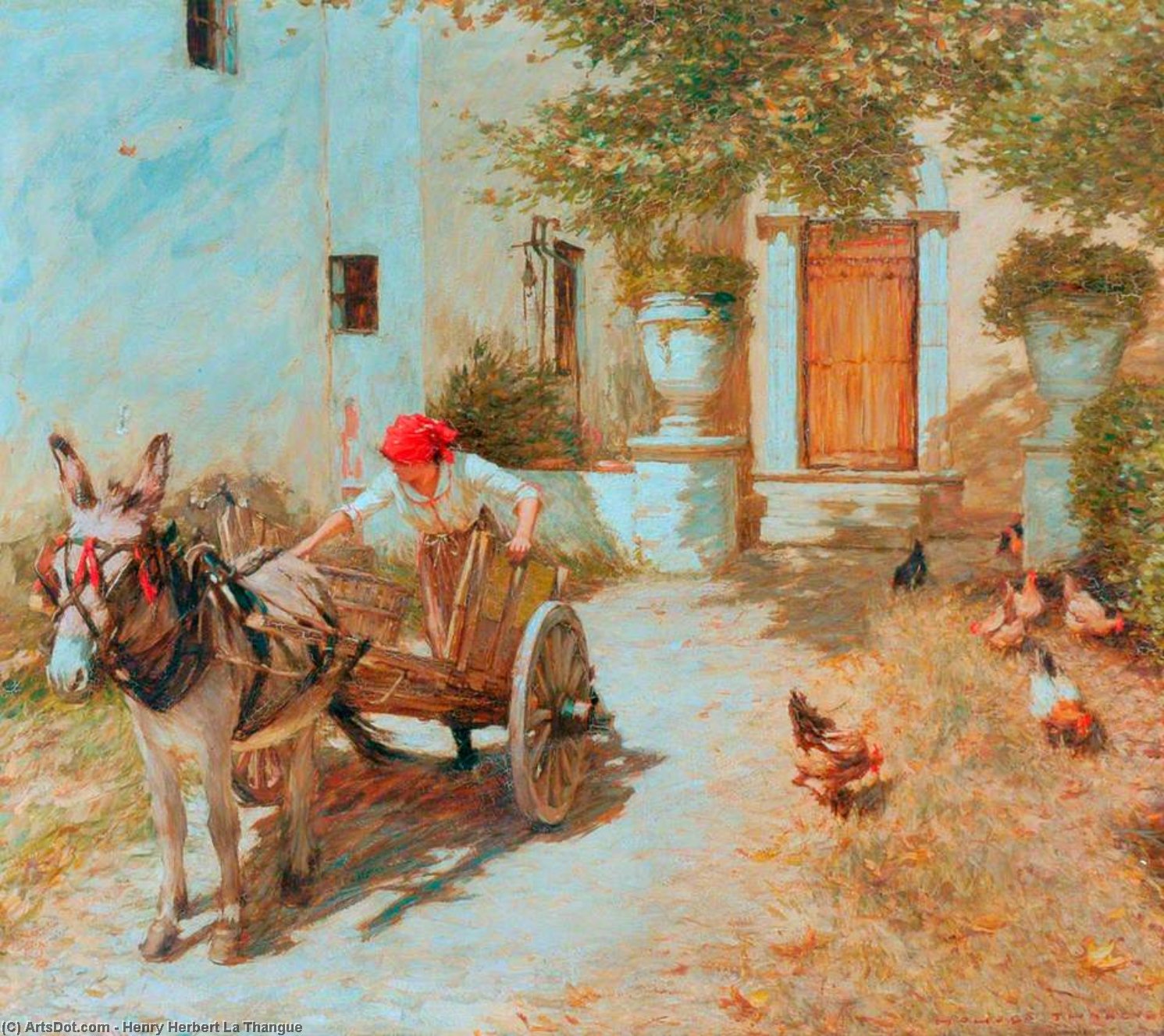
幻灯片播放Farm Yard Scene

 展开详情
展开详情




































从与原作比例一致的预设尺寸中进行选择。

您可以输入自定义尺寸,以适配特定的画框或空间。如果您选择的尺寸与原图比例不符,我们将对作品进行裁剪,或通过镜像填充/纯色填充边缘的方式来扩展图像。在开始制作之前,我们会向您发送一份数字效果图供您确认。
请注意,屏幕上的预览并不能反映实际的裁剪或扩展效果。只有效果图才能准确展示最终的构图。
虽然我们提供定制尺寸,但为了保持原图比例,我们建议您从预设列表中选择尺寸。


 玻璃选项仅适用于110厘米以下的尺寸。

Farm Yard Scene
艺术微喷/版画
复制品尺寸
-


最终总价
$ 80
藏品详情
A Glimpse into Rural Life
The painting depicts a serene farm yard scene with a woman at the center, pulling a cart full of chickens. The surrounding environment is filled with lush greenery, and several birds are scattered throughout the image, adding to the sense of tranquility. A dog is also visible on the left side of the painting, while a potted plant near one of the buildings adds a touch of warmth to the scene. Key Elements of the painting include the artist's use of natural light and his ability to capture the textures of the surroundings. The woman's face is serene, and her interaction with the chickens is a testament to the artist's attention to detail. The Farm Yard Scene is not just a painting; it's an invitation to step into the world of rural England in the early 20th century.La Thangue's Style and Influences
Henry Herbert La Thangue's work is characterized by his commitment to naturalism and rural realism. His paintings often feature agricultural laborers and peasants, showcasing their daily lives with dignity and respect. The influence of Impressionism can also be seen in his loose brushstrokes and atmospheric effects, which add a sense of immediacy to his scenes.- Visit OriginalUniqueArt.com to explore more of Henry Herbert La Thangue's works, including the Farm Yard Scene.
- Learn more about the artist's life and style on Wikipedia.
The Farm Yard Scene is a testament to Henry Herbert La Thangue's skill as an artist and his ability to capture the essence of rural life. With its serene atmosphere and beautiful depiction of nature, this painting is sure to captivate art lovers for generations to come.
艺术家简介
The Visionary Realism of Henry Herbert La Thangue
Henry Herbert La Thangue stands as a pivotal figure in the tapestry of British realist landscape painting, a master whose brush captured the quiet dignity of the English countryside and the fleeting light of the European continent. Born in Croydon, Surrey, in 1859, his artistic journey began amidst the intellectual ferment of Victorian London. Nurtured by connections to fellow luminaries such as Stanhope Forbes and Frederick Goodall during his time at Dulwich College, La Thangue developed an early, profound appreciation for meticulous observation. This formative period instilled in him a commitment to detail that would become the hallmark of his enduring legacy.
His formal education was marked by rigorous discipline, encompassing both the Lambeth School of Art and the prestigious Royal Academy in London. The year 1879 proved to be a watershed moment when he was awarded a coveted gold medal, an achievement that propelled him toward a transformative scholarship at Jean-Léon Gérôme's atelier in Paris. It was within this French setting that La Thangue encountered the ethos of the Barbizon School. While his instructors occasionally critiqued his inclination toward romanticism, La Thangue successfully synthesized the principles of plein air painting with an unwavering dedication to realism, learning to capture the immediate, atmospheric essence of natural light.
A Journey Through Light and Landscape
La Thangue’s creative spirit was never confined by borders. Between 1881 and 1882, his expeditions to Brittany and the Rhône Valley in Donzère allowed him to immerse himself in the diverse landscapes of France. These travels broadened his artistic horizons, introducing a palette of soft colors and tranquil beauty that would later manifest in works such as "A Provençal Stream." This piece serves as a serene testament to his Impressionist influences, where the movement of water and the warmth of the sun are rendered with a delicate, evocative touch.
Upon returning to England in 1886, La Thangue became an active participant in the shifting tides of the British art establishment. His membership in the Royal Institute of Oil Painters solidified his professional standing, yet he remained a reformer at heart. His involvement in the movement to challenge the traditionalist grip of the Royal Academy eventually contributed to the formation of the New English Art Club (NEAC). Through this new venue, he championed a more democratic approach to art, showcasing works that celebrated the honest, unadorned beauty of rural life and the labor of the working class.
Mastery of the Rural Narrative
The true soul of La Thangue’s oeuvre lies in his ability to transform ordinary agricultural scenes into profound emotional experiences. His later years, particularly his time in South Walsham, Norfolk, saw a deepening of his focus on the rhythms of the land. In masterpieces such as "The Last Furrow" (1895), he captures the poignant beauty of the harvest, utilizing a realist technique that honors the grit and grace of rural existence. His work often employs a rich, impasto texture to lend physical weight to the earth and sky depicted on his canvas.
Perhaps no work encapsulates his ability to blend symbolism with naturalism better than "Nightfall," also known as "The Gleaners." In this poignant 1895 oil painting, La Thangue utilizes warm colors and a sense of encroaching shadow to evoke the solemnity of the harvest season. Through his eyes, the landscape is not merely a setting but a living character, imbued with the history of those who toil upon it. His legacy remains a vital part of the Newlyn School tradition, offering a window into a vanished era of British pastoral life through a lens of exquisite, light-filled realism.

Henry Herbert La Thangue
1859 - 1929 , United Kingdom
艺术家简介
- Artistic Movement Or Style: Realist Landscape & Genre Painting
- Artists Or Movements Influenced By This Artist: ['Newlyn School']
- Artists Who Influenced This Artist:
- Jean-Léon Gérôme
- Bastien Lepage
- Dagnan Bouveret
- Date Of Birth: 1859
- Full Name: Henry Herbert La Thangue
- Nationality: English
- Notable Artworks:
- The Mulberry Tree
- Return of the Reapers
- The Man with the Scythe
- Place Of Birth: Croydon, United Kingdom

