 切换至版画销售渠道
 展开全文
展开全文







































 对于任何边长超过 105 厘米(约 41 英寸)的艺术品或复制品,画框将以拆解后的组件形式发货。此方法可确保安全送达并防止运输过程中的损坏。


The Invalid: A Study in Tranquility and Fauvist Color
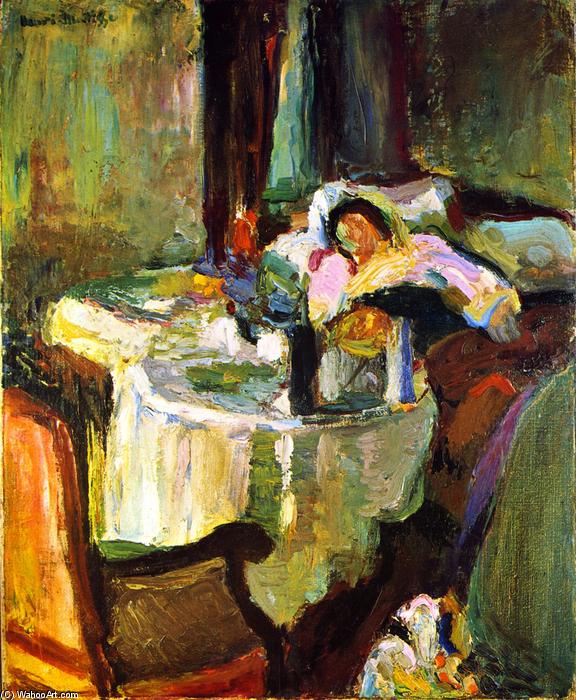
Henri Matisse’s “The Invalid” stands as a testament to the power of understated beauty within the Fauvist movement—a bold departure from academic conventions that nonetheless prioritizes serenity and contemplative observation.
Painted in 1899 during Matisse’s formative years, this oil on canvas measuring 46 x 38 cm resides at the Baltimore Museum of Art, offering viewers a glimpse into the artist's evolving artistic vision. The scene depicts a woman reclining peacefully in bed, her head resting upon a pillow—a deliberate choice that speaks volumes about Matisse’s fascination with capturing stillness and repose.
Composition and Style: Embracing Fauvist Boldness
Matisse skillfully employs compositional elements to heighten the painting's impact. A dining table dominates the foreground, draped in white linen and surrounded by chairs—a subtle suggestion of domestic life juxtaposed against the quiet intimacy of the bedchamber. Two figures appear in the background, providing depth and context without distracting from the central subject.
Crucially, “The Invalid” embodies the core tenets of Fauvism. Matisse’s audacious use of color—particularly vibrant reds, yellows, and blues—is characteristic of this movement's rejection of naturalistic representation. Instead, he prioritizes emotional expression through pigment itself, creating a luminous surface that vibrates with energy.
Artistic Significance: Pioneering Color Expression
“The Invalid” represents a pivotal moment in Matisse’s artistic trajectory, demonstrating his willingness to experiment and push boundaries. Like Picasso and Cézanne before him, Matisse sought to liberate painting from the constraints of traditional perspective and shading—creating a visual language that transcends literal depiction.
This painting isn't merely aesthetically pleasing; it embodies Fauvist’s broader philosophical stance – prioritizing feeling over intellectual analysis. Matisse aimed to convey an inner state of calm and contentment, achieved through masterful color orchestration.
Context Within Matisse’s Oeuvre: Continuity and Innovation
To appreciate “The Invalid” fully, consider its place within Matisse's larger body of work. Alongside masterpieces like “The Open Window” and “La musique”—works that similarly explore color and form—this painting exemplifies Matisse’s unwavering commitment to innovation while retaining a core aesthetic sensibility.
His exploration of decorative patterns and simplified forms foreshadowed developments in later artistic movements. Matisse's legacy continues to inspire artists today, cementing his position as one of the most influential figures in 20th-century art.
常见问题与解答
亨利·马蒂斯 的《The Invalid》 的色彩浓郁度如何?
“The Invalid”的色彩强度为Balanced。强度描述了色彩呈现的浓郁程度。
如何描述 亨利·马蒂斯 的《The Invalid》 的意境?
亨利·马蒂斯 的《The Invalid》 的整体基调为 Serene,这种基调传达了作品的整体氛围。
亨利·马蒂斯 的《The Invalid》 属于哪种艺术流派,又处于哪个时代?
在亨利·马蒂斯 的《The Invalid》中,Fauvist Expressionism运动与19世纪时代交相辉映。
 实景预览
实景预览
 分享
分享 分享
分享
 详情
详情 指南
指南

 下载作品
下载作品
 相似作品
相似作品 X射线
X射线 幻灯片播放
幻灯片播放 问答
问答 统计数据
统计数据