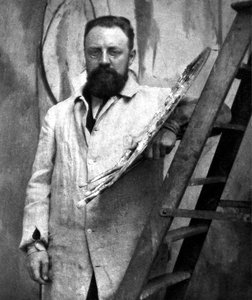
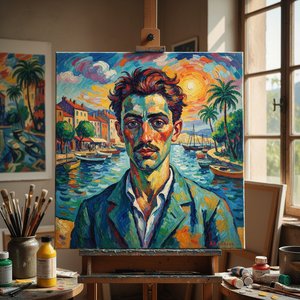
油画原件
 关于 André derain 的详情







































 对于任何边长超过 105 厘米(约 41 英寸)的艺术品或复制品,画框将以拆解后的组件形式发货。此方法可确保安全送达并防止运输过程中的损坏。


A Symphony of Color: Exploring Henri Matisse’s André Derain
André Derain's portrait, “André Derain,” stands as a testament to Matisse’s revolutionary approach to painting—a bold declaration that color could transcend mere representation and become the very essence of artistic expression. Painted sometime between 1908 and 1910 during Matisse’s formative years in Montmartre, this monumental canvas embodies the spirit of Fauvist art, a movement that fiercely rejected academic conventions and championed unrestrained chromatic intensity.- Subject Matter & Composition: The painting depicts André Derain himself—a fellow artist and influential figure within Matisse’s circle—seated in repose. His gaze downward conveys a contemplative mood, hinting at introspection amidst the vibrant surroundings. The deliberate framing of Derain's face against a textured background emphasizes his presence while simultaneously inviting viewers to consider the broader implications of artistic vision.
- Style & Technique: Matisse’s Fauvist style is immediately recognizable through its audacious use of color—a daring departure from Impressionism’s subtle gradations. Bold swathes of crimson and scarlet dominate the turban, creating a visual focal point that commands attention. Complementary hues of yellow and orange illuminate Derain's skin tone, enhancing his luminosity and contributing to the painting’s overall dynamism. Matisse employed loose brushstrokes—a technique characteristic of Fauvist painters—to achieve an expressive surface texture that captures movement and emotion.
Historical Context: The Dawn of Modern Art
The early 1900s witnessed a seismic shift in artistic sensibilities, fueled by advancements in science and psychology. Artists like Matisse were grappling with new understandings of perception and emotion, rejecting the idealized depictions favored by previous generations. Fauvism arose as a reaction against the perceived limitations of Impressionism, arguing that color should be prioritized over accurate representation—a belief rooted in theories about the role of color in influencing human consciousness. The painting’s creation coincided with Matisse's engagement with Symbolist ideas, particularly concerning the expressive power of imagery and its ability to convey deeper meanings.- Symbolism & Emotional Impact: Beyond its formal qualities, “André Derain” resonates with symbolic significance. The turban—a garment traditionally associated with royalty and spirituality—represents Derain’s artistic ambition and intellectual curiosity. The scarlet hue amplifies the painting's emotional intensity, conveying a sense of passion and conviction. Matisse’s masterful manipulation of color evokes feelings of serenity and contemplation alongside an underlying current of energy—reflecting both the artist’s personal state of mind and the broader cultural anxieties of the period.
A Legacy of Bold Color
“André Derain” remains a cornerstone of Matisse's oeuvre and exemplifies his unwavering commitment to artistic innovation. Its influence extends far beyond its immediate stylistic context, inspiring subsequent generations of painters to embrace color as a primary vehicle for conveying emotion and exploring the complexities of human experience. Reproductions of this captivating artwork offer collectors and interior designers alike an opportunity to immerse themselves in the brilliance of Fauvist art—a celebration of visual vibrancy that continues to captivate audiences today.常见问题与解答
André derain是手绘的还是印刷的?
手工绘制:由专业画家在亚麻画布上,以油画形式临摹 André derain。
André derain 我该选择什么尺寸?
尺寸从 36.9 x 27.1 cm (¥1336) 到 245.5 x 180.6 cm (¥10955) 不等;本页表格列出了主要步骤及其价格。
物流配送需要多长时间?
送货时间为 4 至 5 周,并提供全球免费快递服务;本页面还提供加急制作选项。您可以在 100 天内无条件退货并获得全额退款。
《André derain》的原作在哪里?
原作收藏于伦敦的泰特现代美术馆。
亨利·马蒂斯 在创作《André derain》时使用了什么媒介?
Acrylic On Canvas
 实景预览

 分享
 分享
 详情
 作品详情表


 下载作品
 相似作品
 X射线
 幻灯片播放
 问答

 统计数据