

 效果预览
效果预览
 购买印刷品
购买印刷品 分享
分享 分享
分享
 详情
详情

 下载
下载
 相似作品
相似作品 X射线
X射线 幻灯片播放
幻灯片播放Le Reflet
 Post-Impressionism
 1904
1904 92.0 x 73.0 cm
 展开详情
展开详情




































从与原作比例一致的预设尺寸中进行选择。

您可以输入自定义尺寸,以适配特定的画框或空间。如果所选尺寸与原图比例不符,我们将通过裁剪作品或添加手绘元素来扩展画面。数字样稿将在制作开始前发送给您确认。
请注意,屏幕预览无法准确反映实际的裁剪或扩展效果,只有样稿才能真实呈现最终的构图。
虽然我们提供定制尺寸服务,但为了保留原作比例,建议您从预设列表中选择尺寸。
下单后,OriginalUniqueArt.com 团队将通过电子邮件联系客户获取具体要求,并提供效果预览图。


 玻璃选项仅适用于110厘米以下的尺寸。

Le Reflet
复制材质
复制品尺寸
-


最终总价
$ 325
艺术家简介
The Radiant Spirit of Henri Charles Manguin
In the golden light of the early twentieth century, few artists captured the joie de vivre of the French Riviera as vibrantly as Henri Charles Manguin. Born in Paris in 1874 to a family where sculpture and visual tradition held deep roots, Manguin was destined for a life defined by color and form. His journey into the heart of the avant-garde began at the prestigious École des Beaux-Arts, where he studied under the legendary Gustave Moreau. It was within this fertile academic environment that Manguin forged lifelong bonds with fellow visionaries such as Henri Matisse and Charles Camoin. These friendships were more than mere social connections; they were the crucible in which a new, rebellious way of seeing was forged. Together, these young artists spent hours in the Louvre, meticulously reproducing Renaissance masterpieces, an exercise that instilled in Manguin a profound respect for classical composition even as he prepared to shatter traditional boundaries.
As the nineteenth century gave way to the twentieth, Manguin’s brush began to dance with the light of Impressionism. He drew deep inspiration from the luminous palettes of Monet and Renoir, yet he sought something more visceral and subjective. This evolution led him directly into the heart of Fauvism, a movement famously characterized by its "wild" use of color. When the critic Louis Vauxcelles famously dubbed this group of artists Les Fauves—the wild beasts—following the 1905 Salon d'Automne, Manguin stood at the forefront of this chromatic revolution. His work moved away from the delicate, fleeting observations of his predecessors toward a more audacious and emotive application of pigment. He utilized brilliant yellows, searing reds, and soft pastels to evoke not just the sight of a landscape, but the very heat and atmosphere of the Mediterranean sun.
A Mediterranean Muse and the Art of Intimacy
The trajectory of Manguin’s career was irrevocably altered by his discovery of Saint-Tropez. Invited to the coastal village by the Pointillist master Paul Signac in 1904, Manguin found himself spellbound by the crystalline waters and the shimmering Mediterranean light. This landscape became his sanctuary and his most enduring subject. While he did not adopt the rigid dot-work of Signac, he embraced the luminous clarity of the coast, painting scenes of sun-drenched bathers and tranquil seaside vistas that seemed to pulse with life. It was this mastery of light and atmosphere that earned him the evocative title of "the voluptuous painter" from the critic Guillaume Apollinaire, a testament to the sensual and tactile quality of his canvases.
Beyond the sweeping landscapes, Manguin’s work possessed a deeply personal, intimate dimension. His marriage in 1899 to Jeanne Carette brought a profound sense of continuity and tenderness to his oeuvre. Jeanne became his most frequent and beloved model, appearing in numerous portraits that captured the quiet, domestic beauty of their shared life. Through these paintings, Manguin bridged the gap between the grand, experimental gestures of Fauvism and the intimate, emotional depths of portraiture. His ability to weave together the monumental scale of the French landscape with the delicate nuances of human connection remains one of his most significant artistic achievements.
Legacy of a Colorist
The historical significance of Henri Charles Manguin lies in his role as a bridge between eras. He successfully navigated the transition from the structured traditions of the Beaux-Arts to the expressive freedom of modernism. His career was marked by remarkable recognition; the legendary impresario Ambroise Vollard famously purchased over a hundred of his canvases, signaling Manguin's importance to the contemporary art market of his time. Even as he moved through the decades, settling eventually in Saint-Tropez, he remained faithful to the vibrant, emotive vision he had cultivated in his youth.
Today, Manguin is remembered not merely as a participant in a movement, but as a master of light and emotion. His legacy is found in:
- The Fauvist Revolution: His contribution to the development of non-naturalistic, expressive color usage.
- Mediterranean Impressionism: His unique ability to translate the specific atmosphere of the French Riviera into a universal language of beauty.
- Humanist Portraiture: The seamless integration of personal intimacy and grand stylistic experimentation.
Manguin’s work continues to resonate with viewers, offering a window into a period of unparalleled artistic courage, where color was no longer just a tool for description, but a powerful vehicle for the human soul.

henri charles manguin
1874 - 1949 , France
艺术家简介
- Artistic Movement Or Style: Fauvism
- Artists Or Movements Influenced By This Artist: ['Impressionism']
- Artists Who Influenced This Artist:
- Gustave Moreau
- Henri Matisse
- Date Of Birth: March 23, 1874
- Date Of Death: September 25, 1949
- Full Name: Henri Charles Manguin
- Nationality: French
- Notable Artworks:
- Le Reflet
- Jeanne dans un transat à l'oustalet
- Landscape at Coulombs
- Place Of Birth: Paris, France
相关文章

光与影的彼岸:印象派与后印象派艺术收藏家的鉴赏之旅
深入探索印象派与后印象派艺术世界的瑰丽魅力。OriginalUniqueArt为您提供专业的艺术收藏建议、定制油画服务,助您构建独一无二的臻品系列。了解大师作品背后的故事,提升您的艺术鉴赏力。
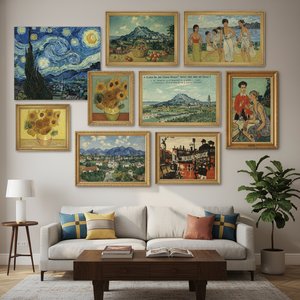
后印象主义十大名作:重塑艺术,点亮生活美学
探索后印象主义的十部杰作,从梵高的星空到高更的塔希提风情。了解艺术大师背后的故事与技法,感受色彩与光线的魅力。OriginalUniqueArt.com为您提供博物馆品质的画作复制和精选家居装饰方案,点亮您的生活美学!
印象主义之外:探索后印象派绘画的情感深度
深入探索后印象派绘画的情感深度,解读塞尚、梵高、高更等大师的艺术创新。OriginalUniqueArt提供专业的艺术史分析与高清作品欣赏,助您领略现代艺术魅力!

Impressionism vs. Post-Impressionism: A Masterclass in the Revolution of Light, Color, and Emotion
Master the nuances of Impressionism vs. Post-Impressionism with our expert guide. Explore the revolutionary shift from Monet’s fleeting light to Van Gogh’s emotional depth. Discover how these iconic movements continue to inspire fine art collectors and modern interiors today.
Beyond the Light: Discovering the Soul and Emotional Depth of Post-Impressionism
Embark on a cultural journey through Post-Impressionism. Discover the profound emotional depth of masters like Van Gogh and Cézanne, exploring how they moved beyond light to capture the very soul of human experience through vibrant color and symbolic form.

