
 实景预览
实景预览
 发送
发送 分享
分享
 详情
详情 指南
指南

 下载图片
下载图片
 相似作品
相似作品 X射线
X射线 幻灯片播放
幻灯片播放 统计数据
统计数据Bent-wing Swift Moth, Zelotypia stacyi


 阅读全文
阅读全文
艺术微喷/版画
博物馆级艺术微喷或帆布版画,制作高效,并提供多种饰面选择。 ( 订购此收藏品的纯手工复刻画作 切换至数字图像销售渠道)




P118B $10

P118H $10

P118W $10

P438Z $10

P508JH $12

P508YH $12

P805H $10

P805Z $10

P919BZ $10

P919G $10

P919XJ $10

P959ZH $10

P968JZ $12

W106C $8

W218G $10

W218JH $8

W218Y $10

W307PJ $10

W316G $10

W316PJ $8

W316Y $10

W398PJ $8

W4111J $10

W500HY $15

W500JH $15

W692G $12

W849H $8

W940BG $15

W953PJ $8




您可以从与原作比例一致的预设尺寸中进行选择。

您可以输入自定义尺寸,以适配特定的画框或空间。如果您选择的尺寸与原图比例不符,我们将对作品进行裁剪,或通过镜像填充/纯色填充边缘的方式来扩展图像。在开始制作之前,我们会向您发送一份数字效果图供您确认。
请注意,屏幕上的预览并不能反映实际的裁剪或扩展效果。只有效果图才能准确展示最终的构图。
虽然我们提供定制尺寸,但为了保持原图比例,我们建议您从预设列表中选择尺寸。


 玻璃选项仅适用于110厘米以下的尺寸。

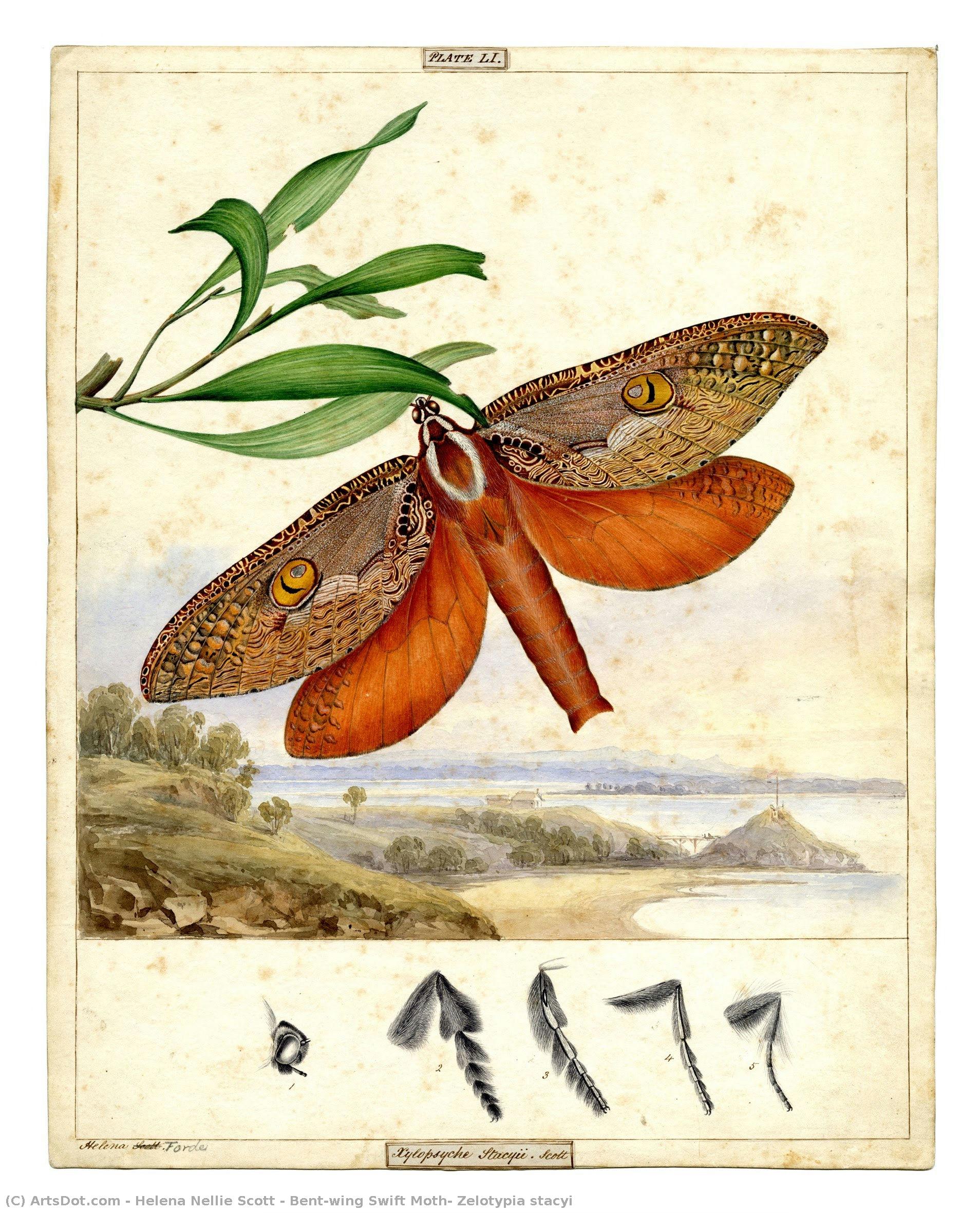
Bent-wing Swift Moth, Zelotypia stacyi
艺术微喷/版画
复刻品尺寸说明
-


总计金额
$ 80
A Glimpse into Australian Entomology: Helena Scott’s Bent-Wing Swift Moth
Helena Nellie Scott's 1864 illustration of the Bent-wing Swift Moth, *Zeotypia stacyi*, is more than just a scientific depiction; it’s a window into a bygone era of meticulous observation and artistic dedication. This exquisite botanical artwork, rescued from an unpublished manuscript intended for Alexander Walker Scott’s “Australian Lepidoptera and Their Transformations,” captures the essence of a remarkable entomologist's daughter and her profound connection to the natural world. The image isn’t merely a rendering of an insect; it’s a testament to the Victorian fascination with classification, taxonomy, and the beauty hidden within the smallest details of Australian fauna.
The illustration immediately draws the eye with its remarkably detailed portrayal of the moth itself. Each scale is painstakingly rendered, suggesting a subtle shimmer and texture that belies the fragility of the creature. The intricate veins of the wings are not simply lines but carefully shaded to convey depth and form, while the delicate antennae and legs are depicted with an almost sculptural precision. Beneath the magnificent moth, a larval stage—a plump caterpillar clinging to a leaf—provides crucial context, illustrating the complete life cycle that Scott so diligently documented. The background landscape, a hazy coastal scene punctuated by a recognizable view of Port Macquarie Harbour (attributed to Captain Perry), subtly anchors the scientific study within its geographical and historical setting.
A Style Rooted in Scientific Precision
Scott’s artistic style is distinctly reminiscent of 18th and early 19th-century scientific illustrations—a period characterized by a commitment to accuracy and an avoidance of overt emotional expression. The composition is vertically oriented, prioritizing clarity and legibility. Lines are precise and carefully drawn, defining shapes with unwavering confidence. The use of hatching and cross-hatching creates subtle shading and depth, lending a sense of volume to the moth’s wings and body. This deliberate restraint in color—a muted palette dominated by browns, grays, and ochres—further emphasizes the illustration's scientific purpose, prioritizing observation over artistic embellishment.
The layering technique employed is particularly noteworthy. Scott doesn’t simply paint the moth; she builds it up through multiple washes of watercolor or ink, creating a sense of tactile richness. This meticulous approach mirrors the painstaking process of collecting and preserving specimens—a reflection of Scott's own dedication to her father’s research. The slightly aged appearance of the image – a subtle discoloration and softened edges – speaks volumes about its historical context, hinting at years spent tucked away in archives and collections.
The Legacy of a Pioneering Artist
Helena Nellie Scott’s story is one of quiet determination and remarkable achievement. Born in Sydney in 1832, she defied the limitations placed upon women artists during her time, carving out a niche for herself as a leading naturalist illustrator. Her upbringing within a family deeply immersed in entomology—her father was a renowned scientist—provided her with unparalleled access to knowledge and inspiration. The Scott sisters’ work, particularly their detailed depictions of Australian moths and butterflies, played a crucial role in advancing scientific understanding of the region's biodiversity.
Further research reveals that Scott’s illustrations were not merely decorative; they served as vital tools for identification and documentation. Her meticulous notes and annotations—often written in Latin—provide valuable insights into the species she depicted, while her correspondence with other naturalists highlights her commitment to sharing her knowledge. Today, her legacy endures through reproductions like this one, offering a glimpse into the world of early Australian scientific art and the remarkable dedication of a woman who dared to pursue her passion amidst societal constraints.
Symbolism and Interpretation
Beyond its technical merits, the Bent-wing Swift Moth itself carries symbolic weight. Moths have long been associated with transformation, mystery, and the hidden realms of the subconscious—qualities that resonate deeply within Scott’s artwork. The “bent wing” in the species' name suggests a deviation from the norm, perhaps representing an individual spirit or a unique perspective. The moth’s nocturnal habits further enhance its enigmatic aura, inviting viewers to contemplate the unseen wonders of the natural world.
The inclusion of the coastal landscape—a recognizable view of Port Macquarie Harbour—adds another layer of meaning. It anchors the scientific study within its geographical and historical context, reminding us that even the most minute details of nature are interconnected with broader ecological and cultural narratives. Scott’s illustration is therefore not simply a depiction of an insect; it's a celebration of Australian biodiversity, a testament to human curiosity, and a poignant reminder of the enduring power of observation.
艺术家简介
沉浸于自然细节的生命
海伦娜·奈莉·斯科特(Helena Nellie Scott)这个名字,伴随着早期澳大利亚自然历史插画那份静谧而专注的奉献精神而为人所知。她于1832年出生在悉尼。尽管人们常将她与她的姐姐哈丽特·摩根(Harriet Morgan)并提,有时也以其婚后的名字海伦娜·福德(Helena Forde)来称呼她,但在那个女性参与此类探索极受限制的时代,斯科特凭借着先驱艺术家的身份和博物学家的敏锐,开辟了一条独一无二的道路。她的成长历程绝非寻常,而是浸润在父亲亚历山大·沃克·斯科特(Alexander Walker Scott)那充满科学好奇心的氛围之中;这位著名的昆虫学家,其对自然的热爱渗透进了家族生活的每一个角落。这种热爱并非仅仅停留在学术层面,而是一种鲜活的生命体验,尤其是在1846年全家迁往亨特河河口阿什岛(Ash Island)之后。在那里,在澳大利亚原始荒野的美景之中,家园变成了一个观察与艺术记录的避风港——一个通过科学研究与细腻艺术手法,将自然界的复杂奥秘细致入微地记录下来的实验室。随着父亲此前婚姻所生的女儿们融入这个家庭动态,这种协作精神得到了进一步培养,并最终定义了斯科特大部分的职业生涯。艺术协作与科学贡献艺术协作与科学贡献
斯科特的艺术风格并非诞生于孤立;它是在协作中绽放的,其中最显著的便是与姐姐哈丽特的合作。她们不仅仅是在为科学发现绘制插图,更是在积极地为当时蓬勃发展的昆虫学和自然史领域做出贡献。她们的共同项目已成为里程碑式的成就:《澳大利亚蛇类》(1869年)、《澳大利亚哺乳动物》(1871年)以及《澳大利亚博物馆矿物与岩石目录》(1873年),这些作品见证了她们卓越的技艺与专注。斯科特的专长在于石版画制作与设计,为她的描绘带来了惊人的细节度与准确性。这些作品绝非仅仅是精美的画作,更是科学理解的重要工具,捕捉到了文字难以传达的细微差别。然而,在精湛的技术之外,更蕴含着对自然界真挚的热爱——这种敬畏之心体现在每一根细腻的线条和精心渲染的色彩之中。她的工作超越了单纯的再现;她具备早期的生态意识,尤其是成为首批警告入侵物种对澳大利亚本土野生动物造成毁灭性影响的人之一——在那个时代,这无疑是一个极具预见性的观察。微观世界的杰作:代表作品
尽管斯科特参与了众多出版物的创作,但真正捕捉到她艺术愿景精髓的,还是她的个人插画。她对飞蛾与蝴蝶的描绘尤为闻名——那是关于形态、色彩与纹理的精妙研究。石版画作品钻石蛇(Morelia spilotes)展示了她在媒介运用上的大师水准,而折翅速蛾(Zelotypia stacyi)则体现了她以令人屏息的精度捕捉复杂细节的能力。黑黑斑斑蝶(Delias nigrina)那鲜艳的色调与细腻的图案,不仅展示了她的技术功底,更体现了她对自然内在美感的深切赞赏。这些作品不仅仅是对昆虫的描绘,更是对生命的颂歌,通过艺术家的眼光与科学家的理解共同呈现。墨尔本维多利亚博物馆收藏了她的多件作品,巩固了她在澳大利亚艺术遗产中的地位。她与父亲共同完成的《澳大利亚鳞翅目及其变态过程》一书,至今仍是一项里程碑式的成就,见证了姐妹俩的协作精神以及她们对昆虫学知识做出的重大贡献。永恒的遗产:先驱精神与深远影响
海伦娜·奈莉·斯科特是澳大利亚艺术与科学领域的一位关键人物。作为澳大利亚首批职业女性插画家之一,她打破了障碍,为后代女性在这些领域追求事业铺平了道路。她的贡献不仅限于艺术天赋;她对入侵物种的早期预警彰显了她的远见以及对环境保护的承诺——这种关怀在今天依然具有强烈的共鸣。她不仅仅是在记录自然,更是在倡导自然的保护,早在生态平衡成为主流关注话题之前,她就已经意识到了其脆弱性。斯科特的遗产超越了博物馆与出版物;它活在人们对她精美艺术作品的持续赞赏中,也活在她在艺术家与科学家心中激发的灵感里。她的生命历程提醒着我们:艺术与科学并非互斥的学科,而是理解与赞美我们周围世界的互补方式,这确保了她作为博物学家与艺术家的非凡故事,将在后世世代流传。
海伦娜·内莉·斯科特
1832 - 1910 , 澳大利亚
快速概览
- Artistic Movement Or Style: 自然历史艺术
- Artists Or Movements Influenced By This Artist:
- 澳大利亚博物学家
- 科学插画家
- Artists Who Influenced This Artist:
- Alexander Walker Scott
- Conrad Martens
- Samuel Thomas Gill
- Date Of Birth: 1832年
- Date Of Death: 1910年
- Full Name: Helena Nellie Scott
- Nationality: 澳大利亚
- Notable Artworks:
- 钻石蛇
- 弯翅迅蛾
- 黑耶洗白蝶
- Place Of Birth: 澳大利亚,悉尼
相关文章
The Art of Precision: Exploring the Beauty and Legacy of Scientific Illustration
Discover the exquisite intersection of science and fine art. Explore the history of scientific illustration, from botanical watercolor masters to nature's intricate geometry, through an expert lens of art history and technical precision.
The Refined Aesthetic of Victorian Illustration: A Study in Narrative & Technique
Explore the captivating world of Victorian illustration! Discover Pre-Raphaelite influences, key artists like Rossetti & Stephens, and the era's rich narrative detail. A deep dive for art enthusiasts.

The Evocative Detail of Nature: A History of Naturalistic Illustration
Explore the rich history of botanical illustration! Discover pioneering artists like Maria Sibylla Merian & Marianne North. Learn about scientific precision, artistic expression, and find museum-quality reproductions at OriginalUniqueArt.

精微的感知:科学插画如何连接艺术、认识论与历史
探索科学插画的历史与艺术价值!OriginalUniqueArt 提供精湛的手工油画复刻,深入解读植物科学画的精确性与美学。专业艺术咨询,助您甄选珍品,传承经典。

The Art of Precision: A Definitive Guide to the History and Beauty of Scientific Illustration
Explore the profound history of scientific illustration. From ancient herbals to botanical masters like Robert Havell Jr., discover how precision meets beauty in this expert guide to natural history art and its enduring legacy in fine art collections.