
 效果预览
效果预览
 购买印刷品
购买印刷品 分享
分享 分享
分享
 详情
详情

 下载
下载
 相似作品
相似作品 X射线
X射线 幻灯片播放
幻灯片播放Arcanum 2
 Hard-edge painting
 1968
1968 152.0 x 152.0 cm
 展开详情
展开详情




































从与原作比例一致的预设尺寸中进行选择。

您可以输入自定义尺寸,以适配特定的画框或空间。如果所选尺寸与原图比例不符,我们将通过裁剪作品或添加手绘元素来扩展画面。数字样稿将在制作开始前发送给您确认。
请注意,屏幕预览无法准确反映实际的裁剪或扩展效果,只有样稿才能真实呈现最终的构图。
虽然我们提供定制尺寸服务,但为了保留原作比例,建议您从预设列表中选择尺寸。
下单后,OriginalUniqueArt.com 团队将通过电子邮件联系客户获取具体要求,并提供效果预览图。


 玻璃选项仅适用于110厘米以下的尺寸。

Arcanum 2
复制材质
复制品尺寸
-


最终总价
$ 300
作品详情
The Painting's Composition and Style
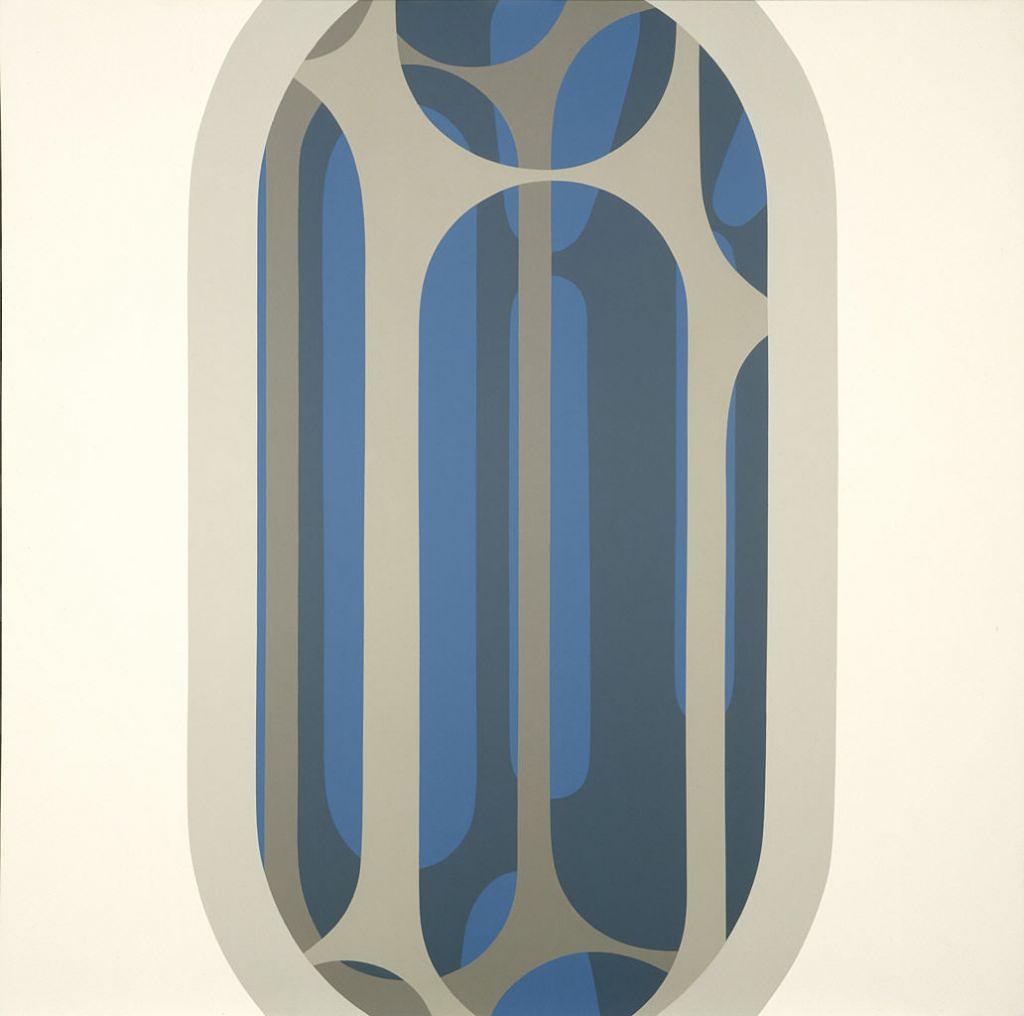
Arcanum 2 features a striking blue and grey color scheme, with a large blue square at its center. The surrounding smaller squares of varying shades of blue and grey create an intriguing visual effect, reminiscent of stained glass windows. This intricate composition is a hallmark of Helen Lundeberg's style, which often explored the relationship between colors and shapes. Key aspects of the painting include its use of geometric forms, bold colors, and a sense of depth and dimensionality. The arrangement of the smaller squares creates a sense of movement and energy, drawing the viewer's eye through the composition. This dynamic interplay of elements is characteristic of Lundeberg's work, which often balanced order and chaos.Artistic Significance and Legacy
Arcanum 2 is not only a notable work by Helen Lundeberg but also an important example of American modernist art. The painting's unique style and composition reflect the artist's experimentation with different techniques and mediums. As part of the Hirshhorn Museum and Sculpture Garden's collection, Arcanum 2 continues to inspire and educate audiences about the development of modern art.- View more artworks by Helen Lundeberg on /art/list/?Filter=Helen-Lundeberg
- Learn about the Hirshhorn Museum and Sculpture Garden on Wikipedia
- Discover hand-painted oil reproductions of famous artworks, including those by Helen Lundeberg, on https://OriginalUniqueArt.com
Arcanum 2 is a testament to Helen Lundeberg's innovative spirit and artistic vision. As a masterpiece of American modernist art, it continues to captivate audiences with its unique composition and style.
艺术家简介
The Intellectual Vision of Helen Lundeberg
Born in Chicago on June 24, 1908, to Swedish immigrants, Helen Lundeberg emerged as a profound architect of American modernism. Her journey was defined by an extraordinary intellectual depth, rooted in her early years within Stanford University's “Study of Gifted Children” program. This academic foundation instilled in her a lifelong dedication to rigorous observation and analytical thought, traits that would later manifest in the precise, deliberate compositions of her mature work. As she moved from the Midwest to the vibrant landscapes of Pasadena, California, Lundeberg began to weave together the complexities of human experience with a structured, visual language that challenged the prevailing artistic norms of her era.
The trajectory of her career was irrevocably altered in 1934 through her marriage to Lorser Feitelson. This union was far more than a personal partnership; it was a powerful artistic collaboration that birthed the movement known as Subjective Classicism, later referred to as Post-Surrealism. Together, they sought to distance themselves from the spontaneous, often chaotic dreamscapes of European Surrealism. Instead of relying on chance or the subconscious's random juxtapositions, Lundeberg championed a method of careful planning and rational composition. Her goal was to guide the viewer’s gaze through a controlled environment where every element served a deeper, symbolic purpose, effectively bridging the gap between classical order and modern abstraction.
Evolution from Surrealism to Hard-Edge Abstraction
As the decades progressed, Lundeberg’s aesthetic underwent a mesmerizing transformation, moving away from the narrative nuances of her early years toward the starker, more geometric clarity of Hard-edge painting. By the 1950s, her work began to embrace a minimalist vocabulary characterized by restrained color palettes and sharp, defined boundaries. This transition was not a rejection of her previous philosophies but rather an evolution of them; the same intellectual precision that guided her Post-Surrealist compositions found its ultimate expression in the clean lines and flat planes of abstraction. Drawing inspiration from the enigmatic atmospheres of Giorgio de Chirico and the surrealist logic of René Magritte, she mastered the art of creating depth through shape rather than shadow.
Her later masterpieces, such as the striking Arcanum 2 (1968), exemplify this mastery. In this work, a captivating interplay of blue and grey squares creates an effect reminiscent of stained glass, demonstrating her ability to balance order and energy within a single frame. Whether she was exploring the serene, muted tones of a still life like Pears Pitcher or the geometric landscapes of Summer Tide, Lundeberg’s work remained anchored in a sense of profound stillness and structural integrity. Her legacy is defined by this unique ability to synthesize disparate influences—from American Regionalism to pure abstraction—into a cohesive, enduring vision that continues to resonate within the halls of institutions like the Hirshhorn Museum and Sculpture Garden.

helen lundeberg
1908 - 1999
艺术家简介
- Artistic Movement Or Style: Post-Surrealism, Hard-edge painting, Subjective Classicism
- Artists Or Movements Influenced By This Artist: ['Giorgio de Chirico']
- Artists Who Influenced This Artist: ['Lorser Feitelson']
- Date Of Birth: June 24, 1908
- Full Name: Helen Lundeberg
- Nationality: American
- Notable Artworks:
- Arcanum 2
- Summer Tide
- Pears Pitcher
- Place Of Birth: Chicago, Illinois
相关文章

抽象表现主义:十幅定义艺术史的杰作
探索抽象表现主义的十幅经典杰作!波洛克、罗斯科等大师作品,揭秘艺术史上的重要瞬间。OriginalUniqueArt.com为您呈现高品质艺术品复制和精选家居装饰方案,感受现代艺术的力量与魅力。立即浏览全系列!

几何抽象艺术十大杰作:定义现代家居装饰的经典之作
探索几何抽象艺术的十大杰作!康定斯基、蒙德里安等大师作品,色彩构成与非具象之美。OriginalUniqueArt.com提供博物馆级艺术复制品,为您的家居带来现代艺术灵感。立即在线探索完整系列!
Beyond the Lines: Mastering the High-Impact World of Contemporary Abstraction
Master the high-impact world of contemporary abstraction. Discover how bold colors, textures, and modern movements like Abstract Expressionism can transform your space with premium, high-energy art curated for the design-conscious professional.
The Soul of Color: A Journey into the Emotional Resonance of Lyrical Abstraction
Embark on a cultural journey through Lyrical Abstraction. Explore how masters like Kandinsky used color and motion to translate emotion into visual poetry. Discover the profound beauty of abstract expressionism and learn to curate emotional resonance in your own art collection.
Lyrical Abstraction: The Emotional Power of Color and Form in Modern Art History
Explore the profound emotional depth of Lyrical Abstraction. Discover how masters like Raymond Parker used color and form to bridge Impressionism and Abstract Expressionism. Learn about this pivotal movement through our expert-led art history guide.

