切换至版画销售渠道
 展开全文
展开全文







































 对于任何边长超过 105 厘米(约 41 英寸)的艺术品或复制品,画框将以拆解后的组件形式发货。此方法可确保安全送达并防止运输过程中的损坏。


The Living Breath of Photography
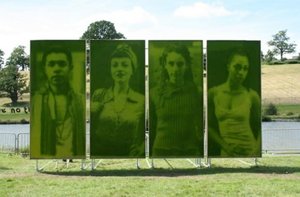
In the evocative work Uncle Charles, the boundary between the organic world and the captured image dissolves into a breathtaking phenomenon known as "photographic photosynthesis." Created by the visionary British duo Heather Ackroyd and Dan Harvey, this piece transcends the static nature of traditional photography. Rather than using silver halides or digital sensors to fix a moment in time, the artists utilize the very essence of life: seedling grass. Through a meticulous process, light is projected through a negative onto vertical surfaces where germinating blades of grass grow, recording the image through the production of chlorophyll. The resulting artwork is not merely a representation of life, but a living, breathing entity that responds to its environment, capturing the profound interplay between light, pigment, and growth.
The visual impact of Uncle Charles is deeply rooted in its connection to the land and its people. This specific work carries a heavy emotional resonance, as it was developed in collaboration with Uncle Charles ‘Chicka’ Madden, a highly respected Gadigal Elder, and his granddaughter Lille Madden. By weaving Indigenous connection into the biological process of the art, Ackroyd & Harvey create a dialogue between the ephemeral nature of plant life and the enduring legacy of First Nations history. The imagery—a poignant black and white portraiture within a gallery setting—serves as a vessel for themes of ancestry, presence, and the deep-seated relationship between human identity and the natural landscape.
A Symphony of Transience and Time
To behold this work is to witness the passage of time in real-time. Because the medium consists of living plant material, the artwork is subject to the natural rhythms of the world; it possesses a temporal dimension that traditional prints lack. The strength of the green hues is dictated by the intensity of light received during the germination phase, creating a lush, verdant depth that feels almost tactile. However, this beauty is inherently fleeting. As UV light interacts with the chlorophyll, a gradual fading may occur, mirroring the inevitable cycles of decay and renewal found in all living things. This inherent fragility invites the viewer to contemplate the concept of transience—the idea that nothing, not even art, is truly permanent.
For the discerning collector or interior designer, Uncle Charles offers more than mere decoration; it offers a conversation piece of unparalleled depth. A high-quality reproduction of this work allows one to bring this sense of ecological wonder and historical reverence into a private space. Whether placed in a contemporary gallery-style living room or a sophisticated professional studio, the piece acts as a window into a world where technology and ecology are harmoniously entwined. It serves as a profound reminder of our interconnectedness with the earth, making it an inspiring choice for those who seek art that challenges the intellect while soothing the soul through its organic beauty.
常见问题与解答
"Uncle Charles" 属于哪种艺术风格?
Heather Ackroyd And Dan Harvey 的《Uncle Charles》 所属的艺术流派为 Contemporary Art。这一分类将该作品置于相关艺术家及艺术作品的语境之中。
是否有关于 Heather Ackroyd And Dan Harvey 的《Uncle Charles》 的导览页?
Heather Ackroyd And Dan Harvey 的《Uncle Charles》 的 指南 页面提供了一份可打印的两页式学生资料单:包含作品及其基本信息表、将其置于艺术家生平中的年代轴、艺术家的其他作品、经测量的色板,以及四种格式的即用型引用文献。
“Uncle Charles”是如何体现 Heather Ackroyd And Dan Harvey 的创作主题与艺术风格的?
"Uncle Charles" 是 Heather Ackroyd And Dan Harvey Contemporary Art 时期的代表作,其创作主题涵盖了 ecology and architecture, indigenous connection, climate action activism, living photographic medium, nature and human presence。
 分享
分享 分享
分享
 详情
详情 指南
指南

 下载作品
下载作品
 相似作品
相似作品 幻灯片播放
幻灯片播放 Q&A
Q&A 统计数据
统计数据