

 效果预览
效果预览
 购买印刷品
购买印刷品 分享
分享 分享
分享
 详情
详情

 下载
下载
 相似作品
相似作品 X射线
X射线 幻灯片播放
幻灯片播放The Window
 Contemporary Realism
 1936
1936 77.0 x 62.0 cm
 展开详情
展开详情




































从与原作比例一致的预设尺寸中进行选择。

您可以输入自定义尺寸,以适配特定的画框或空间。如果所选尺寸与原图比例不符,我们将通过裁剪作品或添加手绘元素来扩展画面。数字样稿将在制作开始前发送给您确认。
请注意,屏幕预览无法准确反映实际的裁剪或扩展效果,只有样稿才能真实呈现最终的构图。
虽然我们提供定制尺寸服务,但为了保留原作比例,建议您从预设列表中选择尺寸。
下单后,OriginalUniqueArt.com 团队将通过电子邮件联系客户获取具体要求,并提供效果预览图。


 玻璃选项仅适用于110厘米以下的尺寸。

The Window
复制材质
复制品尺寸
-


最终总价
$ 300
艺术家简介
Harry Hughes Williams: A Welsh Vision of Rural Life
Born in 1892 at Clai Fawr Farm, a modest holding near Llandrygarn on the Isle of Anglesey, Harry Hughes Williams’ life was inextricably linked to the rugged beauty and timeless rhythms of rural Wales. His early years were marked by a physical challenge – a childhood accident left him with a permanent limp, restricting his mobility but not, it seems, his artistic spirit. This constraint, paradoxically, may have fueled an intense observation of the world around him, shaping a uniquely perceptive eye for detail and a profound appreciation for the landscape that defined his existence.
Williams’ artistic journey began modestly, initially exploring watercolor techniques in the early 20th century. However, it was during the interwar period – specifically from the mid-1930s onward – that he truly established himself as a significant figure in Welsh landscape painting. His work quickly gained recognition for its remarkable realism and evocative portrayal of North Wales’ distinctive scenery. He wasn't merely depicting mountains and fields; he was capturing the essence of a vanishing way of life, a world rooted in tradition and intimately connected to the land.
The Haystacks and Beyond: A Defining Series
Perhaps Williams’ most celebrated achievement is his series of paintings centered around the iconic Haystacks – specifically Ty Mawr II. These towering limestone formations, dominating the horizon near Llanbedr y Fychan, became a recurring motif in his work, representing not just geological grandeur but also a sense of timelessness and spiritual resonance. The dramatic lighting, meticulously rendered textures, and carefully considered composition within these paintings demonstrate Williams’ mastery of watercolor technique – achieving an almost photographic clarity while retaining a distinctly painterly quality.
Beyond the Haystacks, his oeuvre encompassed a wide range of subjects: rolling hills, sheep-dotted pastures, quaint farmhouses, and glimpses into rural interiors. He frequently depicted scenes of daily life – shepherds tending their flocks, farmers working the land, and villagers engaged in their routines. These paintings aren’t romanticized; they present a honest, unvarnished view of Welsh rural existence, capturing both its beauty and its hardships.
Influences and Artistic Context
While Williams remained largely independent, his work undoubtedly reflects the artistic currents of his time. The Pre-Raphaelites, with their emphasis on detailed observation and symbolic representation, exerted a subtle influence, particularly in his use of light and color. Furthermore, he shared affinities with British watercolorists like William Haselden and Frank Hopkins, both known for their meticulous depictions of the Welsh countryside. However, Williams’ work possesses a unique character—a quiet intensity and an unwavering commitment to portraying the specificities of his native landscape.
It's also important to consider the broader historical context in which he worked. The early 20th century witnessed significant social and economic changes in Wales, with traditional rural industries declining and a shift towards urbanization. Williams’ paintings serve as a poignant record of this transition—a visual testament to a disappearing world.
Legacy and Recognition
Harry Hughes Williams' work is now held in several important collections, including the Oriel Môn in Anglesey, where a dedicated collection showcases his life’s work. His paintings are valued for their technical skill, their evocative atmosphere, and their profound connection to Welsh identity. He wasn’t a household name during his lifetime, but his art continues to resonate with viewers today, offering a powerful glimpse into the heart of rural Wales and the enduring spirit of its people.
His legacy extends beyond the canvas; he is remembered as a dedicated artist who persevered despite physical challenges, capturing the essence of his homeland with remarkable skill and sensitivity. Further research can be found at sites like askART and MutualArt, providing deeper insights into his life and artistic development.

harry hughes williams
1892 - 1953
艺术家简介
- Artistic Movement Or Style: Welsh landscape art
- Artists Or Movements Influenced By This Artist: ['Pre-Raphaelites']
- Artists Who Influenced This Artist: ['Thomas Charles Williams']
- Date Of Birth: 1892
- Date Of Death: 1953
- Full Name: Harry Hughes Williams
- Nationality: British
- Notable Artworks: ['Haystacks, Ty Mawr II']
- Place Of Birth: Llandrygarn, Anglesey
相关文章

The Enduring Legacy of Oil on Canvas: Technique, History & Aesthetic Impact
Explore the rich history & techniques of oil painting – from Renaissance masters to Impressionism. Discover pigments, layering methods, and why this timeless medium endures. Expert insights for artists & art enthusiasts.

Oil on Canvas: A Historical & Technical Exploration of a Timeless Artistic Medium
Explore the rich history & enduring techniques of oil painting on canvas. Discover the science behind its longevity, conservation practices, and contemporary relevance. Expert insights for art enthusiasts.
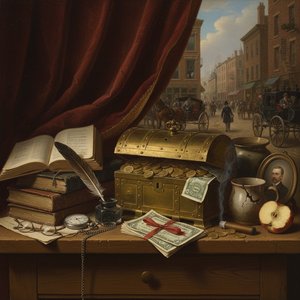
William Michael Harnett: Still Life, Realism & the American Pursuit of Materiality
Explore the captivating still lifes of William Michael Harnett, a master of American realism and trompe l'oeil painting. Discover his technique, legacy & the cultural context behind his iconic works.

Silent Narratives: Exploring the Enduring Appeal of Still Life Painting Across Centuries
Explore the rich history of still life painting with OriginalUniqueArt. Discover Dutch Masters, decode vanitas symbolism & learn about collecting timeless art. Expert insights and museum-quality reproductions.

The Enduring Power of Painting: A Historical & Contemporary Exploration of Form and Emotion
Explore the rich history & enduring techniques of oil painting with OriginalUniqueArt. Discover masterpieces, learn about art collecting, and find authentic handmade reproductions crafted by skilled artists.

