

 效果预览
效果预览
 购买印刷品
购买印刷品 分享
分享 分享
分享
 详情
详情

 下载
下载
 相似作品
相似作品 X射线
X射线 幻灯片播放
幻灯片播放Bark ALOHA II


 展开详情
展开详情




































从与原作比例一致的预设尺寸中进行选择。

您可以输入自定义尺寸,以适配特定的画框或空间。如果所选尺寸与原图比例不符,我们将通过裁剪作品或添加手绘元素来扩展画面。数字样稿将在制作开始前发送给您确认。
请注意,屏幕预览无法准确反映实际的裁剪或扩展效果,只有样稿才能真实呈现最终的构图。
虽然我们提供定制尺寸服务,但为了保留原作比例,建议您从预设列表中选择尺寸。
下单后,OriginalUniqueArt.com 团队将通过电子邮件联系客户获取具体要求,并提供效果预览图。


 玻璃选项仅适用于110厘米以下的尺寸。

Bark ALOHA II
复制材质
复制品尺寸
-


最终总价
$ 300
艺术家简介
A Voice for Reflection and Justice: Exploring the Art of Hank Willis Thomas
Born in Plainfield, New Jersey, in 1976, Hank Willis Thomas has emerged as a profound architect of contemporary conceptual art. His practice is not merely an aesthetic pursuit but a rigorous interrogation of the visual language that shapes our understanding of race, identity, and power. Growing up under the influence of his mother, the renowned photographer and scholar Deborah Willis, Thomas was immersed in an environment where photography served as both a tool for documentation and a vessel for cultural memory. This early exposure to the nuances of African American identity laid the groundwork for a career dedicated to dissecting how mass media, advertising, and popular culture encode systemic biases into the very fabric of our daily perceptions.
Thomas’s artistic evolution is marked by a transition from traditional photographic narratives to complex, multi-layered installations that challenge the viewer's role as a passive observer. His early work, such as the seminal B®anded series, utilized the recognizable iconography of global brands to draw startling parallels between contemporary consumerism and the historical branding of enslaved bodies. By superimposing logos like the Nike swoosh onto the images of Black men, he forced a confrontation with the literal and figural objectification of Black bodies in modern society. This technique of unbranding—the process of stripping commercial imagery of its text and logos—allows him to reveal the underlying structures of prejudice that often remain hidden behind the polished veneer of marketing and mass media.
The Alchemy of Media and Memory
As his practice matured, Thomas expanded his repertoire far beyond the lens of a camera, embracing sculpture, textile, neon, and even industrial materials like retroreflective vinyl. This expansion allows him to create immersive environments where light and perspective play critical roles in the storytelling process. In many of his recent works, he employs flash photography or reflective surfaces to activate hidden layers within an image, effectively inviting the viewer to step into the position of the image-maker. Through this method, he explores the concept of the visual cultural archaeologist, digging through the strata of 20th-century protest imagery and overlooked historical narratives to uncover truths that have been intentionally erased or obscured by the dominant historical record.
The symbolic weight of his work often rests on the tension between the past and the present. In pieces such as The Cotton Bowl, he bridges the gap between the exploitation of Black labor during the era of chattel slavery and the hyper-commodification of Black athletes in contemporary sports. His ability to weave together these disparate timelines creates a haunting resonance, suggesting that the mechanisms of capitalism and racial hierarchy are deeply intertwined. By repurposing recognizable gestures and icons, Thomas does not just present art; he proposes new readings of history, demanding that we reconsider who is included in our collective memory and whose stories are relegated to the margins.
Legacy and Civic Engagement
Beyond the walls of galleries and museums, Thomas has extended his artistic mission into the realm of active citizenship. In 2016, he co-founded For Freedoms, a collaborative platform for creative civic engagement inspired by Norman Rockwell’s iconic paintings of the Four Freedoms. This initiative exemplifies his belief that art must serve as a catalyst for social change, leveraging media and political activism to champion equity and justice across the United States. Through this project, he continues to use the power of the image to foster dialogue, encourage participation, and inspire a more profound engagement with the democratic process.
The historical significance of Hank Willis Thomas lies in his ability to transform the act of looking into an act of critical thinking. His work has been celebrated in prestigious institutions worldwide, including:
- The Museum of Modern Art (MoMA), New York
- The Solomon R. Guggenheim Museum, New York
- The Studio Museum in Harlem, New York
- The International Center of Photography, New York
- Musée du quai Branly, Paris
Through his relentless pursuit of conceptual rigor and social truth, Thomas has redefined the boundaries between art, history, and activism, ensuring that his work remains a vital, breathing part of the ongoing struggle for justice and representation in the modern world.

Hank Willis Thomas
1976 - , United States of America
艺术家简介
- Artistic Movement Or Style: Conceptual Art
- Artists Who Influenced This Artist: ['Rujeko Hockley']
- Date Of Birth: 1976
- Full Name: Hank Willis Thomas
- Nationality: American
- Notable Artworks:
- Ain’t Gonna Let Nobody Turn Us Around
- Bark ALOHA II
- Place Of Birth: Plainfield, United States
相关文章
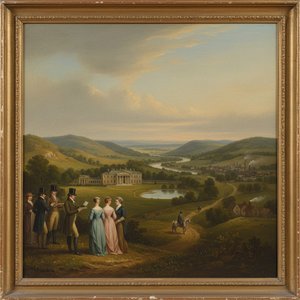
Thomas Barker of Bath: Landscape Painting & Societal Reflection in Early 19th-Century England
Explore the life & work of Thomas Barker of Bath, a key figure in 19th-century English Romanticism. Discover his Parisian success, iconic paintings like 'The Bride of Death', and lasting artistic legacy. Learn more at OriginalUniqueArt.
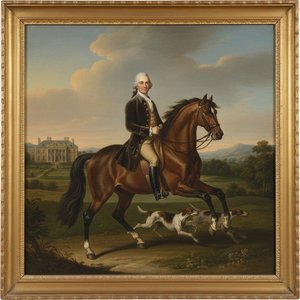
John Francis Sartorius II: Equestrian Elegance & the Rise of British Portraiture
Explore the captivating world of Francis Sartorius II (1734-1804), a leading British painter renowned for his exquisite equestrian portraits and hunting scenes. Discover his life, techniques & enduring legacy.
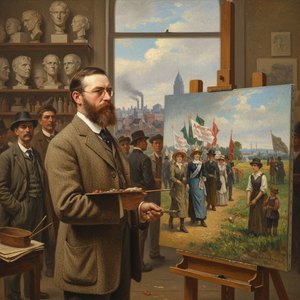
Thomas Pollock Anshutz: Capturing American Life with Realism & Reform
Explore the life & work of Thomas Pollock Anshutz, a key figure in American Realism. Discover his powerful paintings, influence on art education, and commitment to portraying everyday life with honesty and social awareness.

Thomas Whitcombe: Navigating Light & Landscape – A Reassessment of Technique & Influence
Discover the captivating world of Thomas Whitcombe, a leading British marine painter. Explore his life, techniques, and enduring legacy with our expert analysis & guide for collectors.
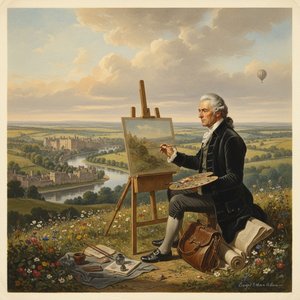
Thomas Sandby: Pioneering Watercolourist & Topographer of Georgian England
Explore the life & art of Thomas Sandby (1721-1798), a pioneering English watercolourist and architect. Discover his innovations, role in founding the Royal Academy, and lasting legacy at OriginalUniqueArt.

