
 实景预览
实景预览
 发送
发送 分享
分享
 详情
详情 指南
指南

 下载图片
下载图片
 相似作品
相似作品 X射线
X射线 幻灯片播放
幻灯片播放 统计数据
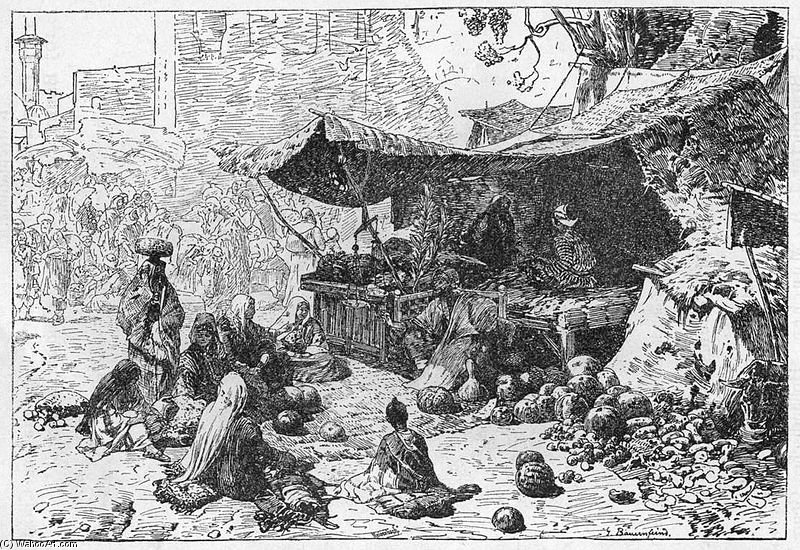
统计数据Markt In Jaffa
 阅读全文
阅读全文
艺术微喷/版画
博物馆级艺术微喷或帆布版画,制作高效,并提供多种饰面选择。 ( 订购此收藏品的纯手工复刻画作 切换至数字图像销售渠道)




































您可以从与原作比例一致的预设尺寸中进行选择。

您可以输入自定义尺寸,以适配特定的画框或空间。如果您选择的尺寸与原图比例不符,我们将对作品进行裁剪,或通过镜像填充/纯色填充边缘的方式来扩展图像。在开始制作之前,我们会向您发送一份数字效果图供您确认。
请注意,屏幕上的预览并不能反映实际的裁剪或扩展效果。只有效果图才能准确展示最终的构图。
虽然我们提供定制尺寸,但为了保持原图比例,我们建议您从预设列表中选择尺寸。


 玻璃选项仅适用于110厘米以下的尺寸。

Markt In Jaffa
艺术微喷/版画
复刻品尺寸说明
-


总计金额
$ 80
艺术家简介
The Painter of Holy Land Landscapes
Gustav Bauernfeind (1848-1904) stands as a pivotal figure in German Orientalist painting, recognized for his meticulous depictions of Jerusalem and the broader landscapes of Palestine during the late 19th century. His work transcends mere topographical accuracy; it embodies a profound engagement with biblical themes and a masterful command of artistic technique—characteristics that cemented his reputation as one of the era’s most celebrated artists. Born in Sulz am Neckar, Germany, Bauernfeind's artistic journey began amidst familial influences rooted in Jewish heritage, shaping his worldview and subtly informing his creative vision.
Bauernfeind’s formative years were marked by a dedication to architectural studies at Stuttgart Polytechnic Institute. This grounding in design principles would prove invaluable as he apprenticed under Wilhelm Bäumer and Adolph Gnauth, honing his skills alongside fellow craftsmen—a partnership that fostered not only technical proficiency but also an appreciation for detailed observation and artistic representation. Initially, Bauernfeind’s canvases explored familiar German landscapes, such as Bavarian Alps vistas and serene Rhine river scenes, establishing a foundational style characterized by realism and tonal subtlety. However, the transformative experience of his 1880-1882 expedition to the Levant ignited a passion for the Orient that would dominate his subsequent artistic endeavors.
A Journey Through the Levant
The pilgrimage to Palestine irrevocably altered Bauernfeind’s artistic trajectory. He returned repeatedly to Jerusalem and Lebanon, immersing himself in the sights and sounds of Middle Eastern life—a fascination reflected in his increasingly ambitious compositions. Unlike earlier works prioritizing serene landscapes, Bauernfeind's later paintings captured the bustling energy of marketplaces, religious processions, and architectural grandeur. His ability to translate the sacred stones of Jerusalem into emotionally resonant art allowed him to bridge the gap between the physical world and spiritual devotion.
In his most celebrated works, such as The Gate of the Great Umayyad Mosque, Bauernfeind employs a palette of warm ochre yellows, terracotta reds, and earthy browns. These sun-baked hues mirror the desert landscape, lending an air of authenticity to his scenes. Through loose, expressive strokes, he conveys the movement of jostling crowds and animated conversations, creating a palpable sense of immediacy. His mastery is often seen in how he directs the viewer’s gaze toward imposing domes or ancient walls, symbolizing faith and timeless beauty through a pyramidal composition.
Legacy and Artistic Significance
Beyond his technical skill as a painter, Bauernfeind was also a talented illustrator and architect, a versatility that allowed him to capture the structural essence of the cities he visited. His legacy is defined by several key contributions to the Orientalist movement:
- Architectural Precision: His training in Stuttgart enabled him to render the intricate details of Middle Eastern architecture with unparalleled accuracy.
- Cultural Documentation: His works serve as a vital visual record of 19th-century life in Jerusalem, Jaffa, and Morocco.
- Emotional Depth: He moved beyond simple exoticism to capture the spiritual atmosphere and religious significance of the Holy Land.
Ultimately, Gustav Bauernfeind remains an essential figure for those seeking to understand the intersection of German realism and Orientalist fascination. His life, which concluded in Jerusalem in 1904, was a testament to his lifelong devotion to the landscapes that captured his soul, leaving behind a body of work that continues to transport viewers back to a vibrant, bygone era.

Gustav Bauernfeind
1848 - 1904 , Germany
快速概览
- Artistic Movement Or Style: Orientalism
- Artists Or Movements Influenced By This Artist: ['Symbolism']
- Artists Who Influenced This Artist:
- Wilhelm Bäumer
- Adolph Gnauth
- Date Of Birth: September 4, 1848
- Date Of Death: December 24, 1904
- Full Name: Gustav Bauernfeind
- Nationality: German
- Notable Artworks:
- The Wailing Wall
- Market at Jaffa
- Place Of Birth: Sulz am Neckar, Germany