

 效果预览
效果预览
 分享
分享 分享
分享
 详情
详情

 下载
下载
 相似作品
相似作品 X射线
X射线 幻灯片播放
幻灯片播放 统计数据
统计数据Grey Wind
 Contemporary Realism
 1952
1952 66.0 x 89.0 cm
 展开详情
展开详情
手工油画复制品
由我们的艺术家按需定制,为您提供您所选尺寸及画框的布面手工油画。 ( 切换至版画销售渠道 切换至数字图像销售渠道)




































从与原作比例一致的预设尺寸中进行选择。

您可以输入自定义尺寸,以适配特定的画框或空间。如果所选尺寸与原图比例不符,我们将通过裁剪作品或添加手绘元素来扩展画面。数字样稿将在制作开始前发送给您确认。
请注意,屏幕预览无法准确反映实际的裁剪或扩展效果,只有样稿才能真实呈现最终的构图。
虽然我们提供定制尺寸服务,但为了保留原作比例,建议您从预设列表中选择尺寸。
下单后,OriginalUniqueArt.com 团队将通过电子邮件联系客户获取具体要求,并提供效果预览图。


 玻璃选项仅适用于110厘米以下的尺寸。

Grey Wind
复制材质
复制品尺寸
-


最终总价
$ 300
A Glimpse into City Life
"C Grey Wind" is a black and white artwork that depicts a city street scene with buildings in the background. The main focus of the painting is a person walking on the sidewalk, who appears to be wearing a suit. The street itself has a tiled surface, which adds texture and depth to the image. The buildings in the background vary in size and shape, creating an interesting urban landscape. Key Elements of the painting include the use of chiaroscuro, a strong contrast between light and dark, to create a sense of depth and volume. The artist's brushstrokes are bold and expressive, adding to the overall energy of the piece. The monochromatic color scheme gives the painting a sense of timelessness, allowing the viewer to focus on the composition and textures.Artist Background
Gregorio Prestopino was an American social realist painter, born in 1907 in Little Italy, New York City. He studied drawing at the National Academy of Design and later became interested in portraying everyday Manhattan and Harlem scenes. His work is characterized by its attention to detail and its ability to capture the essence of city life.- Visit https://OriginalUniqueArt.com to explore more artworks by Gregorio Prestopino
- Learn more about the Smithsonian American Art Museum and its collection on Wikipedia
The "Grey Wind" painting is a significant work by Gregorio Prestopino, showcasing his unique style and attention to detail. Its captivating depiction of city life makes it a must-see for anyone interested in American art.
艺术家简介
The Soul of the City: The Life and Legacy of Gregorio Prestopino
In the vibrant, crowded streets of New York City’s Little Italy, a profound artistic vision began to take shape. Born in 1907 to Italian immigrants Antonino Prestopini and Letteria Rando, Gregorio Prestopino was destined to become one of the most poignant chroniclers of the American urban experience. His early years were marked by a precocious talent that earned him a scholarship to the prestigious National Academy of Design. It was here, under the mentorship of figures like Charles Hawthorne, that Prestopino developed a rigorous foundation in observation. This training did more than teach him how to render form; it instilled in him a deep reverence for the minute details of life, a quality that would later allow him to transform the mundane activities of city dwellers into profound meditations on the human condition.
As his style matured, Prestopino moved away from the soft edges of Impressionism toward the gritty, unvarnished truth of Social Realism. He found kinship with the Ashcan School, drawing inspiration from the unflinching depictions of laborers and marginalized communities seen in the works of Reginald Marsh. His canvases became windows into the heart of the Great Depression, capturing the heavy atmosphere of industrial life and the quiet dignity of the working class. In masterpieces such as Mill Workers, created in 1939, he utilized the textured depth of gouache to portray the collective spirit of those gathered outside factory gates, blending a sense of social urgency with an intimate, almost tender, observation of everyday struggle.
A Mastery of Light and Shadow
The trajectory of Prestopino’s career reached a transformative milestone in 1972 when he was awarded the prestigious Rome Prize. This period of immersion in European art history allowed him to refine his technical command, particularly through the study of chiaroscuro. By mastering the dramatic interplay between light and shadow, he infused his later works with a theatrical intensity that elevated his subjects beyond mere reportage. Whether painting a bustling street scene or a solitary figure, Prestopino used light to sculpt emotion, creating a sense of depth that was both physical and psychological.
His artistic evolution also saw him embracing more expressive modes, blending the boundaries between realism and modernism. In works like Brown Brook, one can witness a shift toward bolder colors and geometric forms, where the energy of Expressionism meets a structured, modern sensibility. This versatility allowed him to remain relevant across decades of shifting aesthetic trends, moving from the stark social commentary of the 1930s to the more complex, textured landscapes of his later years.
The Harlem Studio and Historical Significance
Perhaps the most evocative chapter of Prestopino’s life was his time spent in Harlem. Establishing a studio in this culturally rich neighborhood, he became an integral part of the local artistic fabric. His presence was so deeply felt that filmmakers John Hubley and Faith Elliot famously captured the immediacy of his process in the film Harlem Wednesday, documenting the artist as he worked directly before his canvases. This period solidified his reputation as a painter who did not merely observe the city from a distance but lived within its pulse, capturing the very essence of urban humanity.
Prestopino’s significance lies in his refusal to abandon the human image during an era when much of the art world was turning toward total abstraction. Alongside contemporaries like Ben Shahn and Philip Evergood, he championed a way of seeing that honored the figure and the social reality it inhabited. His legacy is preserved in the permanent collections of institutions such as the Smithsonian American Art Museum, where his works continue to resonate with their characteristic warmth, honesty, and enduring truth.

gregorio prestopino
1907 - 1984
艺术家简介
- Artistic Movement Or Style: American Realism; Expressionism
- Artists Or Movements Influenced By This Artist:
- Ben Shahn
- Philip Evergood
- Artists Who Influenced This Artist:
- Charles Hawthorne
- French Impressionists
- Date Of Birth: June 21, 1907
- Date Of Death: December 19, 1984
- Full Name: Gregorio Prestopino
- Nationality: American
- Notable Artworks:
- Mill Workers
- Grey Wind
- Supper in Bethlehem
- Place Of Birth: New York City, United States
相关文章

White on Canvas: 10 Masterpieces & Timeless Elegance for Your Home Decor
Explore 10 iconic white paintings by Monet, Whistler & Rothko! Discover the stories behind these serene masterpieces and their impact on art history. Find museum-quality reproductions for your home decor at .

American Realism's Defining Works: 10 Masterpieces for Your Home
Explore 10 defining American Realism masterpieces – Hopper, Homer & more. Discover the stories behind these iconic paintings and bring timeless art to your home with OriginalUniqueArt's museum-quality reproductions. Explore the full collection online.

The Unvarnished Truth: A Cultural Journey Through the Soul of American Realism
Explore the profound beauty of American Realism. From the Ashcan School's urban grit to intimate portraits, discover how artists captured the authentic soul of a nation through unvarnished truth and masterful observation.
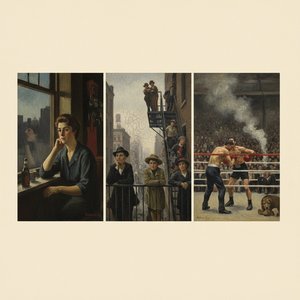
二十世纪初美国现实主义绘画:社会批判与艺术表现的崛起
深入探索二十世纪初美国现实主义绘画的社会批判与艺术创新。了解“八人”、“灰罐派”等先驱运动,以及大萧条时期对工人阶级生活的深刻描绘。OriginalUniqueArt提供高品质油画复制、定制服务和专业艺术咨询。

Dark Masterpieces: 10 Iconic Paintings Dominated by Black Tones |
Explore 10 iconic paintings dominated by black tones, from Rembrandt’s chiaroscuro to Goya's dark expressions. Discover the stories behind these masterpieces & find museum-quality art reproductions for your home at .