切换至版画销售渠道
 展开全文
展开全文







































 对于任何边长超过 105 厘米(约 41 英寸)的艺术品或复制品,画框将以拆解后的组件形式发货。此方法可确保安全送达并防止运输过程中的损坏。


A World Reimagined: The Enigmatic Art of Giuseppe Arcimboldo
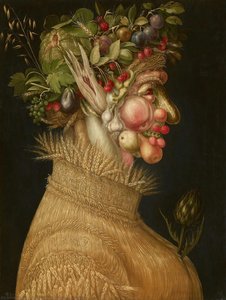
Giuseppe Arcimboldo’s “Winter” stands as an extraordinary testament to the Renaissance spirit—a celebration of intellect, observation, and a daring reimagining of artistic convention. Created in 1563 during Milan’s golden age, this oil painting on panel transcends mere representation; it embodies a profound philosophical statement about humanity's relationship with nature and the cyclical rhythms of existence. Arcimboldo wasn’t simply depicting winter; he was embodying it—transforming disparate botanical elements into a portrait that captivated audiences centuries later.Composition and Technique: A Botanical Symphony
The painting’s brilliance lies in its masterful technique. Arcimboldo employed meticulous layering of oil paint, painstakingly blending colors to achieve remarkable luminosity and textural depth. Each leaf, twig, and fruit is rendered with astonishing precision, capturing the subtle nuances of form and surface detail. The artist's brushwork isn’t merely decorative; it conveys a palpable sense of movement and vitality—as if the frozen landscape itself breathes beneath the painted surface. He skillfully utilized chiaroscuro – dramatic contrasts between light and dark – to sculpt the figure’s contours, emphasizing its sculptural quality and enhancing the overall visual impact. The careful placement of each element contributes to a harmonious balance that underscores Arcimboldo's dedication to artistic excellence.Historical Context: Patronage and Renaissance Ideals
Arcimboldo flourished during a period marked by intellectual curiosity and humanist ideals—a time when artists sought inspiration in classical antiquity and embraced the burgeoning scientific discoveries of the era. He was commissioned by Maximilian I, Holy Roman Emperor, who appreciated Arcimboldo’s innovative approach to portraiture and recognized its potential to convey complex ideas beyond mere likeness. The Habsburg court saw Arcimboldo's work as a symbol of imperial power—a visual representation of the ruler’s dominion over both earthly and celestial realms. Furthermore, Arcimboldo’s art aligns with the broader Renaissance preoccupation with symbolism – specifically, the concept of ‘uomo universale,’ or universal man—who possessed knowledge across disciplines and embodied virtue in all aspects of life.Symbolism: Winter's Silent Narrative
“Winter” is laden with symbolic meaning. The artist deliberately eschewed traditional portraiture conventions, opting instead for a visual metaphor that speaks to the core tenets of Renaissance philosophy. Each element – withered leaves representing mortality, branches symbolizing resilience and endurance, carefully arranged fruits signifying nourishment and fertility—contributes to an overarching narrative about transformation and renewal. Just as winter precedes spring, Arcimboldo suggests that even in apparent decay lies the promise of rebirth. The darkened background serves to heighten the figure’s prominence, emphasizing its stillness and contemplative gaze – inviting viewers to contemplate the profound beauty inherent in accepting change and embracing the cyclical nature of time.Emotional Impact: A Timeless Vision
More than just a visually striking artwork, “Winter” evokes a powerful emotional response. Its serene palette—dominated by earthy browns and greens—creates an atmosphere of quiet contemplation and melancholic grandeur. The meticulous detail compels viewers to linger on the surface, appreciating the artistry involved and allowing themselves to be transported into Arcimboldo’s imaginative world. It's a piece that speaks to our innate fascination with nature’s rhythms and reminds us that beauty can be found even in moments of apparent desolation—a timeless vision that continues to inspire awe and wonder.常见问题与解答
"Winter (detail)"创作于何时,属于哪种艺术流派?
"Winter (detail)"创作于1563年,属于Renaissance Mannerism运动。
朱塞佩·阿尔钦博尔多 (Zhū Sèipèi Ā'Ěrqīnbó'Ěrduō) 的《Winter (detail)》 是人像、风景还是方形构图?
朱塞佩·阿尔钦博尔多 (Zhū Sèipèi Ā'Ěrqīnbó'Ěrduō) 的《Winter (detail)》 采用 竖幅 格式。该格式描述了构图的比例。
创作《Winter (detail)》时,朱塞佩·阿尔钦博尔多 (Zhū Sèipèi Ā'Ěrqīnbó'Ěrduō) 的年龄是多少?
当"Winter (detail)"于1563创作时,出生于1527的朱塞佩·阿尔钦博尔多 (Zhū Sèipèi Ā'Ěrqīnbó'Ěrduō)正值36岁。
 实景预览
实景预览
 分享
分享 分享
分享
 详情
详情 指南
指南

 下载作品
下载作品
 相似作品
相似作品 X射线
X射线 幻灯片播放
幻灯片播放 问答
问答 统计数据
统计数据